

“We commit ₹50 crore or more to each underlying fund as an institutional anchor, which gives us deal-level data room access that an individual investor might not have.”
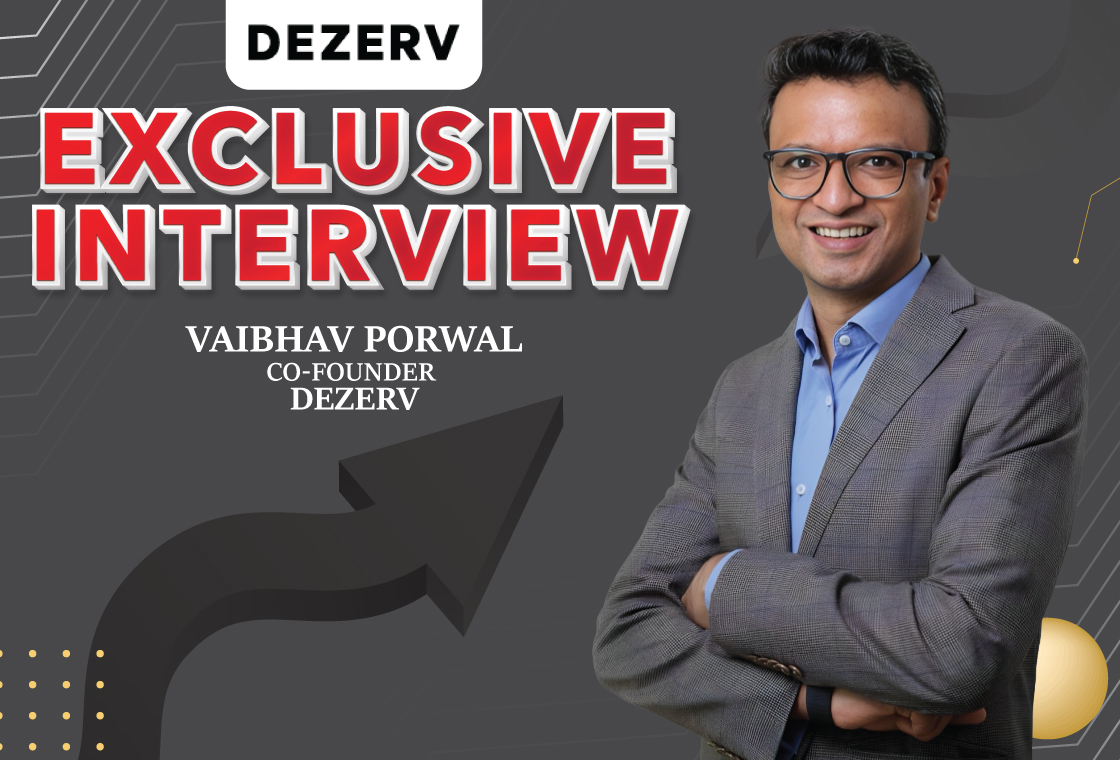
Q1. In a fund-of-funds structure, who determines whether a credit remains performing, and how does Dezerv validate that assessment?
The underlying fund manager makes that call. They originate the investment, underwrite the risk, monitor the borrower and classify the asset, and they answer to their own investors and to the regulator for that classification. Our job is to decide whether that judgement deserves our capital, and to validate it rather than take it on faith.
The structure of DCF 2 is what makes the check possible. We commit ₹50 crore or more to each underlying fund as an institutional anchor, which gives us deal-level data room access that an individual investor might not have. We do a detailed analysis of each borrowing entity, the collateral and the covenant package in the deal. After that, the review is continuous: detailed quarterly factsheets from each fund, regular meetings with its fund manager and ongoing surveillance of the portfolio. We track whether the coupons and principal arrive on time, whether covenants are being met and how collateral cover compares with the level at origination.
Where our reading of a credit differs from the manager's, we take it up with them directly, and it weighs on whether they continue to receive capital from us.
Q2. If an investor needs to exit before the fund's scheduled maturity, what practical options are available?
DCF 2 is a close-ended Category II AIF with a six-year tenure from first close, and we are plain with investors that it is not a liquid investment. It is positioned as a mid- to long-term fixed income solution and suits money investors will not need during that period. That said, the fund makes regular distributions to investors as interest income or capital repayments.
The six-year commitment is deliberate. The underlying loans have an average tenure of about four years, and as they are repaid, the capital is either distributed or reinvested in new performing credit opportunities available at that point, which keeps investors' money working at today's rates for the full term of the fund.
The illiquidity is also part of where the return comes from. Borrowers in this segment want long-term capital that will not be pulled at short notice, and they pay a premium for it. Our underlying funds can offer that certainty because their investors, including DCF 2, are committed for the full term.
For an investor who still needs to exit in extraordinary circumstances, units can be transferred to another eligible investor or buyer with the Investment Manager's consent. We position DCF 2 within the fixed income allocation, for money with a genuine six-year horizon, so that an early exit is rarely needed.
Q3. If an underlying investment turns delinquent, how could that affect DCF 2's overall portfolio returns and target IRR?
Much less than in a single fund, because of how DCF 2 is built. Capital is spread across 50 or more issuers through four to six underlying funds, and the median exposure to any one issuer is below 4%. By our estimate, one default in a standalone performing credit fund with 8 to 12 borrowers would cost about 1.5% of yield, assuming a complete write-off. The same default in DCF 2 would cost about 0.3%.
A delinquency is also not the same as a write-off. Loans in this segment carry collateral cover of 1.5x to 5x through hard assets, promoter pledges and revenue escrows, so the real questions are how much is recovered and how long it takes. Timing matters as much as the amount. A delayed recovery lowers the realised return even when the principal comes back in full.
We state an indicative gross yield of about 14 to 16% for DCF 2, before fees, expenses and taxes. It is a target, not a guarantee. Collateral and diversification reduce the effect of a default. They do not remove it, and investors should commit on that understanding.
Q4. With fees at both the underlying fund and fund-of-funds levels, investors may question the value of the additional layer. How do you respond?
The two fees pay for different work. The underlying manager is paid to originate, structure and monitor loans. DCF 2 is paid to decide which managers deserve capital, on what terms and in what proportion. The fee Dezerv charges (i) includes the fee Dezerv pays to the underlying fund manager, and (ii) is benchmarked against relevant market fees, so that an investor pays a similar fee to what they would have paid by investing with the underlying fund manager directly. This avoids charging investors twice.
The terms are where an investor feels the difference first. Because DCF 2 commits ₹50 crore or more to each underlying fund, it gets institutional share classes, superior fee terms, direct deal negotiation and deal-level data room access. An investor writing a ₹1 crore cheque to a single fund gets none of these. Selection follows: of more than 25 performing credit funds we evaluated, only four to six qualify on sponsor, sourcing, structure, security and share.
Diversification is where the arithmetic is clearest. A standalone fund typically lends to 8 to 12 borrowers. DCF 2 holds 50 or more issuers, so a single default costs roughly a fifth of the yield it would in one fund. Dezerv has also invested ₹5 crore of its own capital alongside investors.
The fair test of any second layer is whether the investor's return after both sets of fees beats what they could have built alone. We are willing to be measured on that.
Q5. As India's private credit market evolves, where do you see the most compelling opportunities, and which segments require the greatest caution?
The clearest opportunity sits in a gap the banks have left. Tighter RBI norms have reduced bank appetite for parts of the market, including businesses that are profitable, cash-flow positive and have operated for a decade or more. For these companies, private credit is capital of choice, not capital of last resort. The rate cycle adds to the case. The RBI raised the repo rate by 25 basis points on 7 October 2026, its first increase since February 2023, and a lender with a six-year horizon can hold today's rates for longer.
Caution belongs wherever yield is doing the work that collateral should be doing. By design, DCF 2 does not invest in venture debt, distressed credit or special situations. These are legitimate strategies, but their outcomes are harder to underwrite and they sit outside what an investor in performing credit has signed up for. As more capital enters Indian private credit, we also watch for terms loosening within performing credit itself, through thinner collateral cover, lighter covenants or larger single-borrower exposures. Those are usually the first signs of a manager competing on volume.
Q6. How does Dezerv evaluate the enforceability of security, the strength of covenants and the underlying manager's ability to recover capital when a credit goes wrong?
Recovery is largely decided before default, when the loan is structured. Security and structure are two of the five counts on which we screen every underlying fund, so a manager's approach to enforcement shapes whether we invest with them at all.
On security, we look at what the collateral is and how quickly it can be realised. Loans in the DCF 2 portfolio carry 1.5x to 5x cover through hard assets, promoter pledges, shortfall guarantees and revenue escrows. Escrows matter most under stress, because they give the lender control of cash flows before a payment is missed. On covenants, we look for financial triggers that let a manager act early, while the borrower still has options and the collateral still holds its value. Many managers also build an unconditional put option into their deals, which lets them call for early repayment if they see early signs of risk. This helps them exit cleanly before the risk surfaces.
The manager's own record is the final test. We ask how their past stressed accounts were resolved, how long recovery took and how much came back, and whether the team has the legal and workout experience to enforce what it has underwritten. As an anchor investor with deal-level data room access, we can check those answers against the documents themselves.
Recent Blogs
Listed vs PRE-IPO: Two Markets, One Goal — Finding Alpha
PMS Bazaar recently organised a webinar titled “Listed vs PRE-IPO: Two Markets, One Goal — Finding Alpha,” which featured Mr. Radha Raman Agarwal, MD & CEO, Swyom Advisors Limited.

SIFs Explained: Can Sundaram Select SIF Unlock Opportunities Beyond the Top 100 Stocks
PMS Bazaar recently organised a webinar titled “SIFs Explained: Can Sundaram Select SIF Unlock Opportunities Beyond the Top 100 Stocks Webinar,” which featured Mr. Madanagopal Ramu, Fund Manager, Equity, Sundaram Mutual.

India's Next Decade of Equities: The Changing Engines of Growth
As India's economy evolves and capital becomes more selective, investors may need to rethink where future market leaders emerge from.

Active PMS Strategies Navigate a Turbulent H1 FY27
Six months. Heightened geopolitical tensions. Persistent inflationary pressures.

Is Large-Cap Alpha Changing? What Does It Mean for Investors
PMS Bazaar recently organised a webinar titled “Is Large-Cap Alpha Changing? What Does It Mean for Investors,” which featured Mr. Naveen Chandramohan, Founder and Fund Manager, ITUS Capital. This blog covers the important points shared in this insightful webinar.

PMS Performance : 401 Equity PMS Beat the Nifty 50 TRI
September 2026 saw global markets grapple with persistent macroeconomic uncertainty, as rising U.S. bond yields, crude oil prices above $90 per barrel and escalating Middle East tensions kept investors on edge. Concerns over renewed inflationary pressures and tighter financial conditions continued to shape market sentiment. The reported 25-basis-point Federal Reserve rate hike, bringing rates to 3.75–4.00 per cent, added another dimension to the evolving global outlook.

When Market Direction Is Uncertain, Can Arbitrage Add Stability to Client's Portfolio?
PMS Bazaar recently organised a webinar titled “When Market Direction Is Uncertain, Can Arbitrage Add Stability to Client's Portfolio?” which featured Mr. Sandeep Tyagi, Founder & Chairman, Estee Advisors and Mr. Shubham Goyal, Director, Strategy, (Principal Officer and Fund Manager - I-Alpha), Estee Advisors Pvt. Limited. This blog covers the important points shared in this insightful webinar.

MF-PMS: Is This the Next Big Wealth Management Opportunity
PMS Bazaar recently organised a webinar titled “MF-PMS: Is This the Next Big Wealth Management Opportunity,” which featured Mr. Sandeep Jethwani, Co-Founder, Dezerv & Vice Chairman, APMI.