

As India's economy evolves and capital becomes more selective, investors may need to rethink where future market leaders emerge from.
much of the last 15 years, equity investors benefited from two powerful tailwinds: falling interest rates and rising financialisation. The combination created a market environment where valuation multiples expanded, liquidity was abundant, and financial services became an increasingly dominant component of Indian equity indices. Many successful investment strategies were built around these trends. Yet history suggests that market leadership rarely remains static.
Global capital markets may be entering a different phase. Rising government debt levels, large-scale investments in manufacturing and infrastructure, and the significant capital requirements of emerging technologies such as Artificial Intelligence are creating conditions where capital may remain structurally more expensive than investors became accustomed to during the post-Global Financial Crisis era. When capital becomes scarcer, earnings growth matters more than valuation expansion. And that can fundamentally change where investment opportunities emerge.
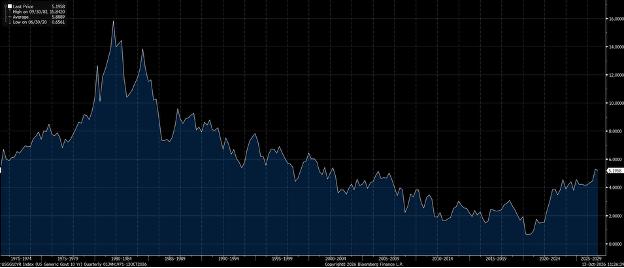
US 10-Year Bond Yields – The 50-Year Picture
The era of continuously falling interest rates may be behind us, increasing the importance of business fundamentals and earnings growth.
A Broader Market Leadership Cycle
One of the defining features of developed equity markets has been the evolution of market leadership over time. In the United States, Financials accounted for over one-fifth of the S&P 500 in the mid-2000s, while Information Technology has since grown to become its largest sector. China has witnessed a similar shift, with technology, consumer and advanced manufacturing businesses expanding their share of market capitalisation.
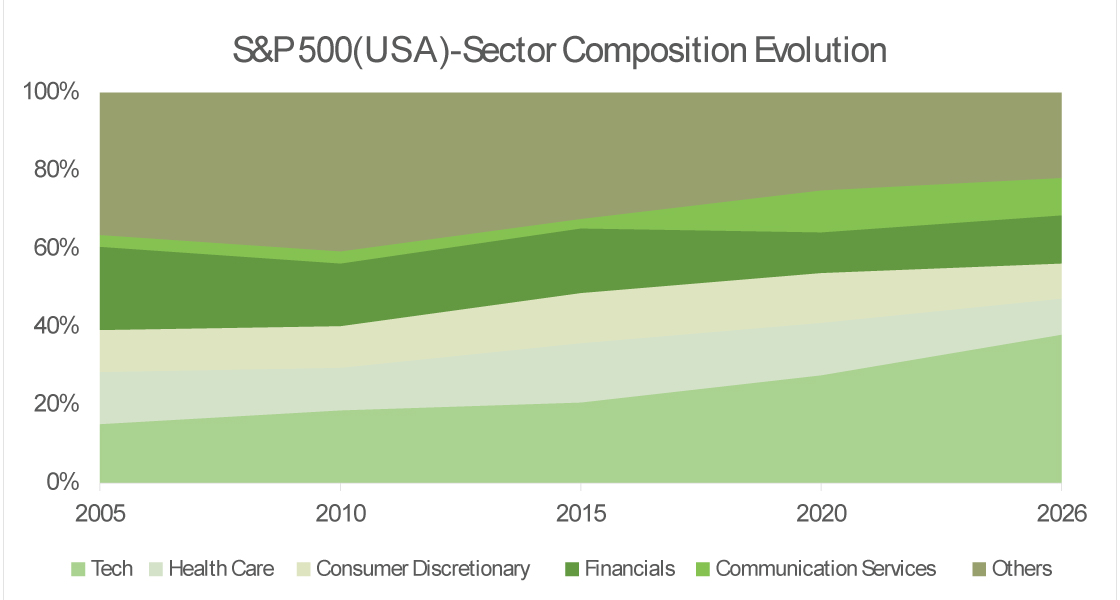
S&P 500(USA)- Sector Composition Evolution
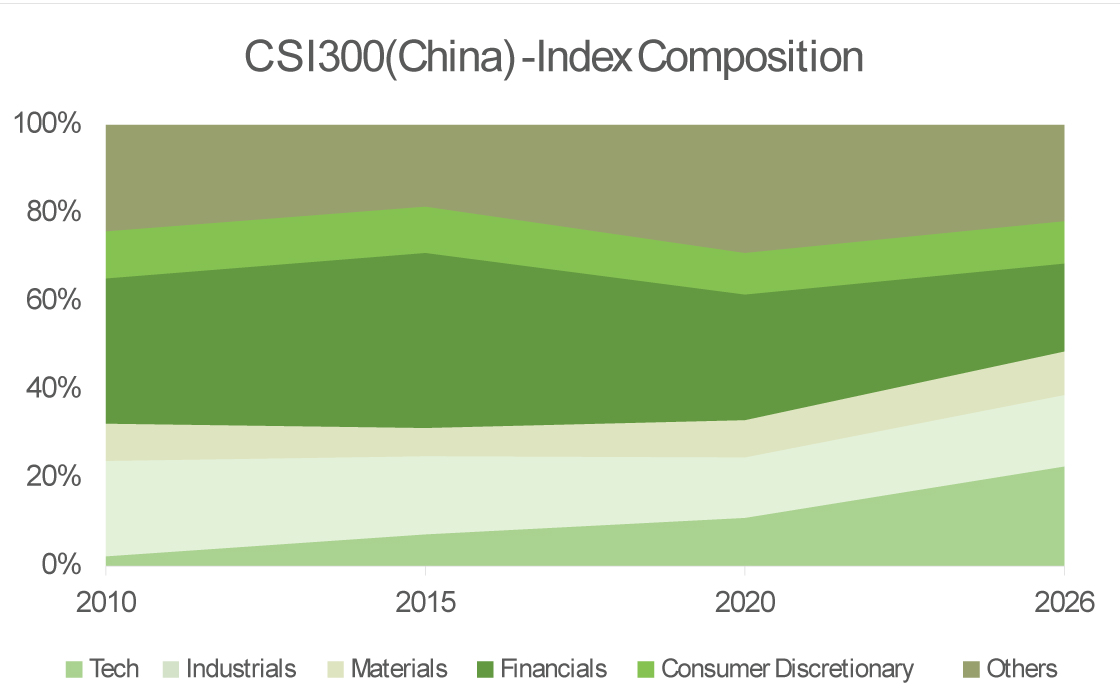
CSI 300(China)-Index Composition
Market leadership evolves as economies mature. Sectors that dominate today may not necessarily drive the next decade's returns.
India, too, may be approaching an important shift in market leadership. Financial services currently represent roughly one-third of major Indian equity benchmarks. While the sector remains critical to India's growth story, economic development tends to create new engines of value creation over time. As manufacturing scales, supply chains deepen, formalisation expands and technology adoption accelerates, the opportunity set available to long-term investors is likely to widen significantly. For investors, the opportunity lies in identifying businesses that can translate these structural shifts into sustainable earnings growth, stronger competitive positions and attractive returns on capital.
India's Manufacturing Opportunity
Manufacturing may represent one of the most significant structural investment opportunities of the coming decade. The conversation is often framed around the "China+1" theme, but the reality is broader. India's manufacturing growth is increasingly supported by multiple reinforcing trends: domestic demand expansion, policy support, improving competitiveness, infrastructure development and rising private-sector capital expenditure.
Electronics, industrials, engineering, defence, specialised chemicals and auto ancillaries are already demonstrating how scale advantages can translate into sustainable growth opportunities. Importantly, these businesses are not solely export stories. Many stand to benefit from both global market share gains and a rapidly expanding domestic economy. The investment opportunity, however, will depend on identifying companies that can scale profitably, sustain competitive advantages and generate attractive returns on capital—not simply those operating in sectors expected to grow.
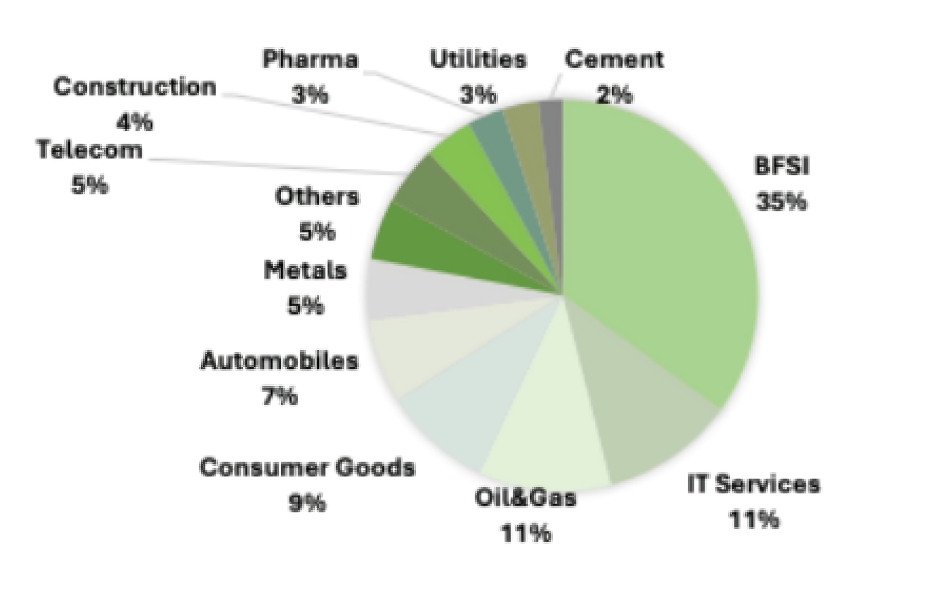
NIFTY 50 Index Composition
If India's economic structure broadens over the coming decade, today's market composition may look very different ten years from now.
Investing for a Different Regime
For investors, the key question is not whether today's winners will disappear. It is whether portfolios are positioned for a market where returns increasingly depend on earnings growth, capital allocation discipline and structural competitive advantages.
At Equirus Asset Management, this perspective is reflected in our Structural Compounding with Cyclical Boost (SCCB) framework. It brings together two complementary sources of opportunity: businesses capable of compounding value over the long term and businesses positioned to benefit from cyclical recoveries. The former focuses on durable growth and business quality; the latter on identifying recovery opportunities where underlying fundamentals remain sound.
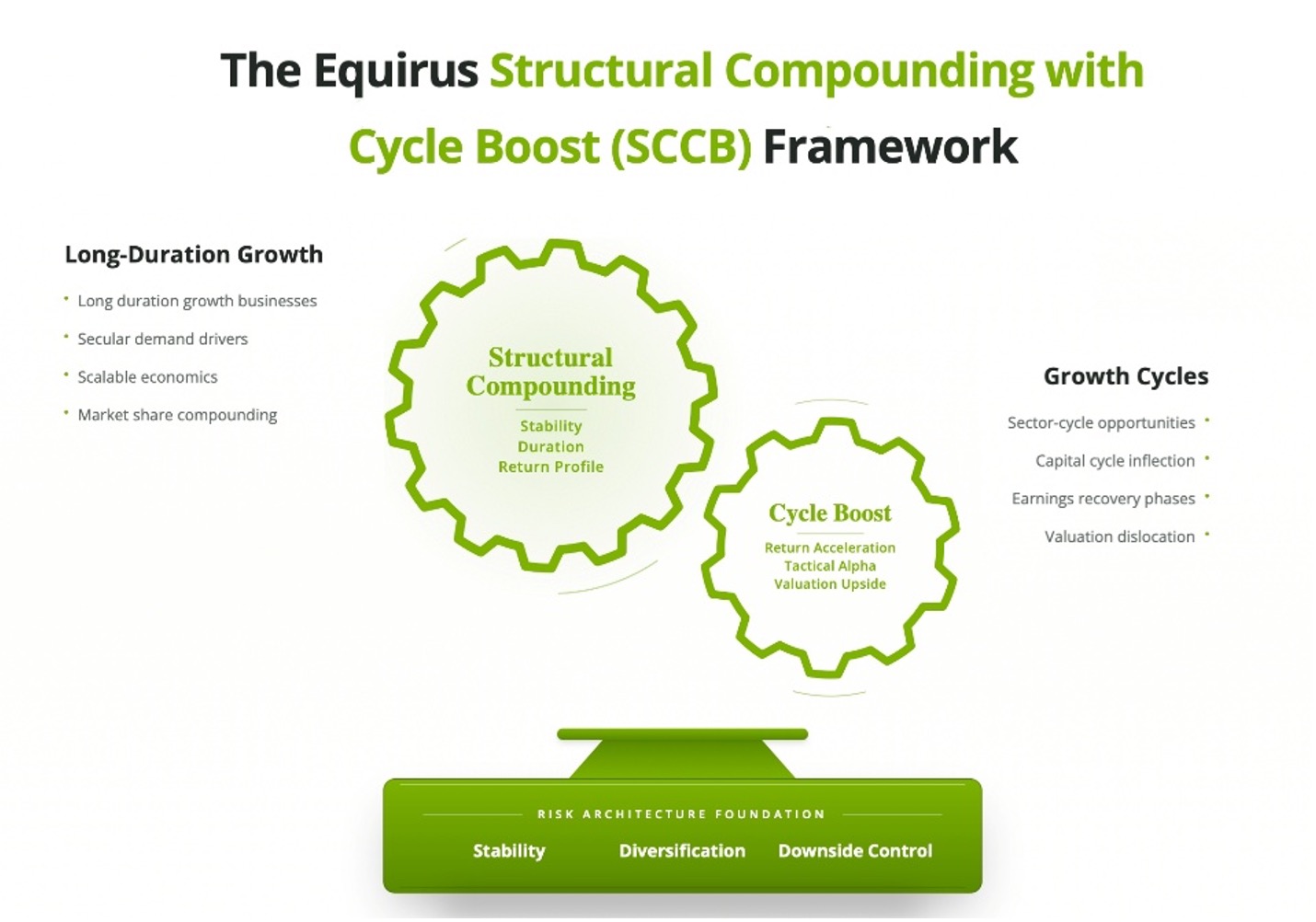
The objective is not to predict which style will outperform in a given quarter. Instead, it is to build a portfolio capable of participating across different market environments while remaining anchored to fundamental value creation.
As India's economy enters its next phase of evolution, investors may need to look beyond the market leaders of the previous decade and towards the businesses shaping the next one. Identifying these emerging growth engines early, while remaining anchored to business fundamentals and valuations, could be key to navigating the opportunities ahead.
Recent Blogs

Active PMS Strategies Navigate a Turbulent H1 FY27
Six months. Heightened geopolitical tensions. Persistent inflationary pressures.
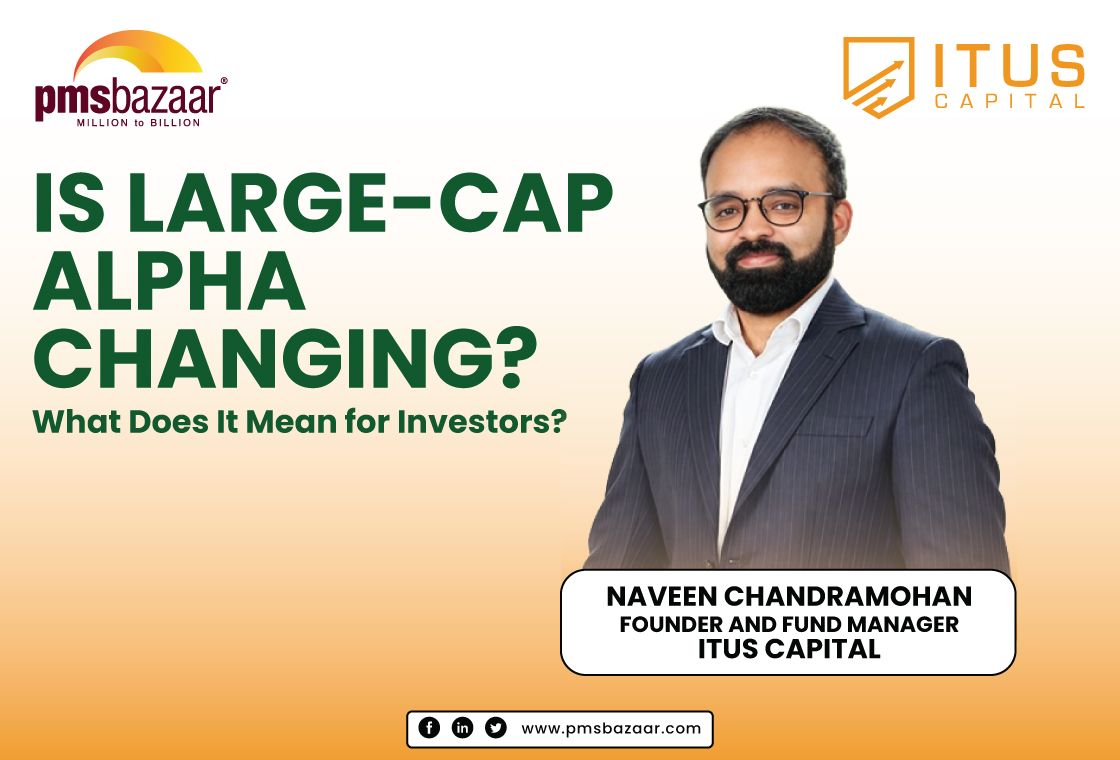
Is Large-Cap Alpha Changing? What Does It Mean for Investors
PMS Bazaar recently organised a webinar titled “Is Large-Cap Alpha Changing? What Does It Mean for Investors,” which featured Mr. Naveen Chandramohan, Founder and Fund Manager, ITUS Capital. This blog covers the important points shared in this insightful webinar.
PMS Performance : 401 Equity PMS Beat the Nifty 50 TRI
September 2026 saw global markets grapple with persistent macroeconomic uncertainty, as rising U.S. bond yields, crude oil prices above $90 per barrel and escalating Middle East tensions kept investors on edge. Concerns over renewed inflationary pressures and tighter financial conditions continued to shape market sentiment. The reported 25-basis-point Federal Reserve rate hike, bringing rates to 3.75–4.00 per cent, added another dimension to the evolving global outlook.
When Market Direction Is Uncertain, Can Arbitrage Add Stability to Client's Portfolio?
PMS Bazaar recently organised a webinar titled “When Market Direction Is Uncertain, Can Arbitrage Add Stability to Client's Portfolio?” which featured Mr. Sandeep Tyagi, Founder & Chairman, Estee Advisors and Mr. Shubham Goyal, Director, Strategy, (Principal Officer and Fund Manager - I-Alpha), Estee Advisors Pvt. Limited. This blog covers the important points shared in this insightful webinar.

MF-PMS: Is This the Next Big Wealth Management Opportunity
PMS Bazaar recently organised a webinar titled “MF-PMS: Is This the Next Big Wealth Management Opportunity,” which featured Mr. Sandeep Jethwani, Co-Founder, Dezerv & Vice Chairman, APMI.

PMS Performance: Over 94% of Tracked Strategies Beat Nifty 50 TRI
Global markets remained under pressure in August 2026 as geopolitical tensions, rising bond yields and elevated crude oil prices kept investors cautious.

The Next Alpha Cycle: How Should Investors Position ‘Alternatives’ in Their Portfolios?
PMS Bazaar recently organized a webinar titled “The Next Alpha Cycle: How Should Investors Position ‘Alternatives’ in Their Portfolios,” which featured Mr. Akhil Chaturvedi, ED & CBO, Motilal Oswal AMC. This blog covers the important points shared in this insightful webinar.
Performing Private Credit in India: Opportunity, Risk & the Investor’s Perspective
PMS Bazaar recently organised a webinar titled “Performing Private Credit in India: Opportunity, Risk & the Investor’s Perspective,” which featured Mr Saurabh Agrawal, Co-Fund Manager and Partner, Spark Asia Impact Alternative Asset Management.