

PMS Bazaar hosted the last webinar for the year on the Sundaram Alternate Series on the topic: Journey from an Intrapreneur to an Entrepreneur. The webinar featured Nitin Jain, Chairman and Managing Director of Neo Wealth and Asset Management, with Vikaas M Sachdeva, Managing Director, and Hitungshu Debhnath, Chief Business Officer, both from Sundaram Alternates.

Excerpts from the interview:
- From corporate executive to entrepreneur: Insights and strategies for success
- Overlap of roles between corporate work and entrepreneur
- Transition to CEO
- Changes in the financial sector
- Capital infusion and equity dilution
- Gender dynamics in entrepreneurship
From Corporate Executive to Entrepreneur: Insights and Strategies for Success
Vikaas Sachdeva opened the discussion by acknowledging Nitin Jain's entrepreneurial achievements. He then posed a question that many could be curious about: what motivated Jain to transition from a successful corporate role to venturing out on his own?
Jain's response revealed that his decision wasn't necessarily a part of a grand plan. He acknowledged the valuable experiences he gained during his time at Edelweiss. Interestingly, he emphasised that even within the corporate environment, he still felt a strong entrepreneurial spirit. He credited Edelweiss for fostering an innovative and autonomous workplace that allowed him to flourish. However, with the completion of various projects at Edelweiss, he felt a sense of closure. This, combined with India's economic growth and opportunities, ultimately led him towards pursuing his entrepreneurial endeavours.
Overlap of roles between corporate work and entrepreneur
Hitungshu Debhnath, curious about Nitin Jain's story, expressed interest in how Jain's experiences as a corporate leader translated to the challenges of entrepreneurship. Debhnath specifically inquired about the skills Jain found transferable between the two worlds.
Jain responded that a surprising amount of overlap exists between the skillsets needed for both roles. Core competencies like building teams, strategising, and managing risk proved highly applicable. He even found running a business within a large corporation to be equally, if not more, complex than running his venture.
However, he acknowledged some key differences. As an entrepreneur, he faced multiple operational challenges, from obtaining licenses to managing logistics and HR. He emphasised the valuable lesson of outsourcing non-critical tasks, which frees him to focus on core business development.
Another crucial factor for success, Jain stressed, was the unwavering support and synergy with his trusted colleagues, some of whom have been by his side for decades. This strong network proved invaluable in navigating the initial hurdles of entrepreneurship. A supportive team, he added, can be a powerful source of motivation during tough times.
Transition to CEO
Debhnath then turned his attention to Neo's unique business model, which featured a prominent tech team compared to traditional financial service firms. He complimented Neo's modern approach and asked Jain about the mindset shift required to transition from CEO to business promoter.
Jain clarified that he still viewed himself as a professional, even in his promoter role. However, he acknowledged the increased accountability and focus on compliance and risk management that came with promotion. He assured Debhnath that his people-centric approach remained consistent, emphasising regular interaction and a hands-on style to stay in tune with the organisation's pulse.
Neo's approach:
Firstly, Neo targeted inherent conflicts of interest prevalent in advisory and traditional wealth management practices. Neo aimed to build a transparent, unbiased, and cost-effective advisory platform prioritising client needs over revenue targets. Secondly, recognising a talent gap in private banking, particularly senior relationship managers, Neo sought out experienced professionals feeling undervalued. Neo offered a platform for these RMs (relationship manager) to build their practices within Neo's framework. Finally, Neo recognised the importance of steady income streams for clients with significant wealth. By offering lower-risk, higher-yield products, Neo aimed to enhance financial freedom and cater to the income needs of affluent clients.
Changes in the financial sector
As the webinar progressed, Debhnath steered the conversation towards the broader trends shaping the financial landscape. Jain, leveraging his experience, identified three key factors.
First, he noted a significant rise in affluence within India. This translated to a shift in consumer behaviour, with a growing demand for premium experiences and luxury goods.
Second, Jain emphasised the transformative power of government reforms. He pointed to demonetisation as a major driver, forcing idle cash into the formal financial system. He also acknowledged the critical role of India's robust digital infrastructure. This facilitated the widespread adoption of digital payments and ushered in a new era of financial inclusion.
Finally, Jain addressed the unexpected impact of the COVID-19 pandemic on capital markets. He observed a surge in Demat account openings and a heightened interest in investment opportunities. He attributed this trend to increased savings and leisure time during lockdowns, prompting many to explore wealth-creation avenues.
Capital infusion and equity dilution
Shifting gears, Sachdeva inquired about Jain's perspective on equity dilution for capital infusion. Jain responded from the perspective of Neo. He stressed the importance of aligning capital decisions with his company's long-term goals. He viewed capital as essential for building a secure and resilient financial institution. However, he cautioned against simply seeking any investor. Instead, he advocated finding partners who shared his company's vision and values, comparing ideal investors to trusted friends.
Gender dynamics in entrepreneurship
The discussion then delved into gender dynamics within the entrepreneurial world. Sachdeva wondered if the journey differed for women, considering the potential dual responsibilities of balancing work and home life. He expressed his interest in the topic and sought Jain's insights.
Jain acknowledged the challenges women face in juggling domestic and professional responsibilities. However, he countered by highlighting the strengths women leaders bring to the financial services industry. He pointed to their emotional intelligence, communication skills, and time management abilities as valuable assets.
Encouragingly, Jain expressed his support for aspiring women entrepreneurs. He mentioned Neo's commitment to fostering female leadership through programs like Athena. He emphasised the firm's dedication to promoting gender diversity within Neo, to develop future female CEOs in the organisation.
These were just some of the many topics covered in the insightful webinar. You can watch the entire session by following the link below.
Get access to rich data and analytics of PMS & AIF by subscribing to us. Join the 60000+ investors & experts now: Subscribe NOW
Recent Blogs
When Market Direction Is Uncertain, Can Arbitrage Add Stability to Client's Portfolio?
PMS Bazaar recently organised a webinar titled “When Market Direction Is Uncertain, Can Arbitrage Add Stability to Client's Portfolio?” which featured Mr. Sandeep Tyagi, Founder & Chairman, Estee Advisors and Mr. Shubham Goyal, Director, Strategy, (Principal Officer and Fund Manager - I-Alpha), Estee Advisors Pvt. Limited. This blog covers the important points shared in this insightful webinar.
MF-PMS: Is This the Next Big Wealth Management Opportunity
PMS Bazaar recently organised a webinar titled “MF-PMS: Is This the Next Big Wealth Management Opportunity,” which featured Mr. Sandeep Jethwani, Co-Founder, Dezerv & Vice Chairman, APMI.

PMS Performance: Over 94% of Tracked Strategies Beat Nifty 50 TRI
Global markets remained under pressure in August 2026 as geopolitical tensions, rising bond yields and elevated crude oil prices kept investors cautious.

The Next Alpha Cycle: How Should Investors Position ‘Alternatives’ in Their Portfolios?
PMS Bazaar recently organized a webinar titled “The Next Alpha Cycle: How Should Investors Position ‘Alternatives’ in Their Portfolios,” which featured Mr. Akhil Chaturvedi, ED & CBO, Motilal Oswal AMC. This blog covers the important points shared in this insightful webinar.
Performing Private Credit in India: Opportunity, Risk & the Investor’s Perspective
PMS Bazaar recently organised a webinar titled “Performing Private Credit in India: Opportunity, Risk & the Investor’s Perspective,” which featured Mr Saurabh Agrawal, Co-Fund Manager and Partner, Spark Asia Impact Alternative Asset Management.
GIFT City IFSC: India's Emerging Hub for Global Finance
PMS Bazaar recently organized a webinar titled “GIFT City IFSC: India's Emerging Hub for Global Finance,” which featured Mr. Bharath Shivappa, President & Chief of Markets, Gujarat International FinanceTec-City. This blog covers the important points shared in this insightful webinar.

PMS Performance: Who Outperformed in July 2026?
July 2026 was another month marked by uncertainty, with market performance shaped by evolving global cues and shifting investor sentiment. Despite the uncertain environment, equity PMS strategies continued to present opportunities, with several managers delivering returns ahead of the broader market benchmarks.
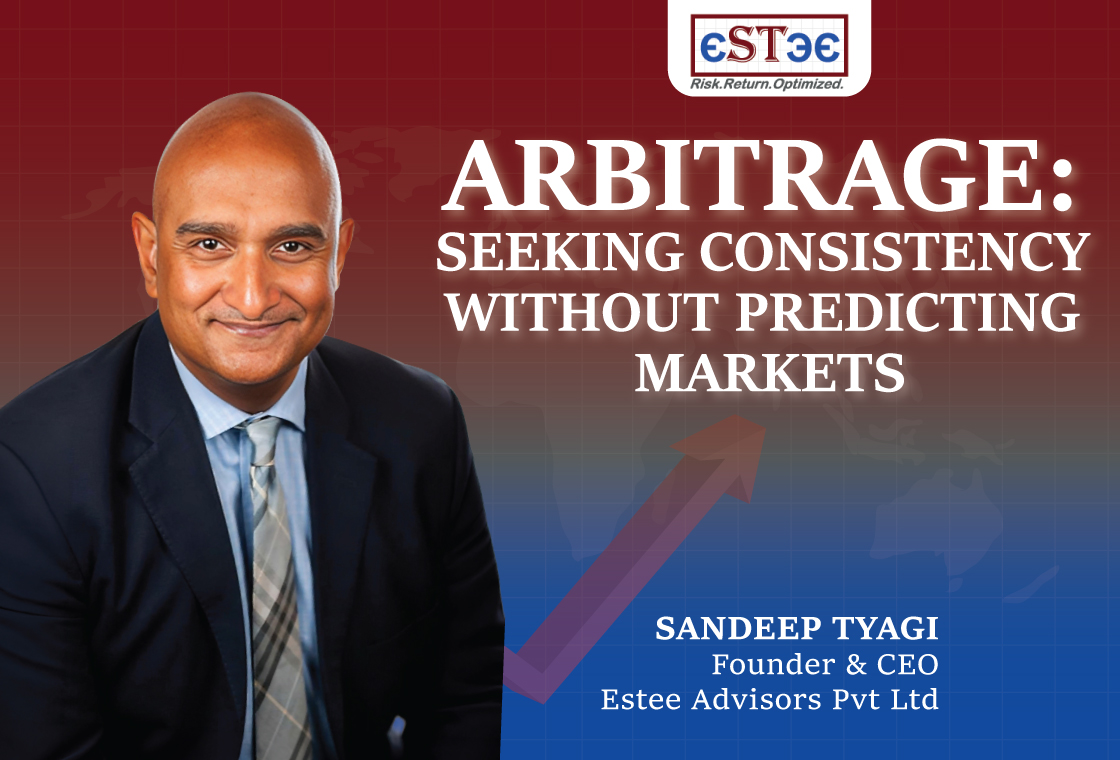
Arbitrage: Seeking Consistency Without Predicting Markets
Every investor grapples with the same challenge: uncertainty.