


Warren Buffett's recent shareholder letter and Berkshire Hathaway’s annual meeting offered valuable insights for investors. He emphasises long-term investing and focusing on a company's fundamentals, viewing market dips as buying opportunities. Additionally, diversification across asset classes is a key principle in his investment philosophy, reminding investors to spread their risk.

The recent Berkshire Hathaway annual meeting in May and shareholder letter, which was shared in February this year, offered a wealth of wisdom from Warren Buffett on various topics relevant to investors. These events served as a masterclass in navigating the market.
Buffett, a champion of long-term investing and value picking, advises investors to focus on the fundamentals of a company rather than short-term market fluctuations. He even encourages a view of market downturns as opportunities to acquire undervalued stocks. Finally, the importance of diversification is a recurring theme in Buffett's philosophy, reminding investors to spread their risk across different asset classes.
Here are the 3 main takeaways.
First, value investing for long-term gains.
Buffett champions value investing, a strategy that prioritises identifying stocks trading below their intrinsic worth. This involves looking past short-term market fluctuations and meticulously analysing a company's core business health and its long-term economic fundamentals. This philosophy discourages investors from impulsively chasing hot tips or trendy investments that may fizzle out quickly.
By adhering to value investing principles, investors can build a portfolio of solid companies with the potential for steady growth over time. Buffett emphasises this patient, analytical approach in his 2024 shareholder letter, where he advises investors to avoid the noise of the market and focus on a company's underlying business strength.
Second, patience is key. Embrace downturns as buying opportunities.
Market downturns are a natural part of the investment cycle, and Buffett acknowledges them without fear. He views these periods as opportunities rather than threats. When the market dips, it can present a chance to acquire quality stocks at a discount. The key is to maintain composure during periods of market turbulence and resist the urge to sell out of fear.
By prioritising long-term value and avoiding permanent capital loss through panicked selling, investors can position themselves to benefit from the overall growth of the market and the power of compounding interest over time. Buffett himself acknowledges that he has made a couple of good decisions throughout his career but emphasises that avoiding serious mistakes is equally important. By staying calm during downturns and focusing on the long term, investors can profit from market corrections and benefit from the snowball effect of compound interest.
And lastly, diversification should be a necessary part of the portfolio.
Broaden your horizons. While Buffett has found great success investing primarily in the US, he has also expanded his portfolio to other geographies, indicating the importance of diversification. In recent years, he has expanded his portfolio to include undervalued companies in other countries, such as Japan. By incorporating global stocks into their portfolio, investors can not only improve their potential returns but also reduce overall risk.
Diversification helps to mitigate the impact of a downturn in any one particular market. Buffett, while acknowledging the continued dominance of the US economy, has also expressed concerns about the national debt and its potential to fuel inflation. This suggests that even for a seasoned investor like Buffett, diversification remains a crucial strategy for navigating the complexities of the global market.
Recent Blogs

May sees selective alpha as PMSes navigate market consolidation
Despite a subdued market environment, PMS strategies continued to deliver positive returns. Leadership remained concentrated in Thematic, Small Cap and Small & Midcap categories, underscoring the value of active management and focused portfolio positioning.

SEBI’s Accredited Investor Certificate: Exclusive Access to AIFs, PMS, SIFs & Private Markets
PMS Bazaar recently organized a webinar titled “SEBI’s Accredited Investor Certificate: Exclusive Access to AIFs, PMS, SIFs & Private Markets,” which featured Mr. Rajesh Kumar S, Head of Business, NSDL Database Management Limited. This blog covers the important points shared in this insightful webinar.

April rebound lifts PMS strategies, but small-cap tilt drives leaders
A broad market recovery helped managers beat large-cap indices, though alpha against wider benchmarks remained more selective and category-dependent

SEBI’s GARUDA Framework: A Big Boost for India’s AIF Industry and GIFT City Ecosystem
India’s Alternative Investment Fund (AIF) industry has evolved rapidly over the last few years. Investors today are increasingly moving beyond traditional investment products such as mutual funds and fixed deposits in search of differentiated opportunities across Private Equity, Venture Capital, Private Credit, Real Estate, infrastructure, and Category III long-short strategies.

Winners & Losers: Sectors to Watch in the Current Global Crisis
PMS Bazaar recently organized a webinar titled “Winners & Losers: Sectors to Watch in the Current Global Crisis,” which featured Mr. Arpit Shah, Co-Founder and Director, Care Portfolio Managers. This blog covers the important points shared in this insightful webinar.
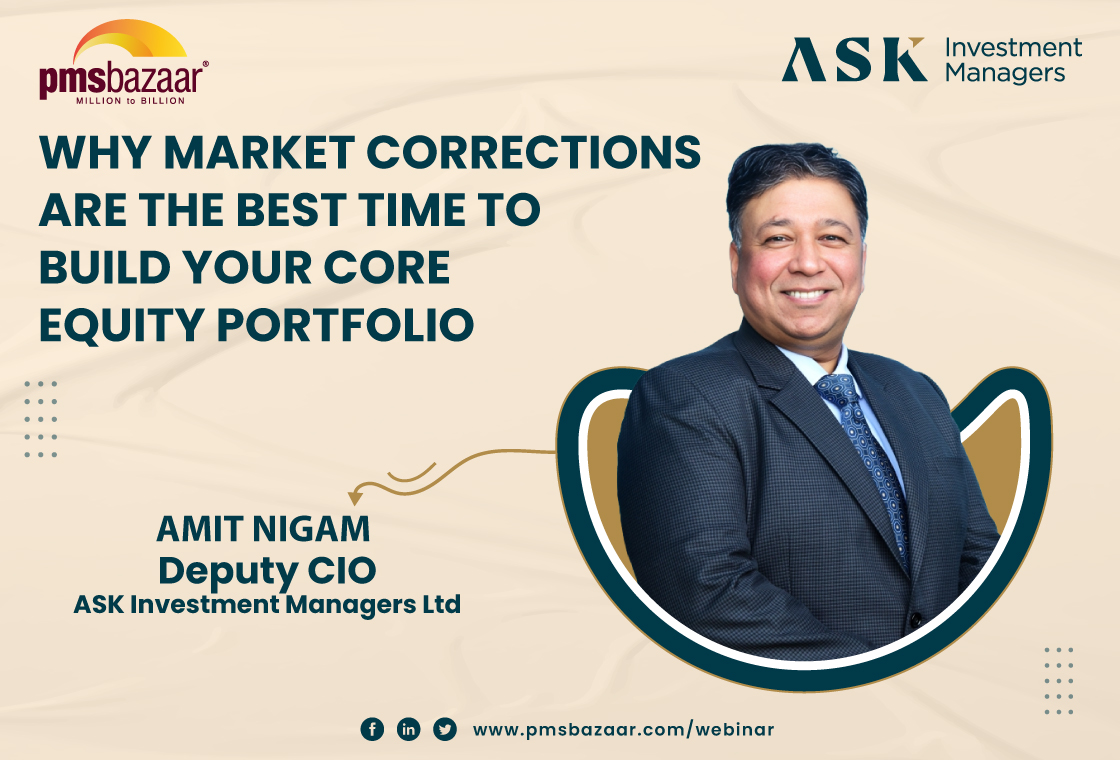
Why Market Corrections Are the Best Time to Build Your Core Equity Portfolio
PMS Bazaar recently organized a webinar titled “Why Market Corrections Are the Best Time to Build Your Core Equity Portfolio,” which featured Mr. Amit Nigam, Deputy CIO, ASK Investment Managers. The webinar blog covers insights from Mr. Nigam, which includes explanation how recent stock market volatility in India creates opportunities for long-term investors. It highlights shifting from a fixed deposit mindset to equities, his blog covers the important points shared in this insightful webinar.

Why ETF-Only Portfolios Are the Most Tax-Efficient Way to Invest
How deferred taxation and lower LTCG rates compound into significantly higher post-tax wealth for long-term investors

6 out of 10 PMSes Beat Benchmarks In March Crash
Despite a fourth straight monthly sell-off, most PMSes fell less than benchmarks; a few even stayed in the green