

PMS Bazaar recently organized a webinar titled " Accessing Dynamic Strategies for Today’s Market Through Karma Magnolia PMS," which featured Mr. Rushabh Sheth, Co-Founder and Co-CIO of Karma Capital, and Ms. Ekta Mehta, Senior Fund Manager, karma Magnolia Fund as the keynote speaker. This blog covers the important points shared in this insightful webinar.

During the webinar, Mr. Sheth introduced Karma Capital, while Ms. Ekta discussed the Karma Magnolia PMS, a recently launched PMS Investment Approach of Karma Capital. In addition to explaining their fund, The Karma Capital team answered various questions from the host and the webinar participants, and this blog covers some of the key points shared during the Question & Answer session.
Key aspects covered in this webinar blog are
• Business Cycle
• Equities Momentum in the Next 3-4 Months
• Earnings Growth
• HNIs’ Sentiment
1. Business Cycle
One of the questions the audience asked was the concept of a business life cycle and how it affects a company's stock prices.
To this, Mr. Sheth replied, a business life cycle represents the natural progression of a business, illustrating the various stages it goes through from inception to maturity. It encompasses a gradual and steady evolution, starting with developing a prototype idea, gaining traction, and transitioning from initial slow growth to eventual high growth. Interestingly, even when a business begins to thrive and achieve success, the narrative surrounding it may remain negative, particularly at the bottom point of the cycle.
Furthermore, Mr. Sheth stated that sometimes, a business's past may not appear compelling or noteworthy, but these companies are entering a growth phase within their life cycle. Notably, the stock price tends to hit its lowest point well after the business has reached its lowest point and starts rebounding. Consequently, the stock price may remain unfavorable for a while, but the narrative gradually changes as the business gains momentum. As the narrative shifts, the stock prices tend to catch up and become more favorable.
2. Equities Momentum in the Next 3-4 Months
The next query was related to the outlook for equities momentum in the upcoming 3-4 months, given recent market performance and potential concerns.
Mr. Sheth shared his insights, acknowledging that there has been a remarkable rally in the market during the last few months. However, he emphasized the importance of adopting a long-term perspective when evaluating market trends. He anticipates some volatility and concerns in the short term, including inflation, interest rates, and geopolitical risks.
While these near-term factors can impact market performance, Mr. Sheth said investors must focus on their financial objectives, risk tolerance, and investment time horizon rather than react impulsively to short-term market fluctuations. Implementing a strategy incorporating diversification, proper asset allocation, and periodic portfolio reviews can help manage risks effectively and position investors for long-term success in the market.
Mr. Sheth also added that taking the long-term view, it's crucial to recognize India's substantial growth potential and the expected economic improvements. Despite the recent positive performance, the Index's current trading valuation is still approximately 20 times its 10-year average, indicating that there could be further opportunities for growth.
In conclusion, Mr. Sheth told investors must approach equities with a long-term perspective, considering the potential for volatility and concerns in the short term, recognizing India's growth prospects, and maintaining a disciplined investment approach aligned with their financial goals.
3. Earnings Growth
Another question was related to the earnings growth in various industries during the last quarter and their future expectations. Ms. Ekta answered this by highlighting the diverse outcomes observed in the earnings landscape for Q4. She pointed out that the automobile and pharma industries exhibited robust earnings, indicating strong performance during that period. However, the IT sector experienced a slowdown, with IT companies facing sluggish earnings.
Further, Mr. Sheth added that several companies across industries have been actively reducing their debt levels, resulting in reaching all-time lows. This debt reduction is a positive development, as it enhances these companies' financial stability and growth potential. Consequently, there are positive expectations for solid earnings in the future from these industries. The combination of reduced debt burdens and high growth potential creates a favorable environment for their continued success and prosperity.
4. HNIs’ Sentiment
Concerning High-Net-Worth Individuals (HNIs), a query raised was about the factors driving the changing sentiment of HNIs toward equity investments and why equity has become more attractive to them in recent years.
Mr. Sheth pointed out that there has been a noticeable shift in the sentiment of HNIs towards equity investments in recent times. He believes that this change is primarily a result of clients becoming more informed and discerning in their financial decision-making processes. As HNIs have grown increasingly aware and knowledgeable about investment opportunities, equity has emerged as a more appealing and acceptable option compared to the past.
This shift in sentiment can be attributed to various factors that have influenced the investment landscape. Among these factors, one significant aspect highlighted by Ms. Ekta is the increased availability of information and resources to HNIs. In today's digital age, clients have access to a wide range of financial products, research tools, and market data that enable them to conduct thorough research and analysis before making investment decisions. This abundance of resources empowers HNIs to evaluate the potential risks and rewards associated with equity investments more effectively.
By having access to such resources, HNIs are better equipped to understand the dynamics of the equity market, track company performance, and assess the overall economic trends. This enhanced understanding of the market and investment opportunities has led to a growing acceptance of equity investments among HNIs. As a result, equity has become more attractive to them in recent years, as they can make more informed decisions based on well-researched insights and data.
Hence, the changing sentiment of High-Net-Worth Individuals toward equity investments can be attributed to their increased financial knowledge, access to information, and the ability to conduct comprehensive research. These factors have made equity investments more viable and appealing, driving HNIs to consider equity a valuable component of their investment portfolios.
Ms. Ekta and Mr. Sheth covered all the topics mentioned above in-depth and answered many more questions from the audience toward the end of the session. For more such insights on this webinar, watch the recording of this insightful session through the appended link below:
Get access to rich data and analytics of PMS & AIF by subscribing to us. Join the 50000+ investors & experts now: Subscribe NOW
Recent Blogs
PMS Performance : 401 Equity PMS Beat the Nifty 50 TRI
September 2026 saw global markets grapple with persistent macroeconomic uncertainty, as rising U.S. bond yields, crude oil prices above $90 per barrel and escalating Middle East tensions kept investors on edge. Concerns over renewed inflationary pressures and tighter financial conditions continued to shape market sentiment. The reported 25-basis-point Federal Reserve rate hike, bringing rates to 3.75–4.00 per cent, added another dimension to the evolving global outlook.
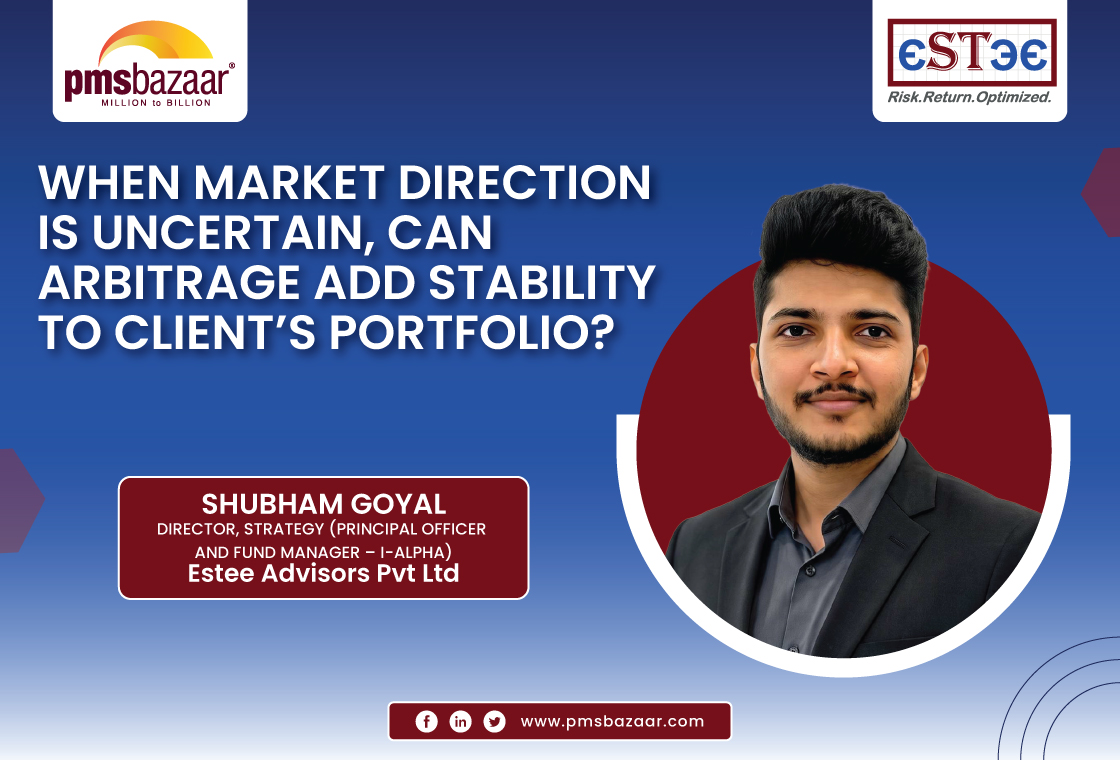
When Market Direction Is Uncertain, Can Arbitrage Add Stability to Client's Portfolio?
PMS Bazaar recently organised a webinar titled “When Market Direction Is Uncertain, Can Arbitrage Add Stability to Client's Portfolio?” which featured Mr. Sandeep Tyagi, Founder & Chairman, Estee Advisors and Mr. Shubham Goyal, Director, Strategy, (Principal Officer and Fund Manager - I-Alpha), Estee Advisors Pvt. Limited. This blog covers the important points shared in this insightful webinar.
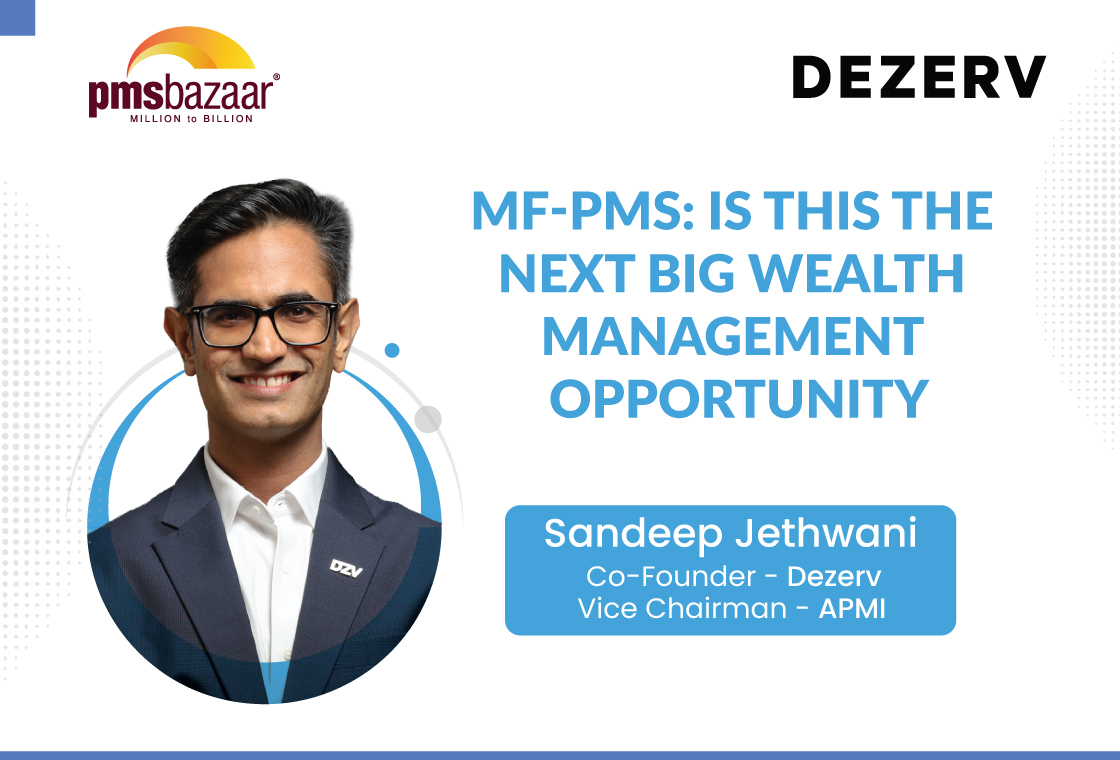
MF-PMS: Is This the Next Big Wealth Management Opportunity
PMS Bazaar recently organised a webinar titled “MF-PMS: Is This the Next Big Wealth Management Opportunity,” which featured Mr. Sandeep Jethwani, Co-Founder, Dezerv & Vice Chairman, APMI.

PMS Performance: Over 94% of Tracked Strategies Beat Nifty 50 TRI
Global markets remained under pressure in August 2026 as geopolitical tensions, rising bond yields and elevated crude oil prices kept investors cautious.

The Next Alpha Cycle: How Should Investors Position ‘Alternatives’ in Their Portfolios?
PMS Bazaar recently organized a webinar titled “The Next Alpha Cycle: How Should Investors Position ‘Alternatives’ in Their Portfolios,” which featured Mr. Akhil Chaturvedi, ED & CBO, Motilal Oswal AMC. This blog covers the important points shared in this insightful webinar.
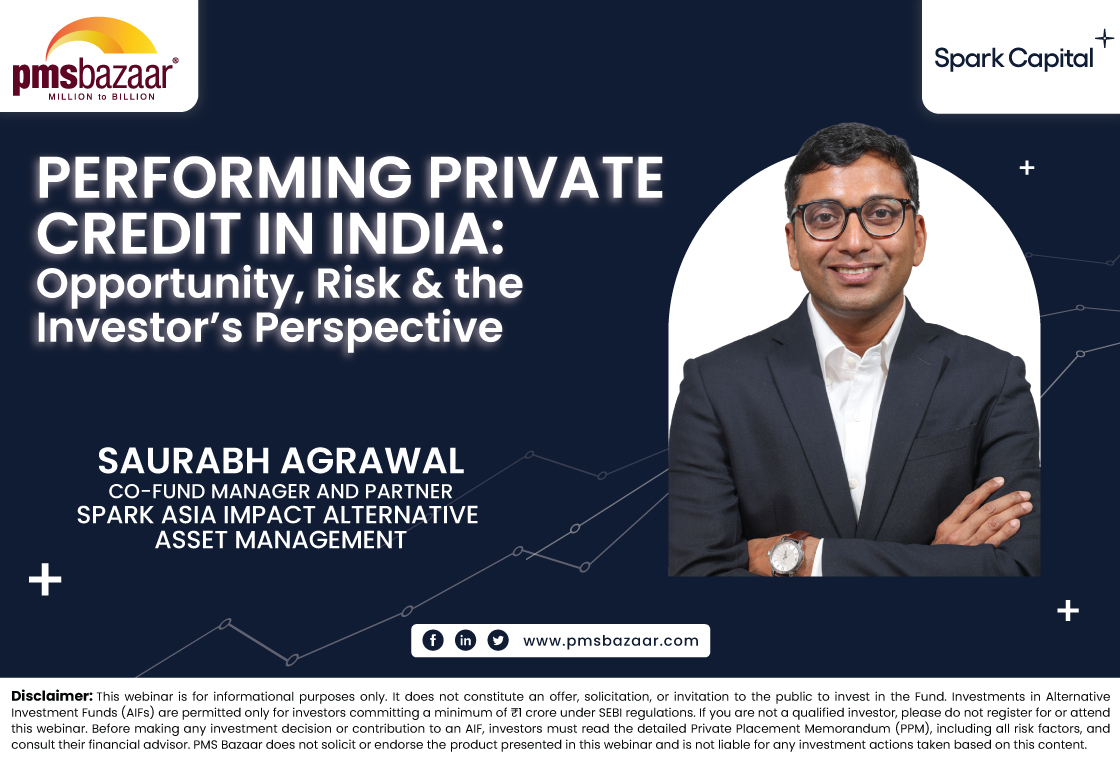
Performing Private Credit in India: Opportunity, Risk & the Investor’s Perspective
PMS Bazaar recently organised a webinar titled “Performing Private Credit in India: Opportunity, Risk & the Investor’s Perspective,” which featured Mr Saurabh Agrawal, Co-Fund Manager and Partner, Spark Asia Impact Alternative Asset Management.
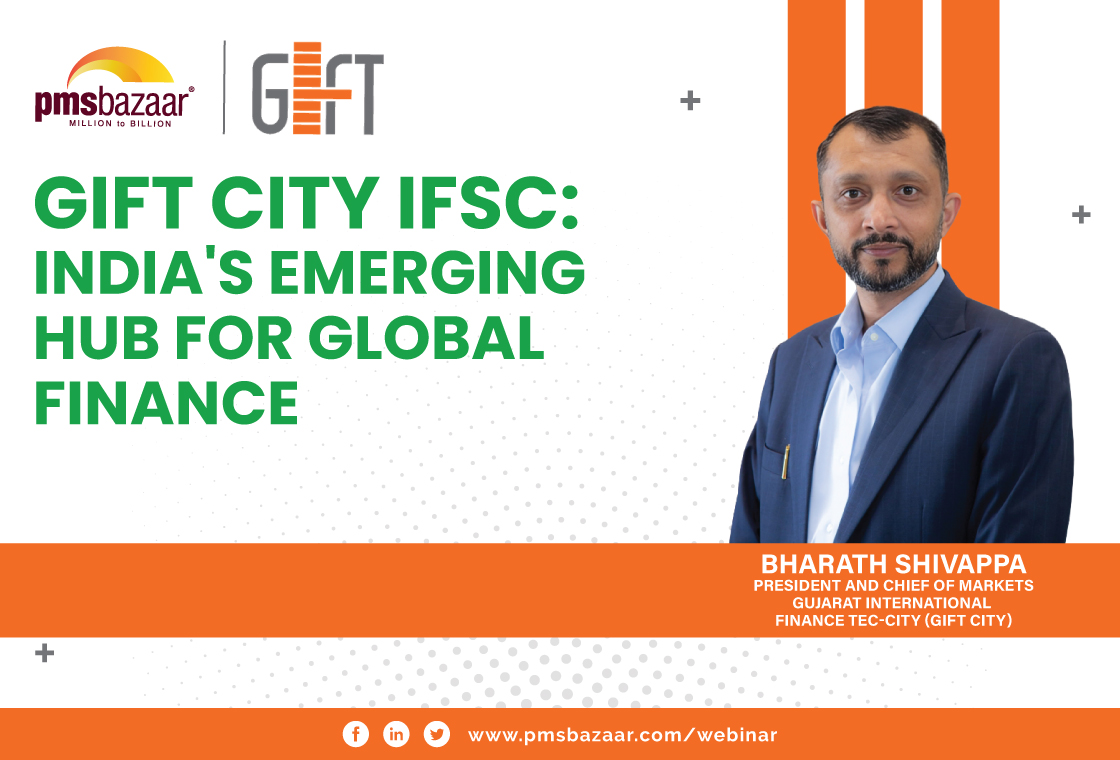
GIFT City IFSC: India's Emerging Hub for Global Finance
PMS Bazaar recently organized a webinar titled “GIFT City IFSC: India's Emerging Hub for Global Finance,” which featured Mr. Bharath Shivappa, President & Chief of Markets, Gujarat International FinanceTec-City. This blog covers the important points shared in this insightful webinar.
PMS Performance: Who Outperformed in July 2026?
July 2026 was another month marked by uncertainty, with market performance shaped by evolving global cues and shifting investor sentiment. Despite the uncertain environment, equity PMS strategies continued to present opportunities, with several managers delivering returns ahead of the broader market benchmarks.