

PMS Bazaar recently organized a webinar titled “Passively Active Investing — A Modern Investor’s Lens on ETF-Based PMS,” which featured Mr. Karan Bhatia, Co-Founder and Co-Fund Manager , Pricebridge Honeycomb ETF PMs. This blog covers the important points shared in this insightful webinar.
.jpg)
The webinar blog covers insights from Mr.Bhatia,which includes India’s evolving investment landscape, focusing on the shift from active to passive strategies. It explained why active funds often underperform, the benefits of low-cost ETFs, and how investors can build diversified, disciplined portfolios. Insights included combining passive investing with risk management, strategic asset allocation, and rebalancing to achieve steady long-term returns.
Key aspects covered in this webinar blog are
- The harsh reality of active management
- The cost of investing: why every basis point matters
- A growing ecosystem: India vs. the world
- How to build a robust ETF portfolio
- Delivering alpha through "active-passive" management
- The future of passive management: insights from Mr. Karan Bhatia
- Why professional management for "simple" ETFs?
- The role of volatility and liquidity
- Strategic asset allocation: the case for silver
- Risk management vs. alpha generation
- The road ahead for Indian investors
Summary: Mr. Karan Bhatia highlighted the growing shift from active to passive investing in India, citing consistent underperformance of active funds and the long-term impact of high costs. He emphasised ETFs as a low-cost, transparent way to build diversified portfolios. By combining passive products with active risk management, strategic asset allocation, and disciplined rebalancing, investors can aim for stable returns with modest alpha, while managing volatility and long-term wealth efficiently.
Mr. Karan Bhatia started the session by detailing the evolving landscape of Indian finance, He shared a compelling case for the transition from active to passive investment strategies. Addressing an audience of informed investors, he began by clarifying the fundamental distinctions between these two worlds. While active management relies on the strategic decision-making of fund managers to buy, sell, and hold assets to beat the market, passive investing offers a structured, low-cost way to gain exposure to the broader market by simply mimicking an index.
The Harsh Reality of Active Management
Mr. Bhatia was quick to dismantle the popular belief that active fund managers consistently deliver superior returns. He noted that while the intent of active management is to outperform, the reality is often the opposite. To support this, he presented data from the SPIVA India report, which has tracked fund performance since the early 2000s.
The findings were stark: a vast majority of Indian equity mutual funds have underperformed their respective benchmarks over long horizons. Mr. Bhatia highlighted that as the time period increases—to five or ten years—the degree of underperformance becomes even more significant. For example, in the large-cap segment, the underperformance rate reached 93% over five years and 74% over ten years. He emphasized that even if a few managers outperform in the short term, maintaining that lead over a decade is an incredibly difficult task that very few achieve.
The Cost of Investing: Why Every Basis Point Matters
Beyond the difficulty of beating the market, Mr. Bhatia identified cost as the second major driver for switching to passive products. He explained that the Total Expense Ratio (TER) creates a significant drag on active fund returns.
Using a practical example, he compared a regular mutual fund to an ETF. If an investor puts ₹100 into a direct large-cap fund, roughly ₹1.5 might go toward fees. In contrast, an ETF might only charge ₹0.04. While these numbers seem small, Mr. Bhatia stressed the power of compounding. Over decades, these lower fees mean more capital remains invested, potentially resulting in a difference of lakhs or even crores in the final corpus. He noted that many investors fail to realize that their ultimate goal should be returns net of expenses, not just gross returns.
A Growing Ecosystem: India vs. The World
The discussion then turned to the rapid growth of the passive market in India. Mr. Bhatia shared that India’s passive Assets Under Management (AUM) is currently between ₹12 and ₹13 lakh crores, representing about 17% of the total market share. While this growth is impressive—up from just 1–3% a decade ago—it still pales in comparison to matured markets.
In the U.S., the ETF ecosystem has reached approximately $12.7 trillion, accounting for over 50% of market activity. Mr. Bhatia noted that while India is still at a nascent stage, the trend is clear. Regulatory shifts, such as the EPFO increasing its ETF allocation from 5% to 15% and the introduction of Total Return Index (TRI) benchmarking, have paved the way for more transparent and efficient passive investing.
How to Build a Robust ETF Portfolio
For investors wondering how to implement these ideas, Mr. Bhatia described ETFs as a "platter" of opportunities. He explained that investors can now gain exposure not just to broad market indices like the Nifty 50, but also to specific sectors (Banking, IT, Pharma), themes (EVs, Defense, Tourism), and even strategy-based indices like Quality or Value.
However, he cautioned that not all ETFs are created equal. He advised investors to evaluate three critical factors:
- Expense Ratio: Prioritizing the lowest cost to maximize long-term gains.
- Liquidity: Monitoring the bid-ask spread on the exchange to ensure efficient entry and exit.
- Tracking Error: Checking how closely the ETF’s returns actually follow the benchmark. He noted that a fund with a lower tracking error is often preferable, even if its expense ratio is slightly higher.
Delivering Alpha through "Active-Passive" Management
Finally, Mr. Bhatia addressed a common question: can a passive portfolio still deliver alpha? His answer was a resounding yes, but through risk management rather than stock picking.
Sharing insights from his work at PriceBridge, he explained how an "all-weather" portfolio can be constructed using passive products across domestic equity, foreign equity, debt, and precious metals like silver. By actively managing position sizes and rebalancing based on market cycles—such as switching from FMCG to Metals and Oil & Gas when the latter show stronger momentum—investors can mitigate risk and potentially generate an extra 1–2% alpha.
Mr. Bhatia concluded by emphasizing that the goal isn't to take undue risks or overexpose oneself to a single stock, but to use the efficiency of ETFs to build a disciplined, diversified, and cost-effective path to long-term wealth.
The Future of Passive Management: Insights from Mr. Karan Bhatia
In a candid follow-up discussion, Mr. Karan Bhatia addressed the nuances of managing a robust Exchange Traded Fund (ETF) portfolio. While he initially joked about not being a public speaker, his detailed breakdown of the "active-passive" strategy provided a clear roadmap for investors looking to navigate the burgeoning Indian ETF market.
Why Professional Management for "Simple" ETFs?
A common query from investors is why they should employ a fund manager for products they can buy with a single click on their phones. Mr. Bhatia explained that while ETFs are easy to purchase, they are rarely "sold" by traditional distributors because low costs mean low commissions.
He clarified that the value of professional management lies in sophisticated research systems and quant models. While a retail investor might buy and hold, a professional manager makes strategic switches across asset classes and sectoral themes to manage risk—decisions that require deep market insight and constant monitoring.
The Role of Volatility and Liquidity
Addressing concerns about intraday volatility, Mr. Bhatia argued that it can actually be a tool for advantage. He recounted an instance involving a silver ETF where his team used an intraday price spike to sell a portion of their holdings at ₹179 per unit, only for the ETF to close the day at ₹168.
On the topic of liquidity, he noted that as the Indian market matures, execution efficiency is improving. He highlighted that SEBI now allows "basket buying" directly from Asset Management Companies (AMCs) for large-ticket investors. This means that scaling a portfolio from ₹500 crores to ₹2,000 crores is no longer a challenge, as the underlying liquidity in the ETF space continues to grow exponentially.
Strategic Asset Allocation: The Case for Silver
Mr. Bhatia shared that his current allocation is heavily tilted toward silver over gold. While both serve as hedges against inflation and currency risk, he prefers silver due to its extensive industrial applications in high-growth sectors like EVs, solar energy, and semiconductors.
"If you believe that most cars in the world will eventually be electric, silver is a vital investment allocation to hold," he remarked.
Risk Management vs. Alpha Generation
A key distinction Mr. Bhatia made is that his team does not act as "active" managers in the traditional sense of chasing high-risk stocks for massive returns. Instead, they are active risk managers. Their goal is to exit sectors with high downside risk and remain in those where risk is minimal.
He noted that the aim is not to deliver "ridiculous" figures but to provide returns close to the benchmark with a consistent 1–2% alpha, achieved by keeping the portfolio's beta (risk) lower than the benchmark itself.
The Road Ahead for Indian Investors
Looking at the numbers, Mr. Bhatia is highly optimistic. He pointed out that ETF folios in India grew from 18 lakhs in 2020 to a staggering 1.4 crores in 2025. With household savings increasingly shifting toward equities, he predicts that 25% of the next 10 crore investors in India will be passive investors.
Mr. Bhatia concluded by emphasizing that while he doesn't have a "one-size-fits-all" model, a typical portfolio might hold 10 to 15 ETFs, tailored to when an investor enters the market. By focusing on low tracking errors and disciplined rebalancing—typically 10–15% every six months—investors can build a reliable path to long-term wealth.
Mr. Bhatia covered all the topics mentioned above in-depth and answered questions from the audience toward the end of the session. For more such insights on this webinar, watch the recording of this insightful session through the appended link below.
Get access to rich data and analytics of PMS & AIF by subscribing to us. Join the 75000+ investors & experts: Subscribe NOW
Recent Blogs
PMS Performance : 401 Equity PMS Beat the Nifty 50 TRI
September 2026 saw global markets grapple with persistent macroeconomic uncertainty, as rising U.S. bond yields, crude oil prices above $90 per barrel and escalating Middle East tensions kept investors on edge. Concerns over renewed inflationary pressures and tighter financial conditions continued to shape market sentiment. The reported 25-basis-point Federal Reserve rate hike, bringing rates to 3.75–4.00 per cent, added another dimension to the evolving global outlook.
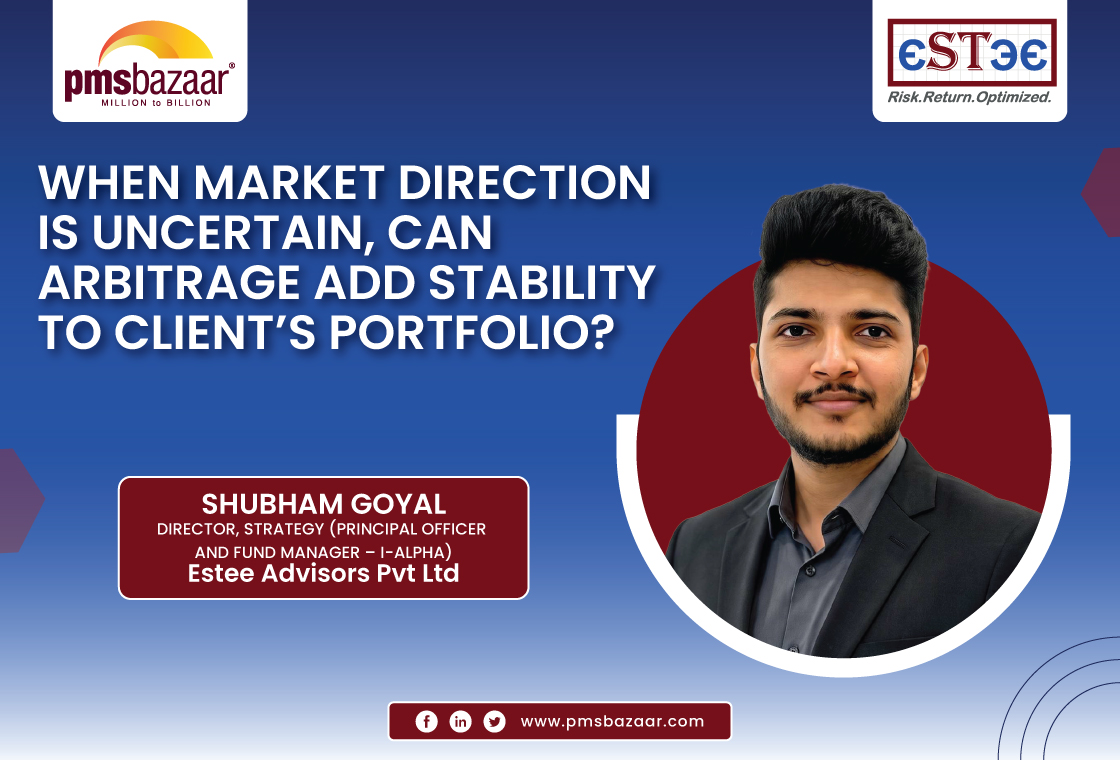
When Market Direction Is Uncertain, Can Arbitrage Add Stability to Client's Portfolio?
PMS Bazaar recently organised a webinar titled “When Market Direction Is Uncertain, Can Arbitrage Add Stability to Client's Portfolio?” which featured Mr. Sandeep Tyagi, Founder & Chairman, Estee Advisors and Mr. Shubham Goyal, Director, Strategy, (Principal Officer and Fund Manager - I-Alpha), Estee Advisors Pvt. Limited. This blog covers the important points shared in this insightful webinar.
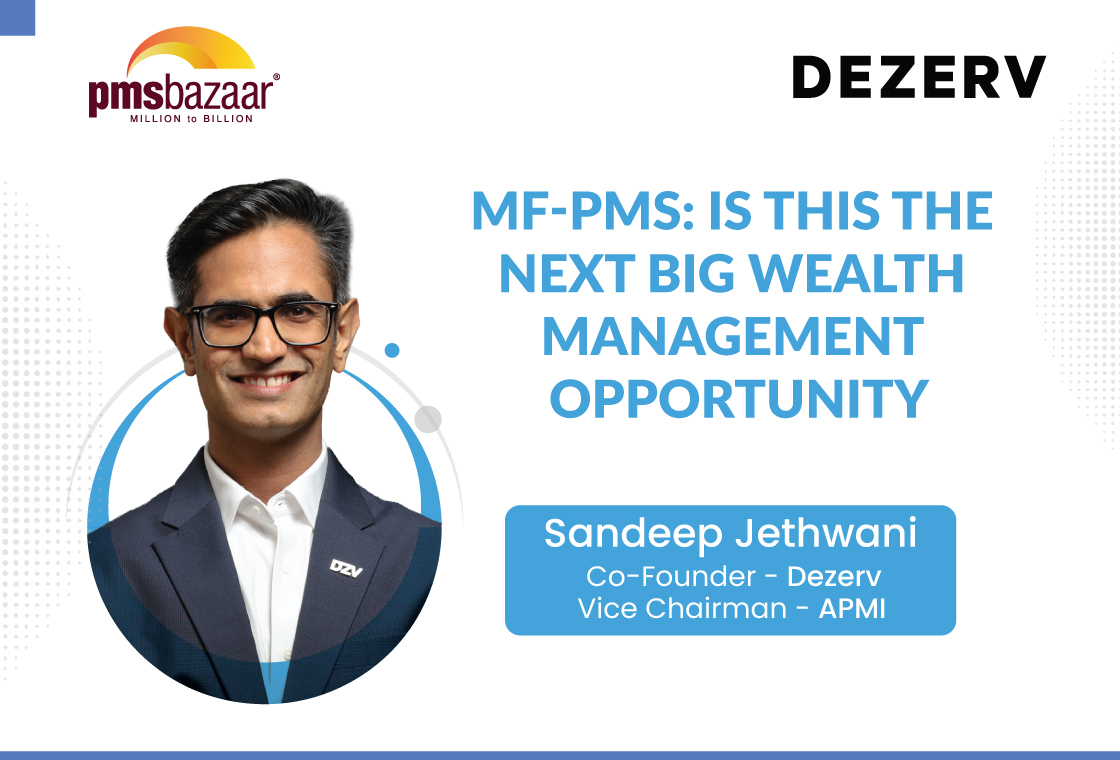
MF-PMS: Is This the Next Big Wealth Management Opportunity
PMS Bazaar recently organised a webinar titled “MF-PMS: Is This the Next Big Wealth Management Opportunity,” which featured Mr. Sandeep Jethwani, Co-Founder, Dezerv & Vice Chairman, APMI.

PMS Performance: Over 94% of Tracked Strategies Beat Nifty 50 TRI
Global markets remained under pressure in August 2026 as geopolitical tensions, rising bond yields and elevated crude oil prices kept investors cautious.

The Next Alpha Cycle: How Should Investors Position ‘Alternatives’ in Their Portfolios?
PMS Bazaar recently organized a webinar titled “The Next Alpha Cycle: How Should Investors Position ‘Alternatives’ in Their Portfolios,” which featured Mr. Akhil Chaturvedi, ED & CBO, Motilal Oswal AMC. This blog covers the important points shared in this insightful webinar.
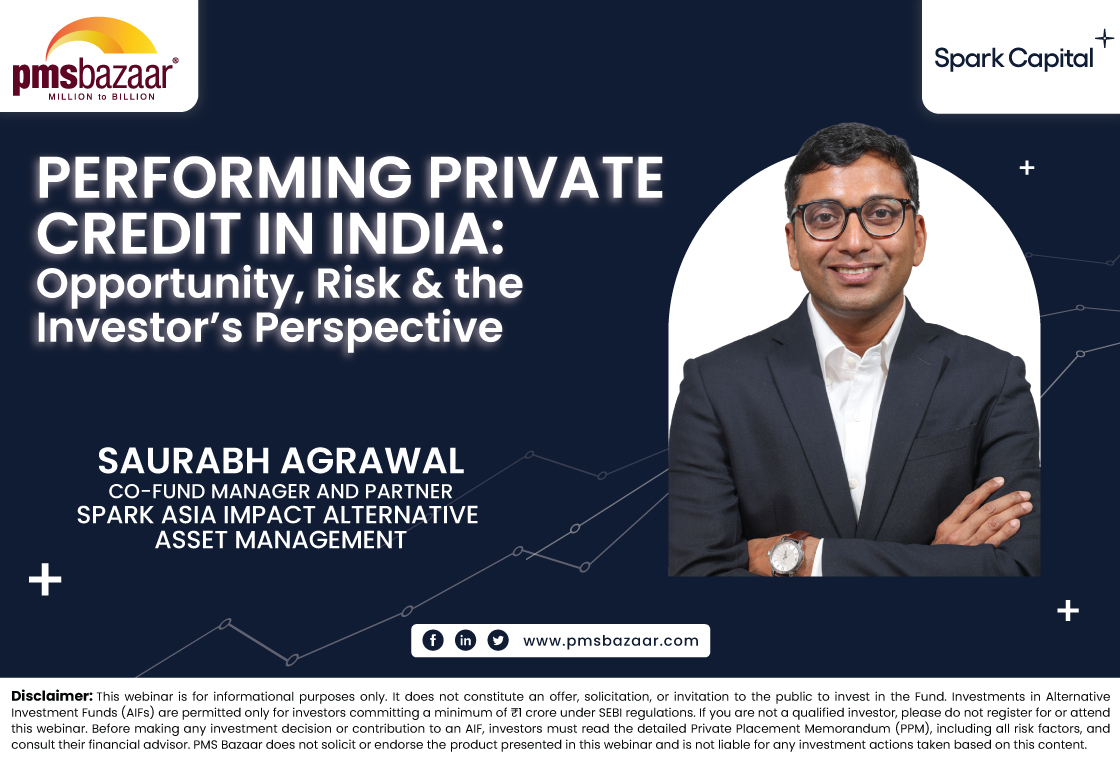
Performing Private Credit in India: Opportunity, Risk & the Investor’s Perspective
PMS Bazaar recently organised a webinar titled “Performing Private Credit in India: Opportunity, Risk & the Investor’s Perspective,” which featured Mr Saurabh Agrawal, Co-Fund Manager and Partner, Spark Asia Impact Alternative Asset Management.
GIFT City IFSC: India's Emerging Hub for Global Finance
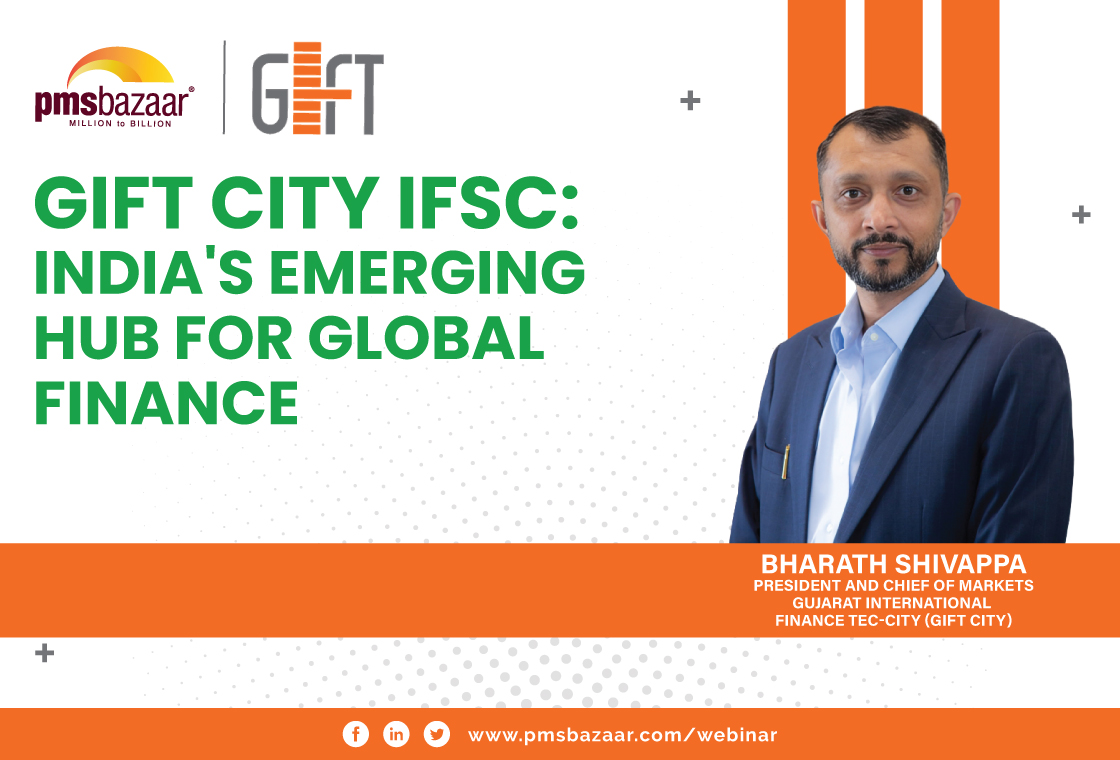
PMS Bazaar recently organized a webinar titled “GIFT City IFSC: India's Emerging Hub for Global Finance,” which featured Mr. Bharath Shivappa, President & Chief of Markets, Gujarat International FinanceTec-City. This blog covers the important points shared in this insightful webinar.
PMS Performance: Who Outperformed in July 2026?
July 2026 was another month marked by uncertainty, with market performance shaped by evolving global cues and shifting investor sentiment. Despite the uncertain environment, equity PMS strategies continued to present opportunities, with several managers delivering returns ahead of the broader market benchmarks.