

PMS Bazaar recently organized a webinar titled “Finding Clarity in Volatile Markets: A Large-Cap Led ASK CORE Strategy,” which featured Mr.Anunaya Kumar, President – Sales and Distribution ASK Investment Managers Limited. This blog covers the important points shared in this insightful webinar.
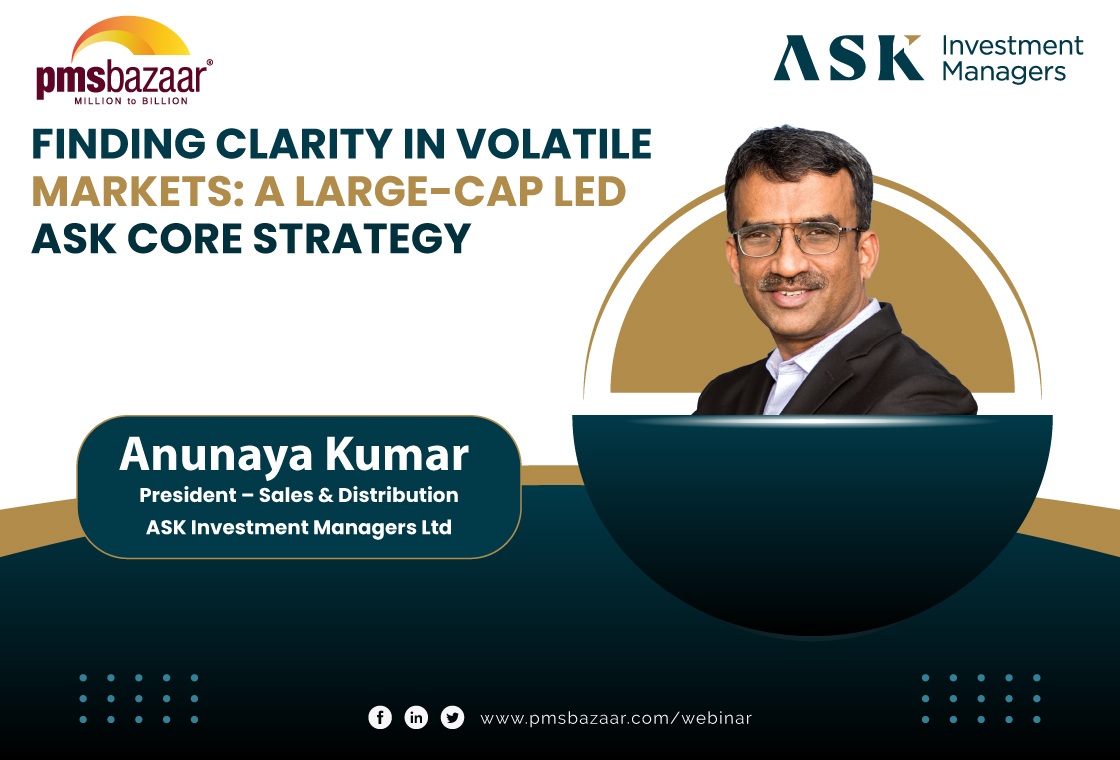
The webinar blog covers insights from Mr. Kumar,which includes, as to why Indian investors should shift focus from volatile mid- and small-cap stocks to stable large-cap companies. He highlights India’s economic strength, changing global capital flows, and the benefits of risk-adjusted investing. Mr Kumar promotes a disciplined, high-conviction large-cap strategy as a smarter way to manage volatility and build long-term wealth in FY26 and beyond.
Key aspects covered in this webinar blog are
- The currency factor and FII exit
- The strategic case for large-cap stocks
- Precision over diversification: the “core” philosophy
- A disciplined framework for future wealth
- The decadal shift toward large-cap stability
- India’s changing position in global markets
- Why large-caps offer a safety net against drawdowns
- Strategy in focus: concentration and conviction
- The mantra for FY26: transparency and simplicity
Summary: India’s investment narrative is shifting from speculative mid- and small-caps toward resilient large-caps. With India sustaining ~6.5% growth, improving earnings and manageable deficits, large-caps now offer better risk-adjusted returns amid global fragility. FIIs may return as currency risks stabilise and valuations look attractive. Low institutional ownership and historical drawdown resilience strengthen the case. A focused, high-conviction large-cap strategy prioritising fundamentals, margin of safety and patience is emerging as the smarter approach for FY26.
Mr.Anunaya Kumar started by outlining a compelling roadmap for navigating the current fluctuations in the Indian capital markets. The discourse centered on a fundamental shift in market dynamics, suggesting that while global "big daddies" like the United States face structural fragility, India’s economic story is increasingly defined by resilient internal tailwinds and a favorable risk-reward equation within the large-cap space.
The Macro Picture: India’s Growth vs. Global Fragility
The Mr. Kumar began by establishing the stark contrast between the Indian economy and its global peers. He noted that from a Gross Domestic Product (GDP) and fiscal deficit perspective, India presented an extremely promising narrative. Despite global headwinds, India remains one of the few major economies capable of sustaining a growth rate of 6.5%. He highlighted that the nation’s fiscal deficit remained within manageable limits, a factor that has directly fueled robust earnings growth. The data shared indicated a significant acceleration in corporate earnings. From the period of FY18 to FY21, the Compound Annual Growth Rate (CAGR) stood at a modest 6%. However, this rate has more than doubled to 13%, with projections suggesting this momentum will carry through from FY25 to FY28.
Conversely, the Mr. Kumar pointed out that the United States is currently navigating a "rough patch." With a widening fiscal and current account deficit and inflation hovering at 2.5%—well above the Federal Reserve's 2% comfort zone—the US economy appears increasingly fragile. He suggested that what serves as a headwind for the US is effectively becoming a tailwind for India, as capital seeks more stable and growth-oriented environments.
The Currency Factor and the FII Exit
A significant portion of the discussion was dedicated to the behavior of Foreign Institutional Investors (FIIs). The Mr. Kumar observed that FIIs have been in a "flight to safety" mode, deserting emerging markets in favor of developed economies. This trend resulted in a negative flow of approximately 16 billion dollars in the current fiscal year (FY25).
This exodus has put pressure on the Indian Rupee, which depreciated from the 84.5 level in May 2025 to over 91. However, the Mr. Kumar offered a counter-intuitive perspective, suggesting that this depreciation actually addresses a major investment hurdle: currency risk. At a level of 91 or 91.5, the large-scale risk of further sudden depreciation is largely mitigated. This allows institutional investors to pivot their focus away from currency concerns and back toward fundamental market risks, potentially paving the way for a reversal in capital flows.
The Strategic Case for Large-Caps
The expert made a forceful case for large-cap stocks as the primary vehicle for navigating current volatility. He argued that large-caps offer a unique proposition of resilience and stability. Historical data from major market shocks—including the Lehman crisis, the 2G scam, the COVID-19 pandemic, and the Russia-Ukraine conflict—demonstrate that large-caps consistently experience the lowest drawdowns.
Despite this resilience, the Mr. Kumar revealed that large-cap ownership is currently at a two-decade low. While the 20-year average for institutional ownership in large-caps is around 58%, it currently sits at just 50%. In contrast, mid-cap and small-cap ownership levels are significantly stretched, leading to valuations that are nearly 50% more expensive than their larger counterparts.
The Mr. Kumar noted that as of November, the BSE 100 (representing large-caps) had delivered returns of nearly 8%, while mid and small-cap indices were either flat or negative. He predicted that this outperformance would become even more pronounced as the year concludes.
Precision Over Diversification: The "CORE" Philosophy
Rather than simply tracking an index like the Nifty 50, which the Mr. Kumar noted is often split 50/50 between outperformers and underperformers, he advocated for a high-conviction, concentrated approach. He introduced the "ASK Core Portfolio," where "CORE" stands for Conviction-oriented Risk-adjusted Equity.
This strategy is built on several strict pillars:
- Concentration: The portfolio never exceeds 15 stocks to ensure every position is backed by high conviction.
- Cap Discipline: At least 70% of the portfolio is always anchored in large-caps, though up to 30% can move into other caps if the opportunity arises. Currently, the portfolio is 100% large-cap due to the superior margin of safety.
- Sectoral Guardrails: No single sector exceeds 25%, with the exception of BFSI, which can go up to 40%.
- Active Weights: The Mr. Kumar emphasized the importance of active weights—the difference between the portfolio weight and the index weight. For instance, if the team has high conviction in a stock like Bajaj Finserv, they might assign it an active weight of 7.7% compared to its 1% weight in the BSE 100.
A Disciplined Framework for Future Wealth
The session concluded with an explanation of the "FOCUS" and "MFS" frameworks used to select these 15 bright ideas. The "FOCUS" philosophy prioritizes Fundamentals, Opportunity size, Cycle awareness, Unique moats (technology or brand), and a strict Margin of Safety.
The "MFS" framework (Macro, Fundamental, Sentiment) ensures a top-down and bottom-up integration. The team analyzes over 750 companies, with roughly 475 under active research, to identify businesses with superior governance, profitability, and industry positioning.
The Mr. Kumar maintained that while concentration carries inherent risks and requires a 4-to-5-year patient time horizon, it is the most effective way to capture alpha in a volatile market. He suggested that as "risk-on" trades eventually return, the initial wave of global liquidity will inevitably flow into these well-valued, resilient large-cap leaders first. For the modern investor, shifting from a pure wealth-creation mindset to a "return-adjusted-to-risk" approach is no longer optional—it is the core of effective wealth management.
The Decadal Shift: Why "Boring" is the New Intelligent for FY26
In a forward-looking dialogue exploring India’s position on the global investment map, a senior investment strategist from ASK shared a provocative thesis: the era of chasing "hidden jewels" in small and mid-cap sectors is yielding to a decadal shift toward large-cap stability. Addressing a gathering of advisors and investors, the Mr. Kumar argued that navigating the transition from 2025 to 2026 requires a fundamental change in perspective—moving away from the high-octane excitement of the last four years and embracing a "boring but intelligent" approach to wealth creation.
India’s Global Context: From Back Foot to Tailwind
The discussion began by addressing why India seemed to underperform or remain flat relative to the MSCI Emerging Markets Index recently. The expert noted that a significant global "AI play" had dominated emerging market flows, a trend in which India was not a primary participant. This, combined with India’s relatively high valuations and a perceived slowdown in its growth path, kept the market on the back foot as institutional investors prioritized geographical allocations where valuations felt more supportive.
However, the strategist posited that the tide is turning. He suggested that the global obsession with AI may have become fundamentally overplayed. As global markets look for a mean reversion and more grounded fundamentals, India’s "expensive" tag is being mitigated by the fact that large-cap stocks have remained static for years, effectively undergoing a "time correction." He predicted that while FY25 saw a massive $16 billion exit by Foreign Institutional Investors (FIIs), FY26 could see a dramatic reversal. Interestingly, he pointed out that while FIIs were selling in the listed space, they were simultaneously committing equal capital to India’s unlisted markets, signaling long-term faith in the economy.
The Myth of the Drawdown: Why Large-Caps Offer a Safety Net
When questioned about the potential for drawdowns in a relatively new concentrated strategy, the Mr. Kumar redirected the focus toward institutional ownership patterns. He revealed that large-cap ownership is currently at a two-decade low—roughly 50% compared to a 20-year average of 58%. Because large-caps have delivered flat to negative returns over the last four to five years, the "bubble" risk is nonexistent in this space.
In contrast, mid and small-cap stocks are trading at nearly 50% premiums to their historical averages. The expert warned that these segments are ripe for either a "price correction" or a painful "time correction," where stock prices remain range-bound for years while earnings slowly catch up to inflated expectations. By staying anchored in large-caps, investors are essentially moving into a space that has already seen its period of underperformance and is now positioned as a primary recipient of returning institutional flows.
Strategy in Focus: Concentration and Conviction
The strategist defended the highly concentrated nature of the "ASK Core" portfolio, which limits itself to just 15 stocks. He argued that in a market where roughly half of the Nifty 50 underperforms the index itself, diversification can often lead to mediocrity. High conviction must be demonstrated through "active weights"—taking significant positions in high-quality businesses like those in the BFSI (Banking, Financial Services, and Insurance) sector, where the fund allows exposure up to 40%.
Addressing concerns about portfolio churn, the Mr. Kumar explained that turnover would remain low. In the large-cap universe, business models are established and earnings are predictable. Unless the original investment thesis is defeated or a stock "moves too fast, too soon," the strategy prioritizes stability.
The Mantra for 2026: Transparency and Simplicity
The session concluded with a powerful message on investor psychology and professional ethics. The expert urged advisors to be transparent about risks and to include clients in the educational process rather than treating them as passive signatories. He noted that in a digital world with infinite information, honesty and simplicity are the keys to building lasting trust.
"At times, being simple is also being different," he remarked. He challenged the "herd mentality" that seeks excitement in volatile small-caps, suggesting that true intelligence lies in recognizing when the market is shifting. For FY26, he believes the winning approach will be to capitalize on the "boring" reliability of India’s corporate giants. He left the audience with a final piece of advice: wealth on paper is not real until it is capitalized. Booking profits from overstretched mid-caps and realigning to a "risk-adjusted" large-cap core is the most efficient way to stay ahead of the curve.
Mr. Kumar covered all the topics mentioned above in-depth and answered questions from the audience toward the end of the session. For more such insights on this webinar, watch the recording of this insightful session through the appended link below.
Get access to rich data and analytics of PMS & AIF by subscribing to us. Join the 90000+ investors & experts: Subscribe NOW
Recent Blogs
PMS Performance : 401 Equity PMS Beat the Nifty 50 TRI
September 2026 saw global markets grapple with persistent macroeconomic uncertainty, as rising U.S. bond yields, crude oil prices above $90 per barrel and escalating Middle East tensions kept investors on edge. Concerns over renewed inflationary pressures and tighter financial conditions continued to shape market sentiment. The reported 25-basis-point Federal Reserve rate hike, bringing rates to 3.75–4.00 per cent, added another dimension to the evolving global outlook.
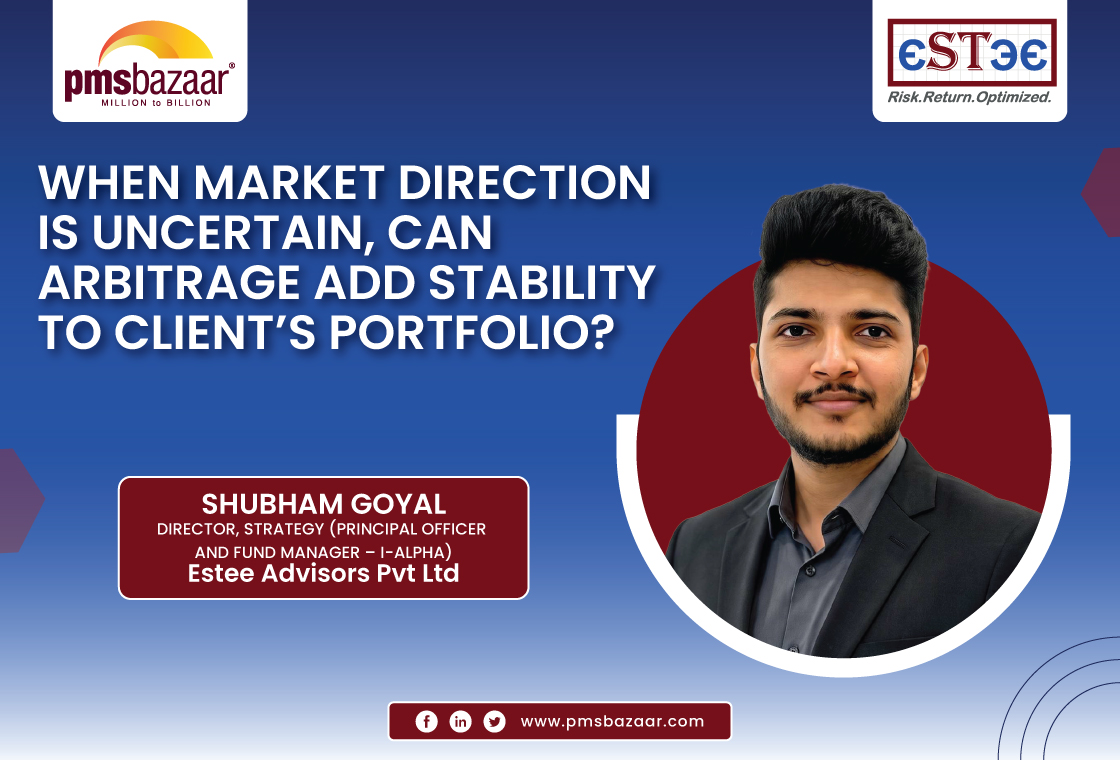
When Market Direction Is Uncertain, Can Arbitrage Add Stability to Client's Portfolio?
PMS Bazaar recently organised a webinar titled “When Market Direction Is Uncertain, Can Arbitrage Add Stability to Client's Portfolio?” which featured Mr. Sandeep Tyagi, Founder & Chairman, Estee Advisors and Mr. Shubham Goyal, Director, Strategy, (Principal Officer and Fund Manager - I-Alpha), Estee Advisors Pvt. Limited. This blog covers the important points shared in this insightful webinar.
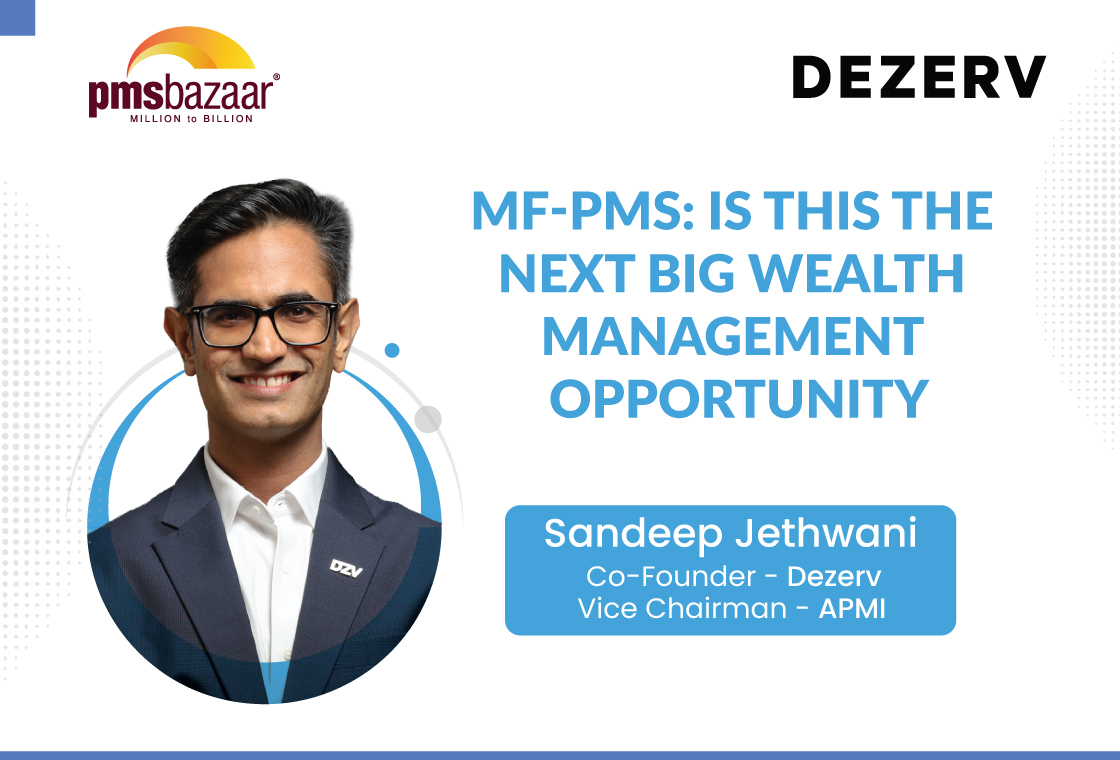
MF-PMS: Is This the Next Big Wealth Management Opportunity
PMS Bazaar recently organised a webinar titled “MF-PMS: Is This the Next Big Wealth Management Opportunity,” which featured Mr. Sandeep Jethwani, Co-Founder, Dezerv & Vice Chairman, APMI.

PMS Performance: Over 94% of Tracked Strategies Beat Nifty 50 TRI
Global markets remained under pressure in August 2026 as geopolitical tensions, rising bond yields and elevated crude oil prices kept investors cautious.

The Next Alpha Cycle: How Should Investors Position ‘Alternatives’ in Their Portfolios?
PMS Bazaar recently organized a webinar titled “The Next Alpha Cycle: How Should Investors Position ‘Alternatives’ in Their Portfolios,” which featured Mr. Akhil Chaturvedi, ED & CBO, Motilal Oswal AMC. This blog covers the important points shared in this insightful webinar.
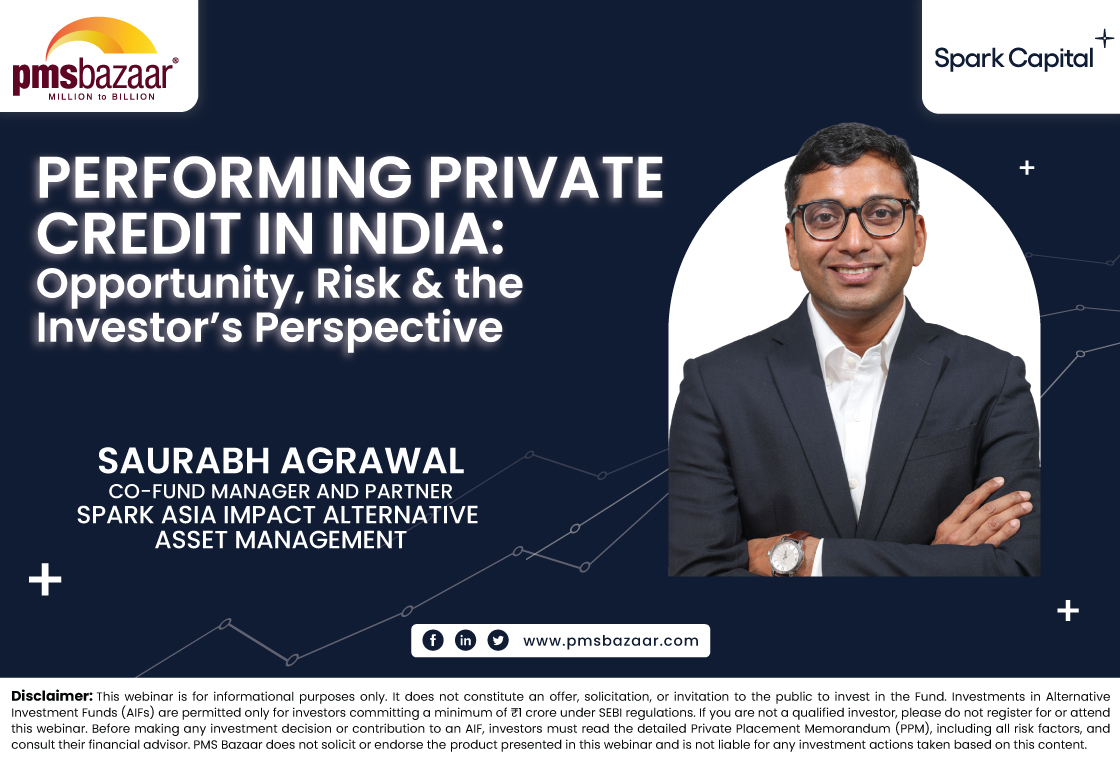
Performing Private Credit in India: Opportunity, Risk & the Investor’s Perspective
PMS Bazaar recently organised a webinar titled “Performing Private Credit in India: Opportunity, Risk & the Investor’s Perspective,” which featured Mr Saurabh Agrawal, Co-Fund Manager and Partner, Spark Asia Impact Alternative Asset Management.
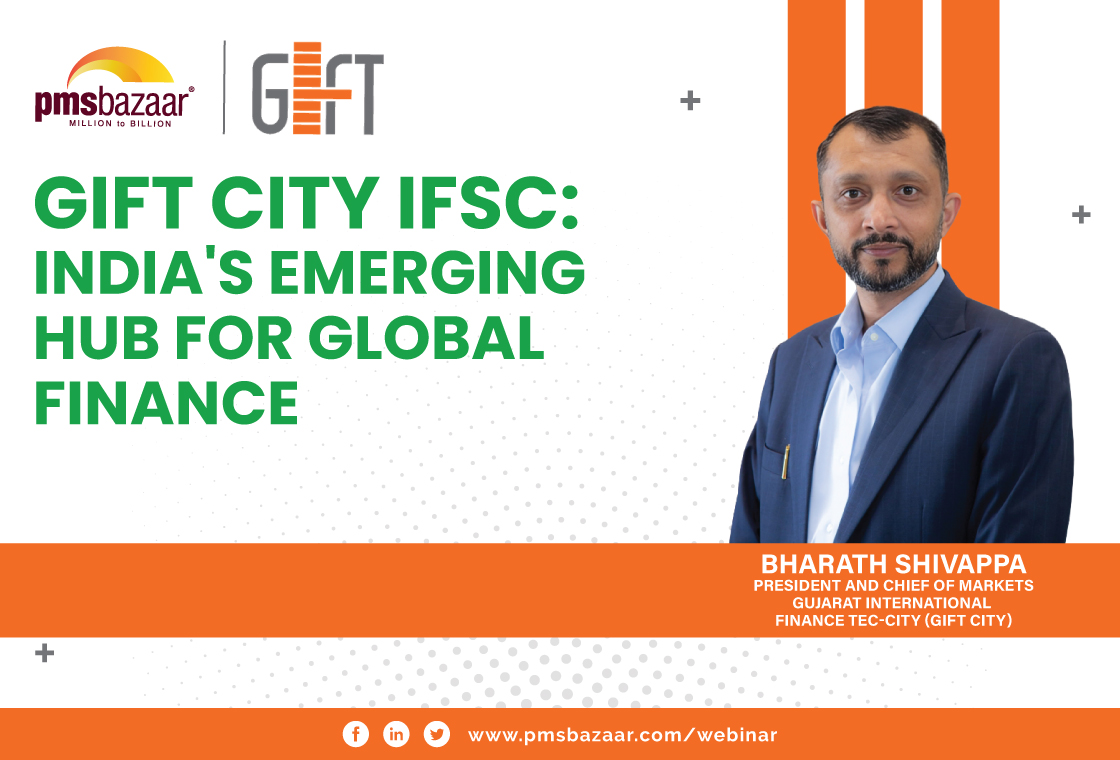
GIFT City IFSC: India's Emerging Hub for Global Finance
PMS Bazaar recently organized a webinar titled “GIFT City IFSC: India's Emerging Hub for Global Finance,” which featured Mr. Bharath Shivappa, President & Chief of Markets, Gujarat International FinanceTec-City. This blog covers the important points shared in this insightful webinar.

PMS Performance: Who Outperformed in July 2026?
July 2026 was another month marked by uncertainty, with market performance shaped by evolving global cues and shifting investor sentiment. Despite the uncertain environment, equity PMS strategies continued to present opportunities, with several managers delivering returns ahead of the broader market benchmarks.