

PMS Bazaar recently organized a webinar titled “MICRO CAPS: The Dark Horses of the Indian Equity Market,” which featured Mr. Rishi Agarwal and Mr. Adheesh Kabra, both Co-Founders and Fund Managers, Aarth AIF. This blog covers the important points shared in this insightful webinar.

The webinar blog covers insights from Mr. Agarwal and Mr. Kabra, which includes their journey into MSME and micro-cap fund management. It highlights their focus on promoter commitment, governance, and strategic capital deployment. Emphasizing sustainability, risk management, and long-term value creation, the discussion covers investment frameworks, portfolio strategies, pre-IPO planning, and navigating market challenges to unlock growth in India’s emerging MSME sector.
Key aspects covered in this webinar blog are
- The transition to fund management
- Solving the capital problem
- Investment frameworks: MSME vs. small cap
- The human element: a three-generation con-call
- Headwinds and the "me-too" risk
- Sector outlook: beyond AI
- The future of the platform
- Strategic portfolio construction
- Avoiding the "retail trap"
- Managing liquidity and exit discipline
Summary: The discussion with Mr. Agarwal and Mr. Kabra highlighted the challenges and opportunities in MSME and micro-cap fund management. Emphasizing sustainability, fitness, and mindfulness, they shared insights on transitioning from global finance to niche investing. They focus on governance, promoter commitment, and capital efficiency in MSMEs, aiming to unlock value through strategic entry, pre-IPO investments, and liquidity management. With a disciplined approach, the duo navigates risks, avoids market hype, and builds portfolios that balance opportunity, exit horizons, and long-term growth in India’s emerging sectors.
The Transition to Fund Management
Transitioning to the core of the discussion, Ms. Menon queried the CEOs about their shift from global institutional backgrounds into the specialized world of MSME and micro-cap fund management.
Mr. Kabra, a Chartered Accountant by training, explained that his profession is built on the ability to look "beyond the numbers." For him, analyzing balance sheets and understanding business mechanics is second nature. He shared his deep-rooted connection to the markets, having grown up watching his father run a stockbroking firm. Having witnessed market cycles since childhood, his professional journey evolved from wealth management and financial planning into active investing. He noted that he has tracked the SME segment since its inception in 2012, recalling that the first company to enter the segment hailed from Jaipur. Watching the platform grow from a niche space to a robust market with over 1,500 listed companies solidified his passion for identifying value in hidden gems.
"The real Indian growth story is happening in the MSME space. We have not even scratched the surface of its potential." — Mr. Adheesh Kabra
Solving the Capital Problem
Mr. Agarwal added that the decision to focus on this space was the result of six months of rigorous deliberation. They had to define what "micro-cap" truly meant in an era where the definition of "small-cap" has shifted to include companies with market caps exceeding ₹5,000 crores.
He explained that they were solving a fundamental problem in capital raising. While Private Equity (PE) often hunts for "disruptions" and "hundred-baggers," the MSME sector offers incremental growth across every value chain. Mr. Agarwal noted that while the NSE and BSE have hosted SME exchanges for a decade, the segment lacked institutional-level research and rigor. With the maturation of regulations and the presence of numerous merchant bankers, they believed the market was finally "ripe" for an AIF (Alternative Investment Fund) platform to bridge the gap.
Investment Frameworks: MSME vs. Small Cap
When asked how their decision-making frameworks differ between MSMEs and larger small-caps, Mr. Agarwal identified a critical "gray space": Governance.
In large-cap companies, a board consists of diverse professionals and institutional representatives. In MSMEs, businesses are often "one-man armies" or family-run operations. He argued that having family members—such as an 80-year-old mother—on the board is often a sign of a "God-fearing" promoter who is less likely to commit fraud, as their personal and family reputation is at stake.
The duo looks for:
- Focus: Is the promoter dedicated 24/7 to one segment, or are they over-diversified in non-correlated businesses?
- Value-Add: Is the capital being raised for a genuine product value-add or simply to fix a debt cycle?
- Conviction: Finding promoters who "live and breathe" their business.
The Human Element: A Three-Generation Con-Call
To illustrate the unique nature of MSME investing, Mr. Agarwal shared a story of a recent conference call with an Indore-based EPC (Engineering, Procurement, and Construction) company. The call featured three generations: the 80-year-old grandfather, two sons in their 50s, and the third generation of 25-year-old professionals.
He observed the "structure" of the family—the third generation remained respectful while the grandfather spoke of his desire to professionalize the business after COVID-19 losses. Mr. Agarwal noted that this level of "all eggs in one basket" commitment provides a level of security that cannot be quantified or bought. He famously remarked that L&T executives might not build infrastructure in the vulnerable "chicken neck" of Northeast India, but MSMEs will.
Headwinds and the "Me-Too" Risk
Looking ahead into 2026, the discussion turned to potential challenges. Mr. Agarwal warned against the "Me-Too" risk—businesses that copy the latest trends, such as solar module manufacturing, without having a unique edge. He noted that as the market becomes saturated, margins squeeze and "PE de-rating" occurs.
Other headwinds include:
- Supply Chain Disruption: Driven by geopolitical risks.
- Increased Paper Supply: A surge in IPOs leading to potential liquidity issues.
- Innovation Lag: If a company isn't using its location or individual strengths to create "alpha," it will struggle.
Sector Outlook: Beyond AI
While AI is the buzzword of the year, Mr. Agarwal views it merely as a tool for efficiency—using it to summarize DRHPs (Draft Red Herring Prospectuses) or automate financials. Instead, he pointed toward Precision Engineering and Import Substitution as the real areas of value. He highlighted the potential in robotic welding—a space currently dominated by imports—and the revival of IT through specialized innovation. He also predicted a surge in public infrastructure spending in the lead-up to the 2028 elections, which will benefit the EPC sector.
The Future of the Platform
Mr. Kabra addressed whether MSME investing is moving toward a Private Equity model. He argued that SME listing is essentially "Private Equity in a public space." He cited the record-breaking subscriptions of recent IPOs—where companies saw bids worth tens of thousands of crores—as a testament to investor confidence.
Mr. Agarwal concluded that a company is "IPO ready" the moment it can prove the math: that the capital raised will return to the balance sheet within three to five years through 2X industry growth. Whether it is through robotics or better human resource management, the goal remains the same: scaling the real engines of the Indian economy
As the conversation with Ms. Akshara Menon deepened, the focus shifted to a critical question for any investor: where is the maximum value created in the lifecycle of an MSME?
Mr. Rishi Agarwal offered a nuanced perspective, noting that risk and return must always go hand-in-hand. While a Private Equity (PE) investor might boost a 1,200x return on an IPO like Groww, he cautioned that such investors often place a hundred similar "checks" into startups that never see the light of day. He emphasized that for institutional investors in the MSME space, the goal is to mitigate the liquidity risk inherent in pre-IPO or PE funds. Unlike private markets, public markets provide a daily screen where one can exit or enter, though he admitted this is relative to the market cap of the script.
According to Mr. Agarwal, value unlock is ultimately a function of the entry price and one’s assumptions about the company’s intrinsic value three years down the line. He highlighted that the "promoter-business fit" is often more important than the initial business model. He shared an example of an IT service company that pivoted into a product-based model to avoid disruption from AI and global layoffs, proving that a promoter’s ability to disrupt their own business is a hallmark of success.
Strategic Portfolio Construction
Addressing a direct question about his specialization, Mr. Agarwal clarified that they operate as a Category 3 AIF, primarily focusing on public markets. While they can invest up to 40% in unlisted equities, they maintain a 20% benchmark for pre-IPOs.
Their strategy is driven by three factors:
- Clear Exit Horizon: A visible exit path within three years.
- Opportunity Cost: Comparing pre-IPO returns against available listed scripts.
- Liquidity Premium: Securing an entry price 30–40% below the screen price.
Currently, their portfolio consists of 15% pre-IPO investments, with the remainder listed on the exchange.
Avoiding the "Retail Trap"
Mr. Adheesh Kabra weighed in on the common mistakes made by individual investors, particularly the tendency to invest based on subscription numbers or Grey Market Premiums (GMP). He labeled such participants as "flippers" rather than investors. He advised that in the SME space, deep diving into the actual business and the promoter's time commitment is essential. His 15-year journey has taught him that if the fundamentals and numbers are strong, the price will eventually follow. He urged investors to stay invested for the long term rather than jumping between ideas based on short-term listing gains.
Managing Liquidity and Exit Discipline
When asked about the perceived lack of liquidity in MSMEs, Mr. Kabra explained that the exit strategy is the first thing they consider before investing. To manage this, they perform regular stress tests and avoid over-concentrating in scripts with scarce liquidity. He revealed that 65–70% of their current NAV consists of already booked profits, as they "churn" the portfolio based on specific price targets or time horizons.
Mr. Agarwal added that they maintain a "strategic book" of roughly 60 scripts, which they re-evaluate quarterly. To maintain a pulse on these businesses, their team of 15 analysts speaks to every promoter at least once a month. This close relationship sometimes even leads to business development, where they connect portfolio companies—such as a battery manufacturer and a laptop refurbisher—to create supply-chain matches.
Mr. Agarwal and Mr. Kabra covered all the topics mentioned above in-depth and answered questions from the audience toward the end of the session. For more such insights on this webinar, watch the recording of this insightful session through the appended link below.
Get access to rich data and analytics of PMS & AIF by subscribing to us. Join the 90000+ investors & experts: Subscribe NOW
Recent Blogs
PMS Performance : 401 Equity PMS Beat the Nifty 50 TRI
September 2026 saw global markets grapple with persistent macroeconomic uncertainty, as rising U.S. bond yields, crude oil prices above $90 per barrel and escalating Middle East tensions kept investors on edge. Concerns over renewed inflationary pressures and tighter financial conditions continued to shape market sentiment. The reported 25-basis-point Federal Reserve rate hike, bringing rates to 3.75–4.00 per cent, added another dimension to the evolving global outlook.
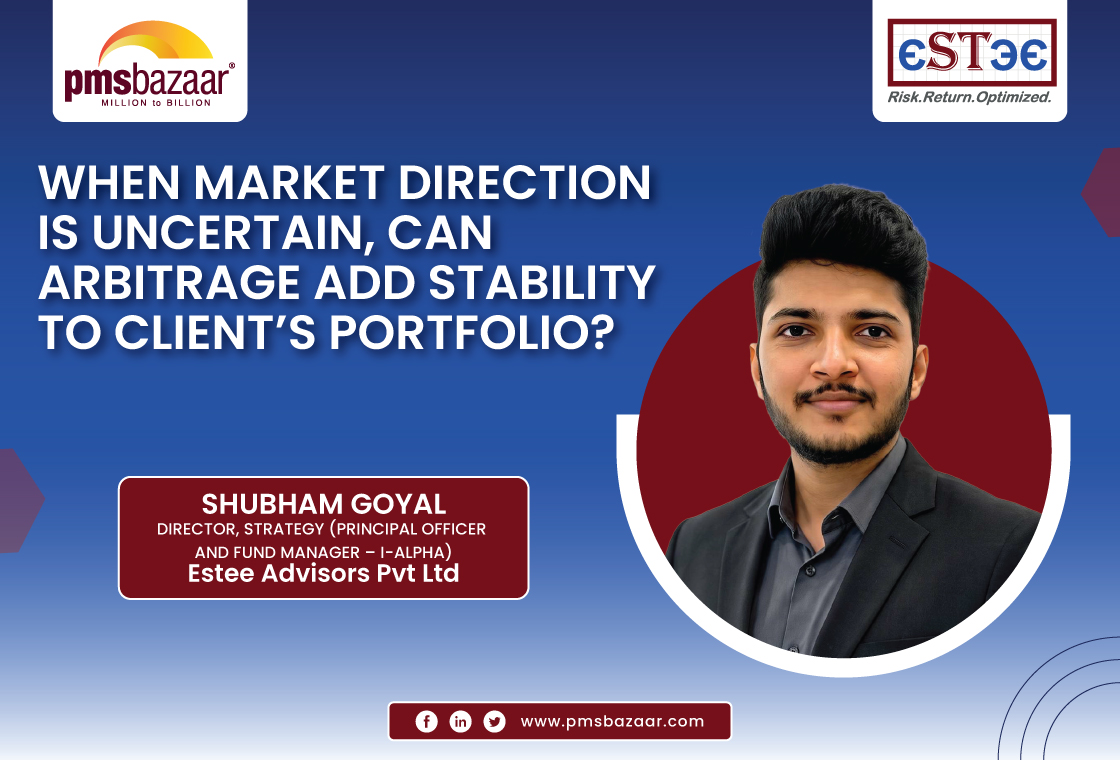
When Market Direction Is Uncertain, Can Arbitrage Add Stability to Client's Portfolio?
PMS Bazaar recently organised a webinar titled “When Market Direction Is Uncertain, Can Arbitrage Add Stability to Client's Portfolio?” which featured Mr. Sandeep Tyagi, Founder & Chairman, Estee Advisors and Mr. Shubham Goyal, Director, Strategy, (Principal Officer and Fund Manager - I-Alpha), Estee Advisors Pvt. Limited. This blog covers the important points shared in this insightful webinar.
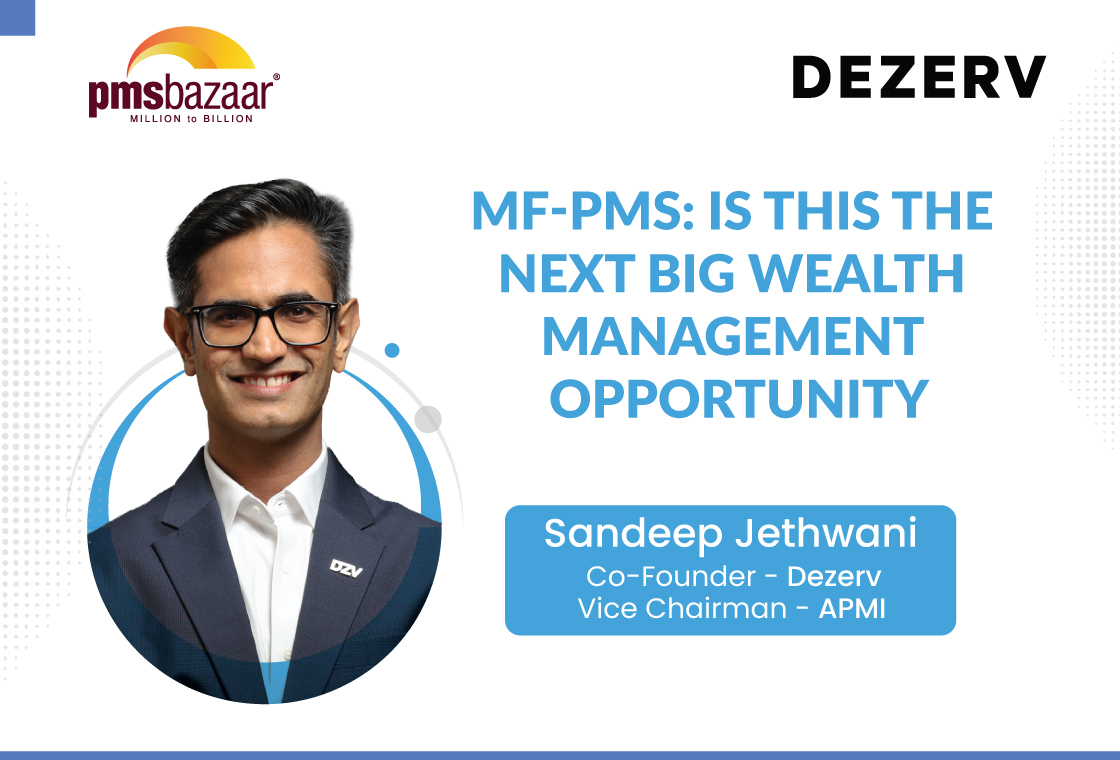
MF-PMS: Is This the Next Big Wealth Management Opportunity
PMS Bazaar recently organised a webinar titled “MF-PMS: Is This the Next Big Wealth Management Opportunity,” which featured Mr. Sandeep Jethwani, Co-Founder, Dezerv & Vice Chairman, APMI.
PMS Performance: Over 94% of Tracked Strategies Beat Nifty 50 TRI
Global markets remained under pressure in August 2026 as geopolitical tensions, rising bond yields and elevated crude oil prices kept investors cautious.

The Next Alpha Cycle: How Should Investors Position ‘Alternatives’ in Their Portfolios?
PMS Bazaar recently organized a webinar titled “The Next Alpha Cycle: How Should Investors Position ‘Alternatives’ in Their Portfolios,” which featured Mr. Akhil Chaturvedi, ED & CBO, Motilal Oswal AMC. This blog covers the important points shared in this insightful webinar.
Performing Private Credit in India: Opportunity, Risk & the Investor’s Perspective
PMS Bazaar recently organised a webinar titled “Performing Private Credit in India: Opportunity, Risk & the Investor’s Perspective,” which featured Mr Saurabh Agrawal, Co-Fund Manager and Partner, Spark Asia Impact Alternative Asset Management.
GIFT City IFSC: India's Emerging Hub for Global Finance
PMS Bazaar recently organized a webinar titled “GIFT City IFSC: India's Emerging Hub for Global Finance,” which featured Mr. Bharath Shivappa, President & Chief of Markets, Gujarat International FinanceTec-City. This blog covers the important points shared in this insightful webinar.
PMS Performance: Who Outperformed in July 2026?
July 2026 was another month marked by uncertainty, with market performance shaped by evolving global cues and shifting investor sentiment. Despite the uncertain environment, equity PMS strategies continued to present opportunities, with several managers delivering returns ahead of the broader market benchmarks.