

In several segments, the difference between the best and worst performer was more than 20 percentage points

FY26 was annus horribilis for many PMS strategies. The market corrected sharply after September 2024. Foreign investors remained sellers for much of the year. Richly valued mid- and small-cap stocks came under pressure. Sector leadership also kept changing. Financials, defence, manufacturing and select value plays did well at different points. But momentum-led and expensive pockets struggled.
Data shows that flexible strategies performed better than rigid ones. Multi-cap, flexicap and multi-asset portfolios handled the volatility far better than pure small-cap or thematic strategies. Debt PMS also stood out for offering steady returns at a time when equity portfolios saw sharp swings.
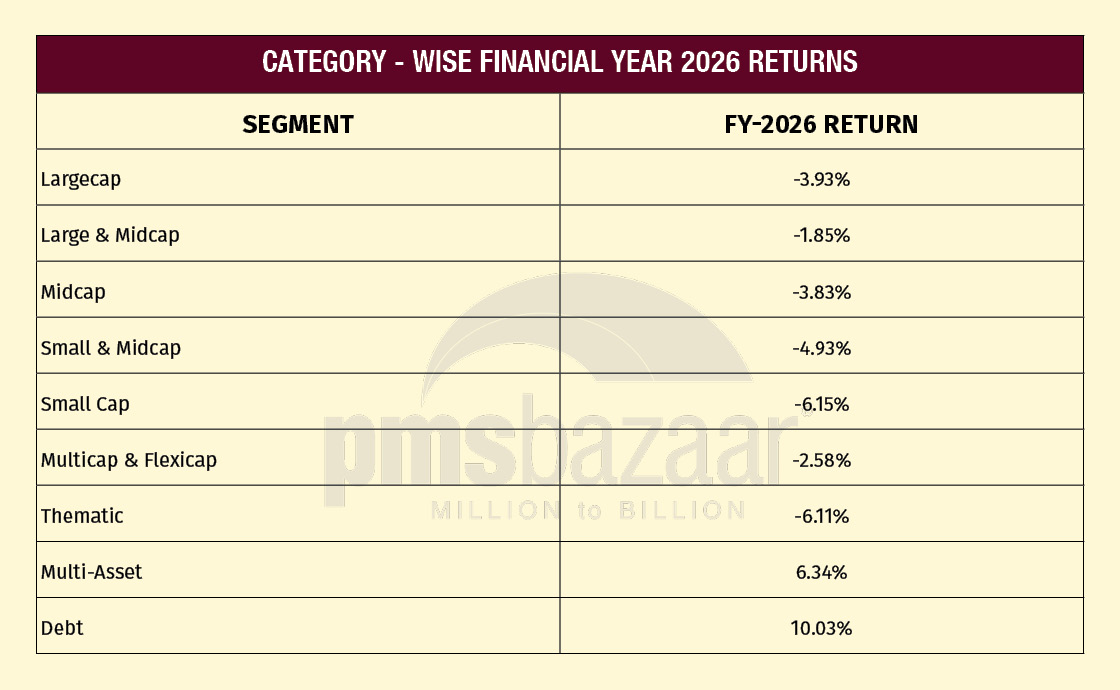
Among diversified equity PMS categories, Multi & Flexicap delivered the strongest average performance. Multi-Asset and Debt PMS were the only categories to post clearly positive average returns. Small-cap and thematic PMS were the most return-famished segments of FY26.
Performance differed sharply across categories. In several segments, the difference between the best and worst performer was more than 20 percentage points. This suggests that stock selection mattered more than broad market-cap allocation. A few concentrated portfolios generated strong alpha. Many others struggled to protect capital.
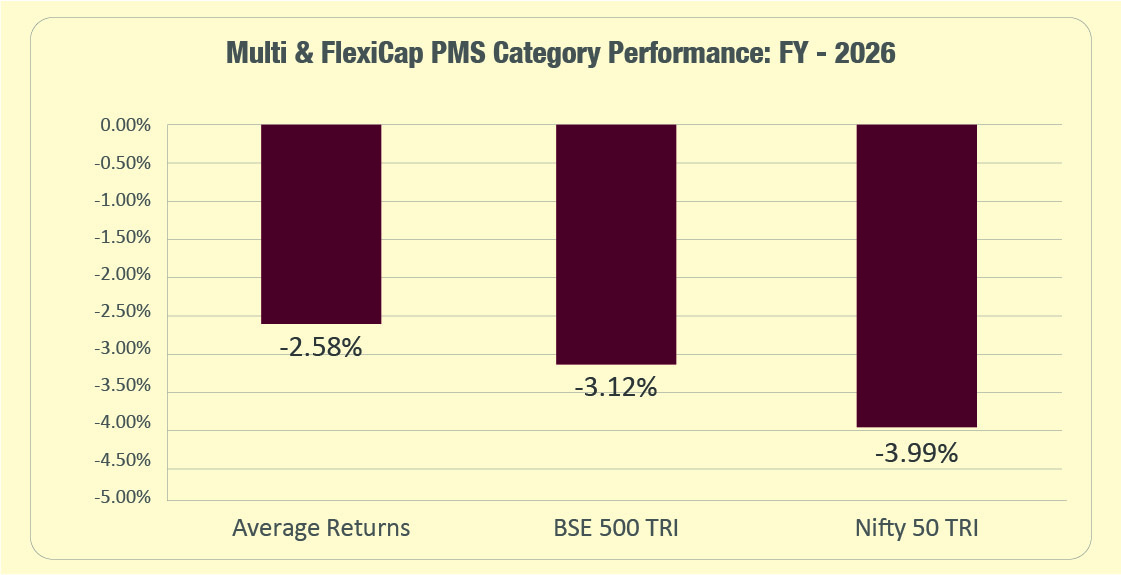
FY26 was bad for equity benchmarks, with the Nifty 50 TRI down 3.99 per cent and the S&P BSE 500 TRI down 3.12 per cent. Hybrid indices were flat to negative, with the Crisil Hybrid 50+50 Moderate Index up 0.4 per cent and the Nifty 50 Hybrid Composite Debt 50:50 Index down 0.64 per cent. Debt and multi-asset benchmarks were steadier, with the CRISIL Credit Index up 9.62 per cent, the CRISIL Composite Bond Fund Index up 3.58 per cent, and NSE Multi Asset indices returning 3.79 per cent and 3.27 per cent.
Top-10 performers
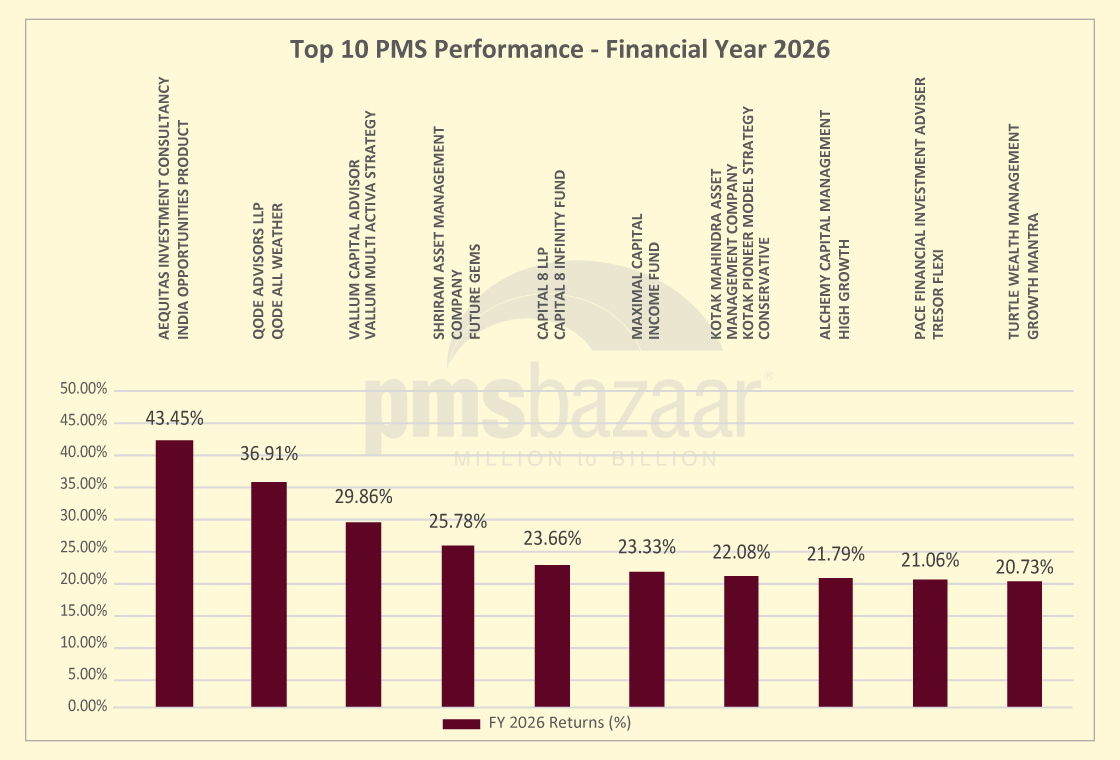
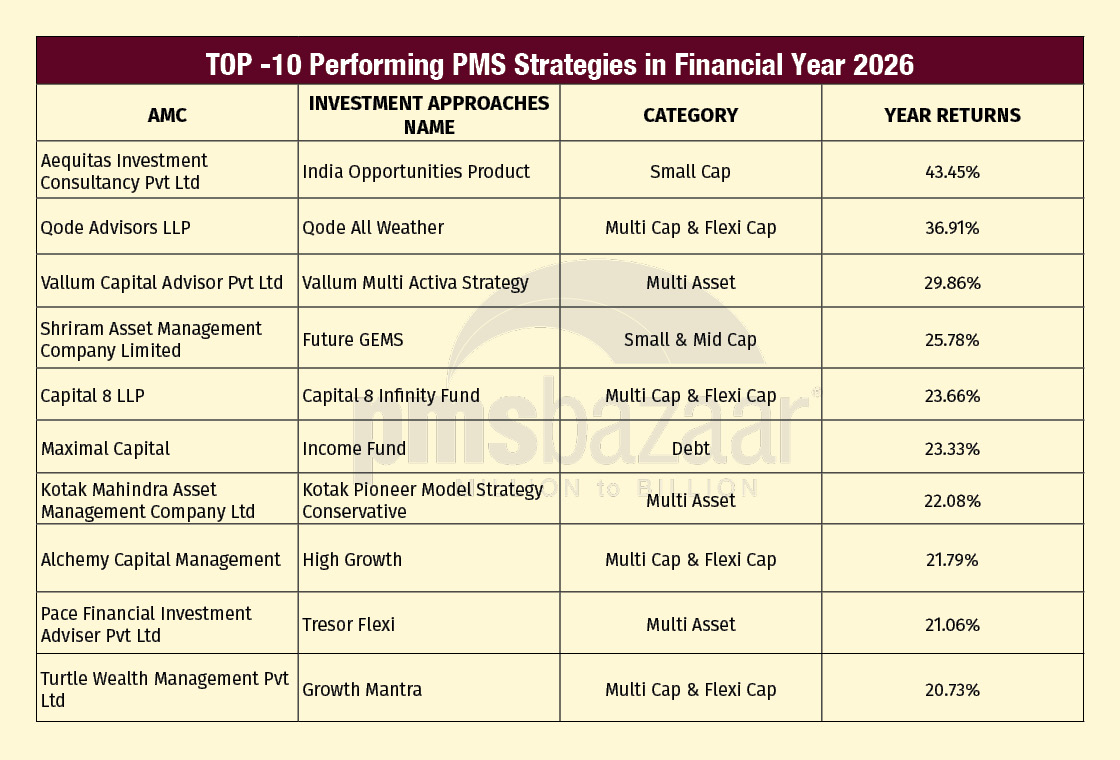
FY26's top PMS performers came from a wide mix of categories. Small-cap, flexicap, multi-asset and even debt strategies found a place in the top 10. India Opportunities Product from Aequitas Investment Consultancy emerged as the best-performing PMS of FY26 with a return of 43.45 per cent. Qode All Weather from Qode Advisors followed at 36.91 per cent, while Vallum Multi Activa Strategy from Vallum Capital Advisor returned 29.86 per cent.
Large Cap PMS
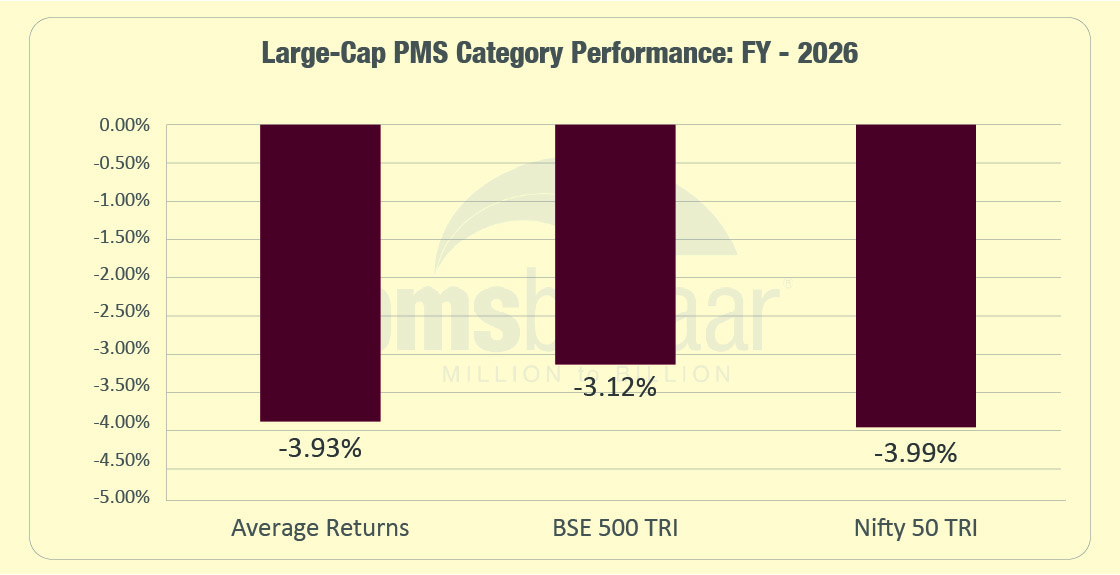
Large-cap PMS had a tepid FY26, with the 30 schemes in the category delivering an average return of minus 3.93 per cent. That was slightly worse than the S&P BSE 500 TRI, which fell 3.12 per cent, but marginally better than the Nifty 50 TRI decline of 3.99 per cent. Of the 30 schemes, 12 outperformed the BSE 500 TRI, while 14 beat the Nifty 50 TRI.
Large-cap PMS saw only modest gains. The category broadly stayed flat through the year and lagged more flexible strategies. Large-cap portfolios benefited from exposure to financials and select defensives. But their upside remained limited because broader market leadership was narrow.
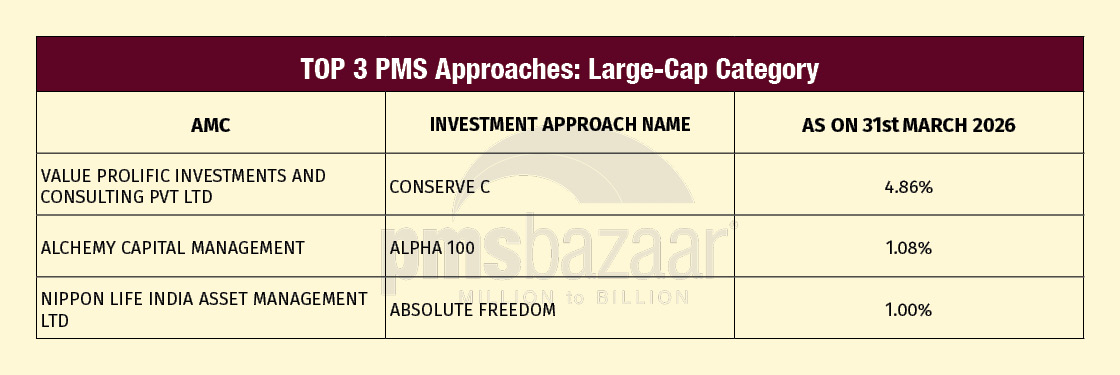
The top performer in the category was Conserve C from Value Prolific Investments and Consulting, with a return of 4.9 per cent. This was followed by Alpha 100 from Alchemy Capital Management at 1.1 per cent and Absolute Freedom from Nippon Life India Asset Management at 1 per cent.
The better-performing large-cap PMS strategies had a clear bias towards value, quality and cash-generating businesses. Aggressive growth portfolios struggled.
Mid Cap PMS
Mid-cap PMS had a tough year. The 21 schemes in the category delivered an average return of minus 3.83 per cent, worse than the S&P BSE 500 TRI but slightly better than the Nifty 50 TRI. Only six schemes beat the BSE 500 TRI and seven outperformed the Nifty 50 TRI.
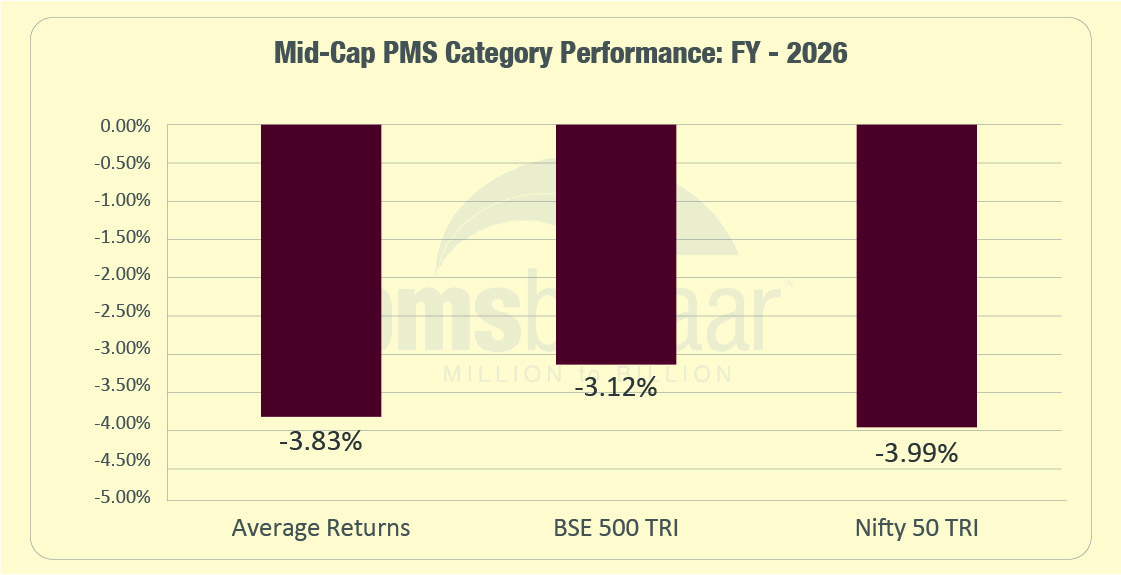
The category was volatile and saw a sharp correction after a strong run in earlier years. Managers with exposure to domestic manufacturing, defence and financials managed to outperform.
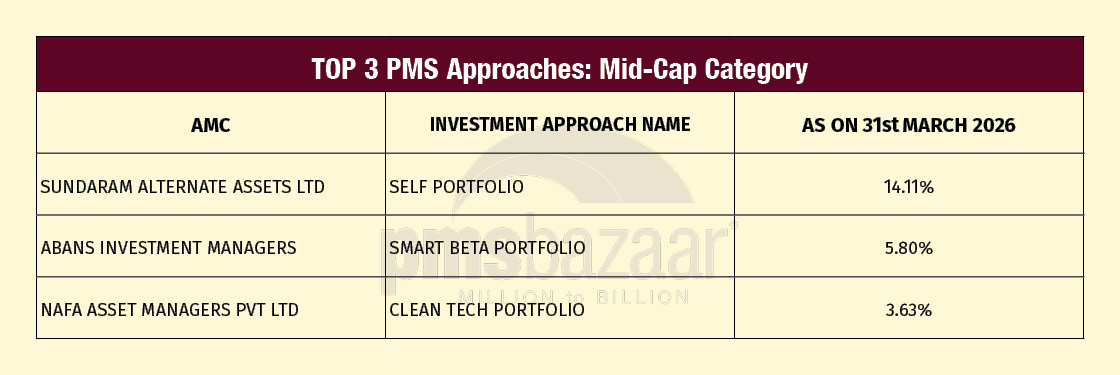
SELF Portfolio from Sundaram Alternate Assets emerged as the best-performing mid-cap PMS with a return of 14.1 per cent. Smart Beta Portfolio from Abans Investment Managers returned 5.8 per cent. Clean Tech Portfolio from NAFA Asset Managers came third with a return of 3.6 per cent.
Most other mid-cap PMS strategies generated only low single-digit returns or ended the year in the red. The category showed that strong stock selection remained crucial even within the same market segment.
Small Cap PMS
Small-cap PMS was one of the weakest equity categories of FY26. The 24 schemes delivered an average return of minus 6.15 per cent, underperforming both the S&P BSE 500 TRI and the Nifty 50 TRI. Only four schemes beat the BSE 500 TRI and five outperformed the Nifty 50 TRI.
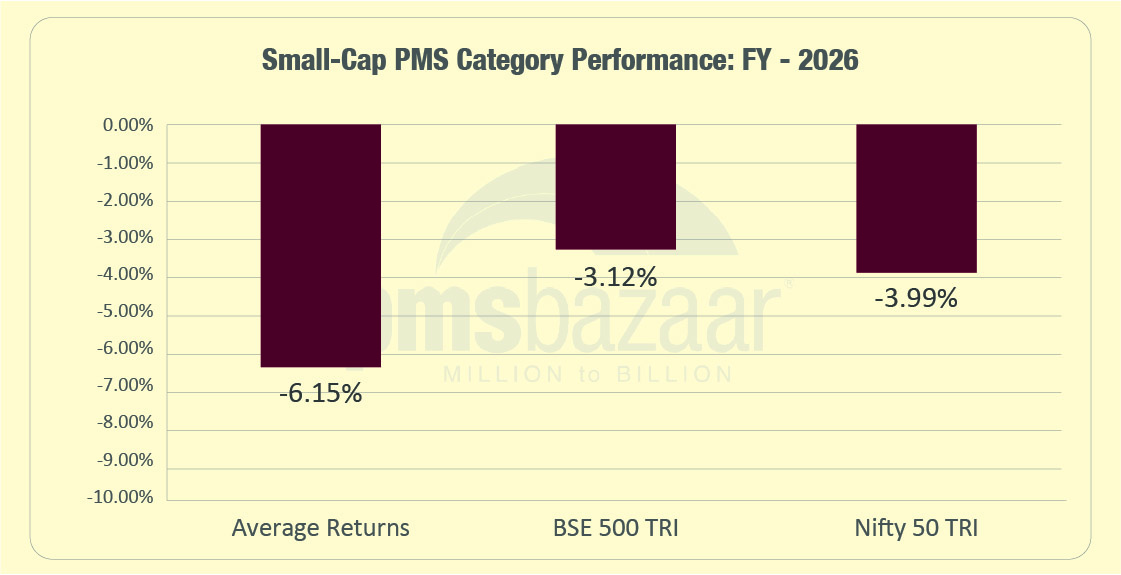
The segment saw the sharpest correction after valuations became stretched. Return dispersion was also the widest in this category.
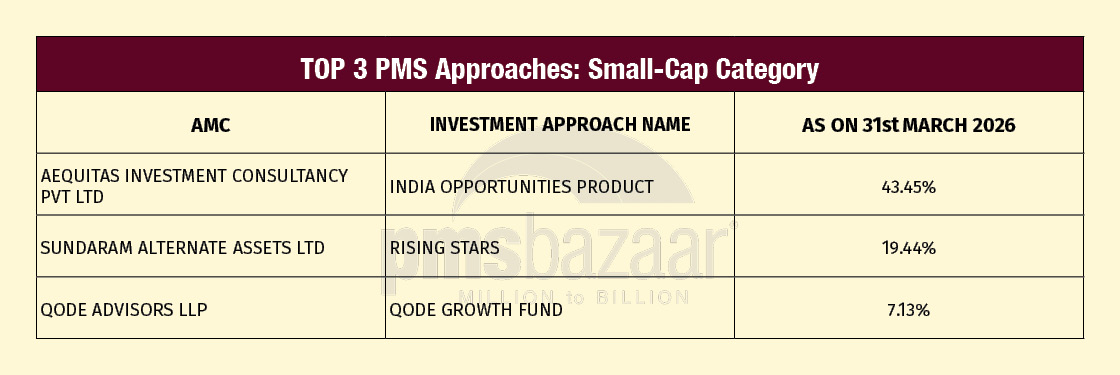
India Opportunities Product from Aequitas Investment Consultancy was a clear outlier. It generated a return of 43.5 per cent. Rising Stars from Sundaram Alternate Assets returned 19.4 per cent. Qode Growth Fund from Qode Advisors delivered 7.1 per cent.
Beyond the top few strategies, many small-cap PMS portfolios ended with negative returns. Concentrated portfolios with exposure to niche themes did well. Broad-based small-cap strategies struggled as risk appetite waned.
Large & Midcap PMS
Large & Midcap PMS benefited from balanced exposure. The 21 schemes in the category delivered an average return of minus 1.85 per cent, beating both the S&P BSE 500 TRI and the Nifty 50 TRI. Twelve schemes outperformed the BSE 500 TRI, while 13 beat the Nifty 50 TRI.
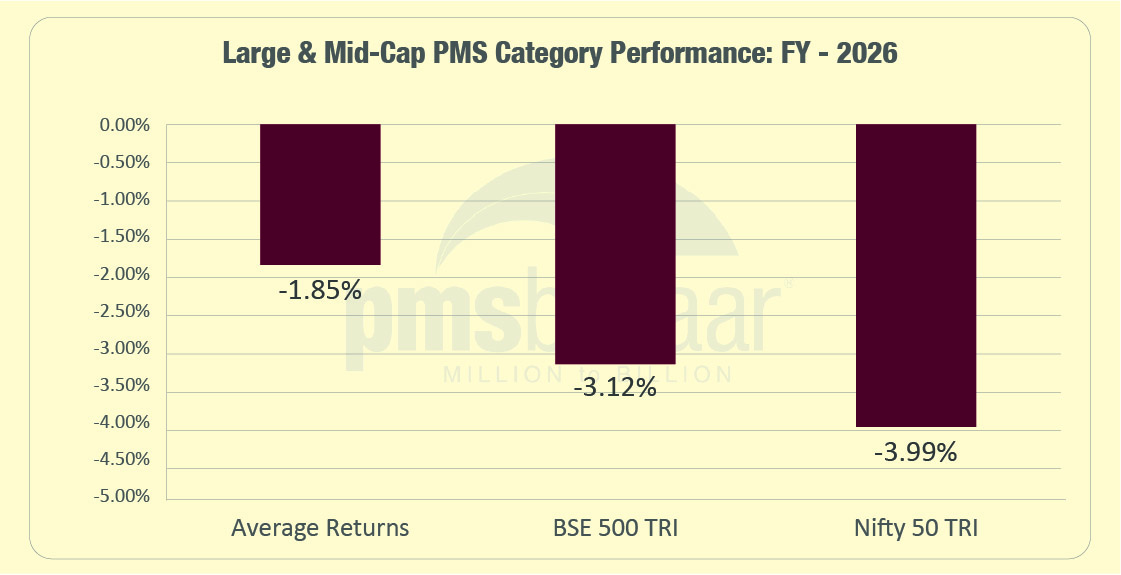
These strategies managed to contain downside better than pure mid-cap or small-cap portfolios. They also participated in the recovery when market sentiment improved.
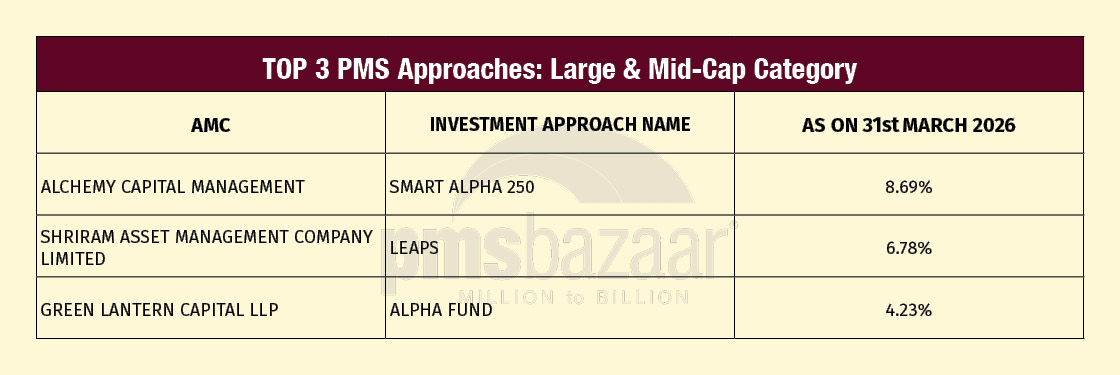
Smart Alpha 250 from Alchemy Capital Management was the top performer with a return of 8.7 per cent. LEAPS from Shriram Asset Management followed with 6.8 per cent. Alpha Fund from Green Lantern Capital came third with 4.2 per cent.
The category showed that combining large-cap stability with selective mid-cap exposure helped deliver more consistent returns.
Mid & Smallcap PMS
Mid & Smallcap PMS produced both some of the best and some of the most volatile returns of FY26. The 56 schemes in the category delivered an average return of minus 4.93 per cent, underperforming both the S&P BSE 500 TRI and the Nifty 50 TRI. Only 21 schemes beat the BSE 500 TRI, while 23 outperformed the Nifty 50 TRI.
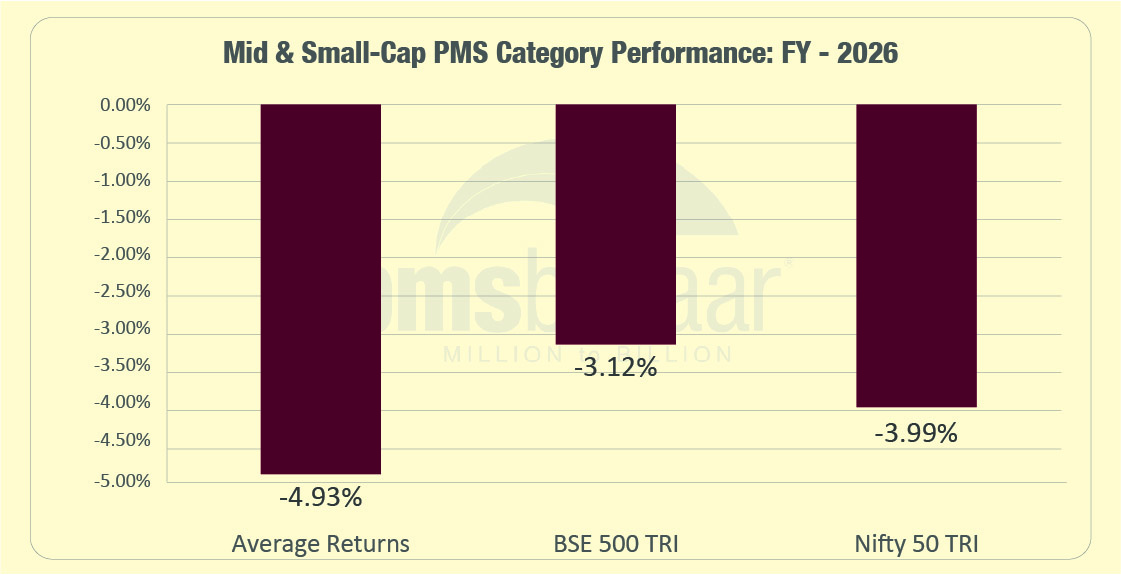
The category did well during phases of broader market optimism. But it also corrected sharply when sentiment turned worse.
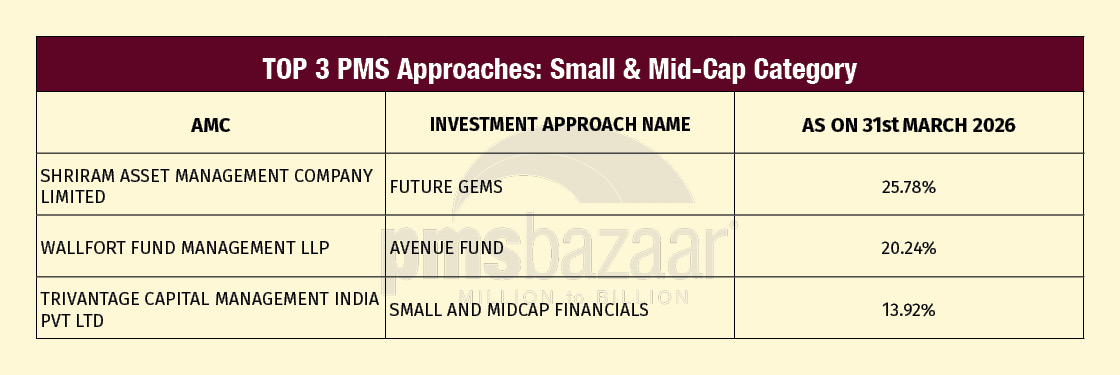
Future GEMS from Shriram Asset Management was the best-performing strategy in the segment. It generated a return of 25.8 per cent. Avenue Fund from Wallfort Fund Management returned 20.2 per cent. Small and Midcap Financials from Trivantage Capital delivered 13.9 per cent.
The strongest performers in this category usually had concentrated positions and a clear sectoral tilt. That created higher upside, but also much higher risk.
Multi & Flexicap PMS
Multi & Flexicap was among the strongest equity PMS categories of FY26. The ability to shift across sectors and market caps helped managers protect capital and capture opportunities. The 251 schemes in the segment delivered an average return of minus 2.58 per cent, beating both the S&P BSE 500 TRI and the Nifty 50 TRI. Even so, fewer than half the schemes outperformed, with 120 beating the BSE 500 TRI and 134 doing better than the Nifty 50 TRI.
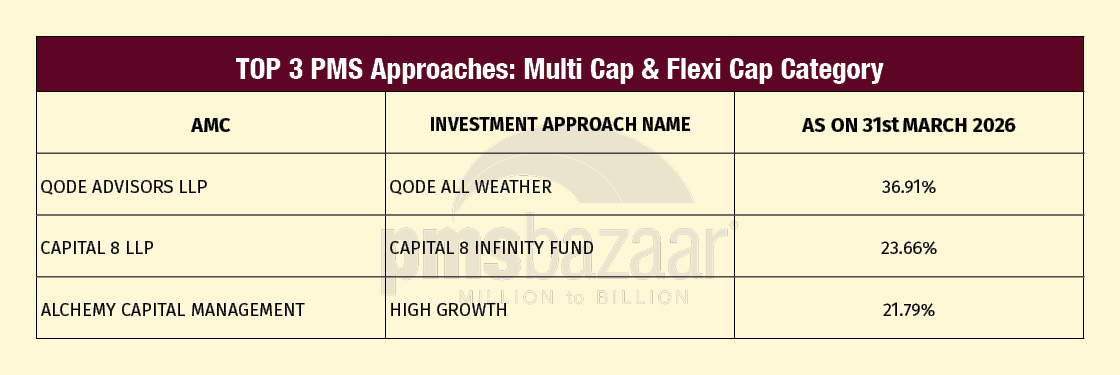
Qode All Weather from Qode Advisors was the best-performing PMS across the broader diversified categories. It delivered a return of 36.9 per cent. Capital 8 Infinity Fund from Capital 8 returned 23.7 per cent. High Growth from Alchemy Capital Management generated 21.8 per cent.
The category stood out because managers could move away from expensive pockets and increase exposure to sectors that were gaining strength. Flexibility proved more valuable than sticking to one style or market-cap bucket.
Thematic PMS
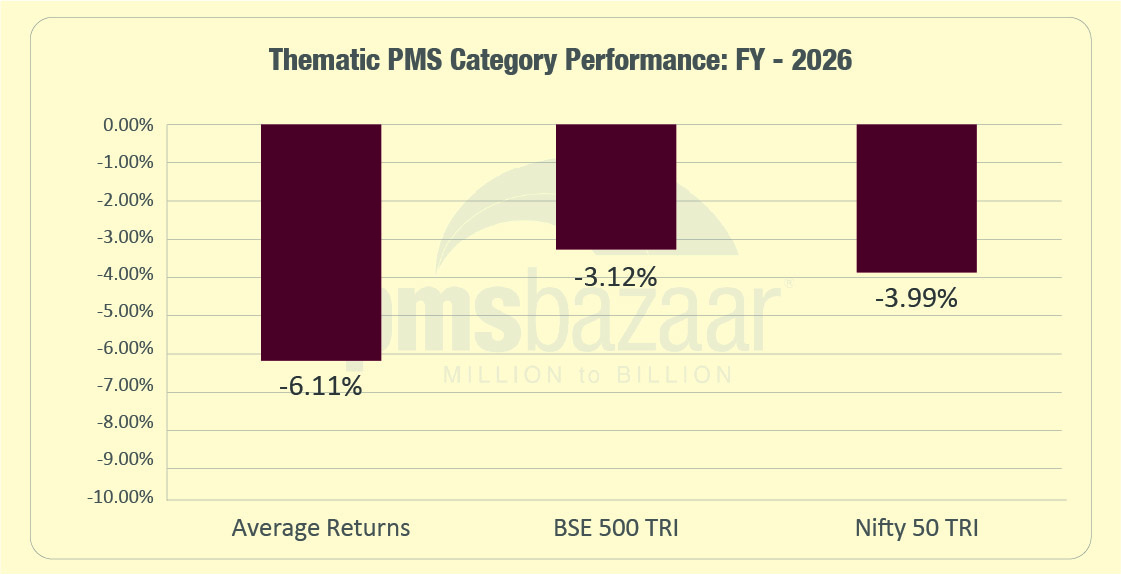
Thematic PMS had a rather forgettable FY26. The 15 schemes in the category delivered an average return of minus 6.11 per cent, underperforming both the S&P BSE 500 TRI and the Nifty 50 TRI. Only seven schemes beat each of the two benchmarks.
The category was hurt by sharp reversals in sectors that had become overheated in the previous year. Timing became extremely important.
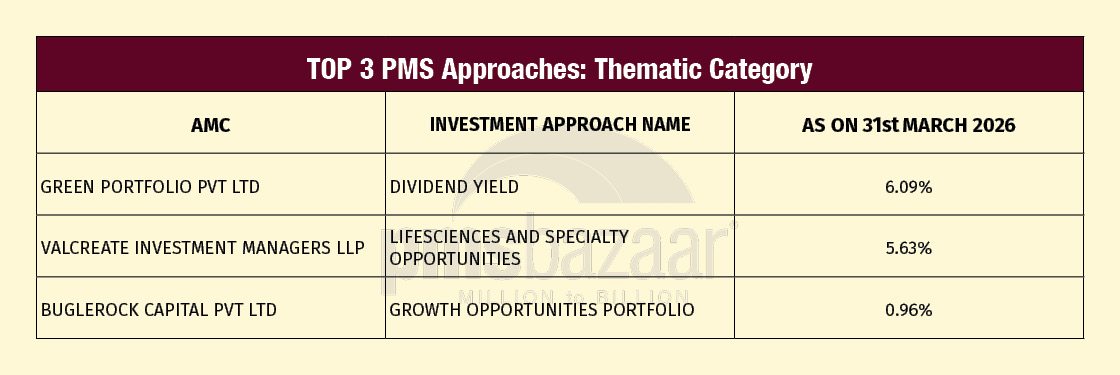
Dividend Yield from Green Portfolio was the best-performing thematic PMS with a return of 6.1 per cent. Lifesciences and Specialty Opportunities from Valcreate Investment Managers returned 5.6 per cent. Growth Opportunities Portfolio from BugleRock Capital delivered 1 per cent.
Most other thematic PMS strategies generated negative returns. Healthcare, technology and other narrowly focussed themes struggled after strong gains in earlier periods. The category once again showed that thematic investing can create strong returns, but only if the timing is right.
Multi-Asset PMS
Multi-Asset PMS was one of the most stable segments of FY26. The 26 schemes in the category delivered an average return of 6.34 per cent, comfortably ahead of both NSE Multi Asset Index 1 and NSE Multi Asset Index 2. Seventeen schemes outperformed each of the two benchmarks.
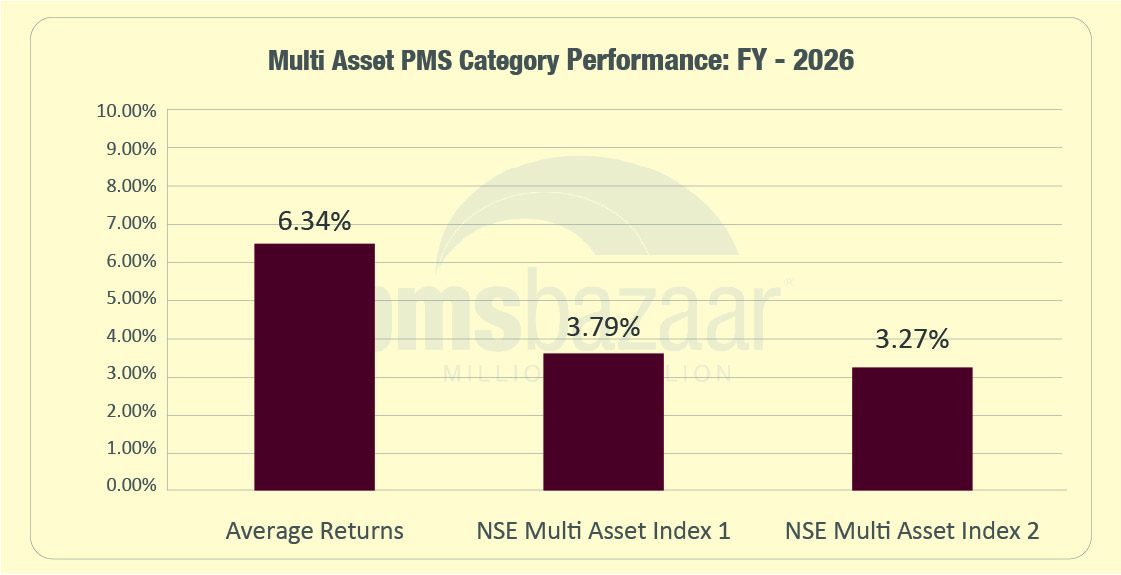
The combination of equity, debt and gold helped smooth volatility. Gold in particular provided a strong cushion during periods of market weakness.
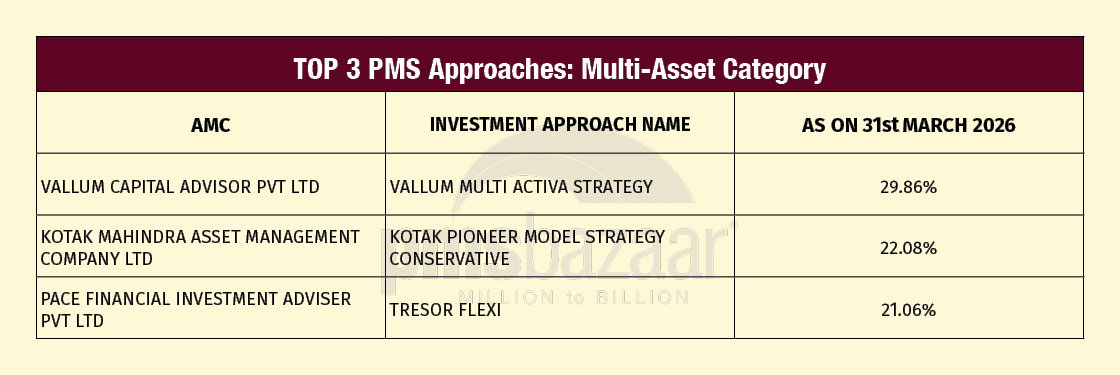
Vallum Multi Activa Strategy from Vallum Capital Advisor was the best-performing multi-asset PMS with a return of 29.9 per cent. Kotak Pioneer Model Strategy Conservative from Kotak Mahindra Asset Management returned 22.1 per cent. Tresor Flexi from Pace Financial Investment Adviser delivered 21.1 per cent.
Multi-asset PMS worked because no single asset class dominated the portfolio. Diversification helped reduce downside and improve consistency.
Debt PMS
Debt PMS generated lower but far steadier returns than equity PMSes in FY26. In that sense, it was the strongest return generator. The 14 schemes in the segment returned 10.03 per cent on average, beating the CRISIL Composite Bond Fund Index and the Nifty Medium to Long Duration Debt Index, and also edging past the CRISIL Credit Index. Thirteen schemes outperformed the CRISIL Composite Bond Fund Index, 13 beat the Nifty Medium to Long Duration Debt Index, and six did better than the CRISIL Credit Index.
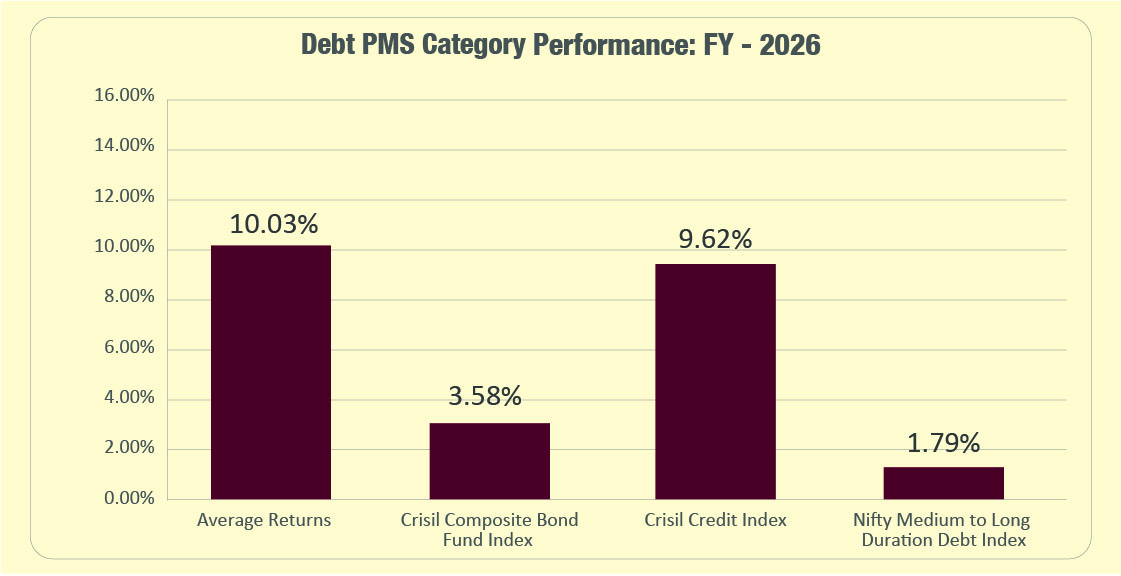
Falling bond yields and expectations of easier monetary policy supported fixed-income strategies.
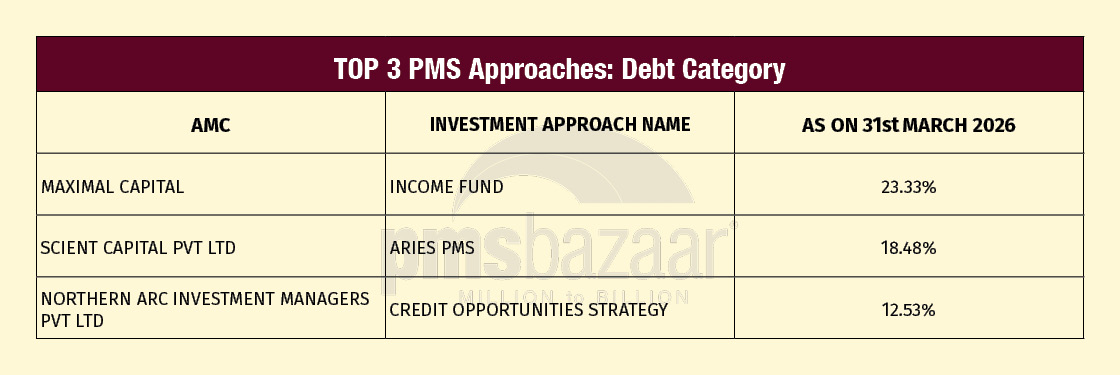
Income Fund from Maximal Capital was the best-performing debt PMS with a return of 23.3 per cent. Aries PMS from Scient Capital returned 18.5 per cent. Credit Opportunities Strategy from Northern Arc Investment Managers generated 12.5 per cent.
Debt PMS benefited from accrual and credit strategies. Longer-duration portfolios also gained as yields softened during the year.
Overall PMS Segment wise for the FY 25-26
Recent Blogs
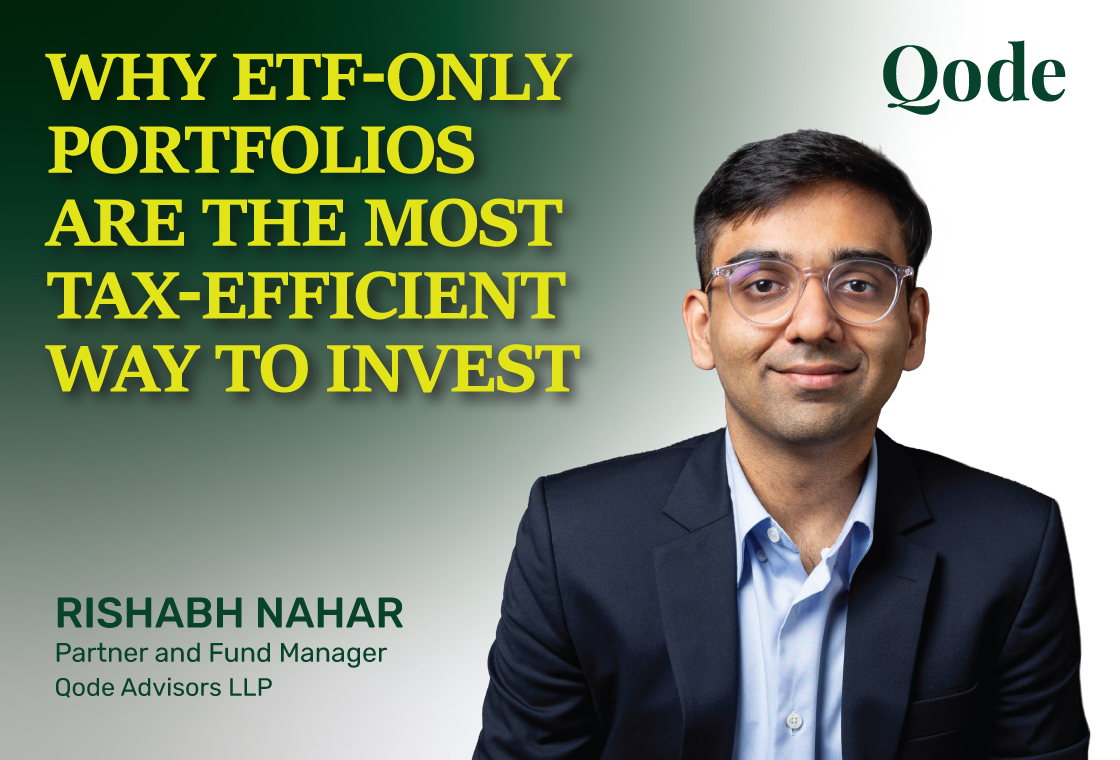
Why ETF-Only Portfolios Are the Most Tax-Efficient Way to Invest
How deferred taxation and lower LTCG rates compound into significantly higher post-tax wealth for long-term investors

Why Market Corrections Are the Best Time to Build Your Core Equity Portfolio
PMS Bazaar recently organized a webinar titled “Why Market Corrections Are the Best Time to Build Your Core Equity Portfolio,” which featured Mr. Amit Nigam, Deputy CIO, ASK Investment Managers. The webinar blog covers insights from Mr. Nigam, which includes explanation how recent stock market volatility in India creates opportunities for long-term investors. It highlights shifting from a fixed deposit mindset to equities, his blog covers the important points shared in this insightful webinar.

6 out of 10 PMSes Beat Benchmarks In March Crash
Despite a fourth straight monthly sell-off, most PMSes fell less than benchmarks; a few even stayed in the green
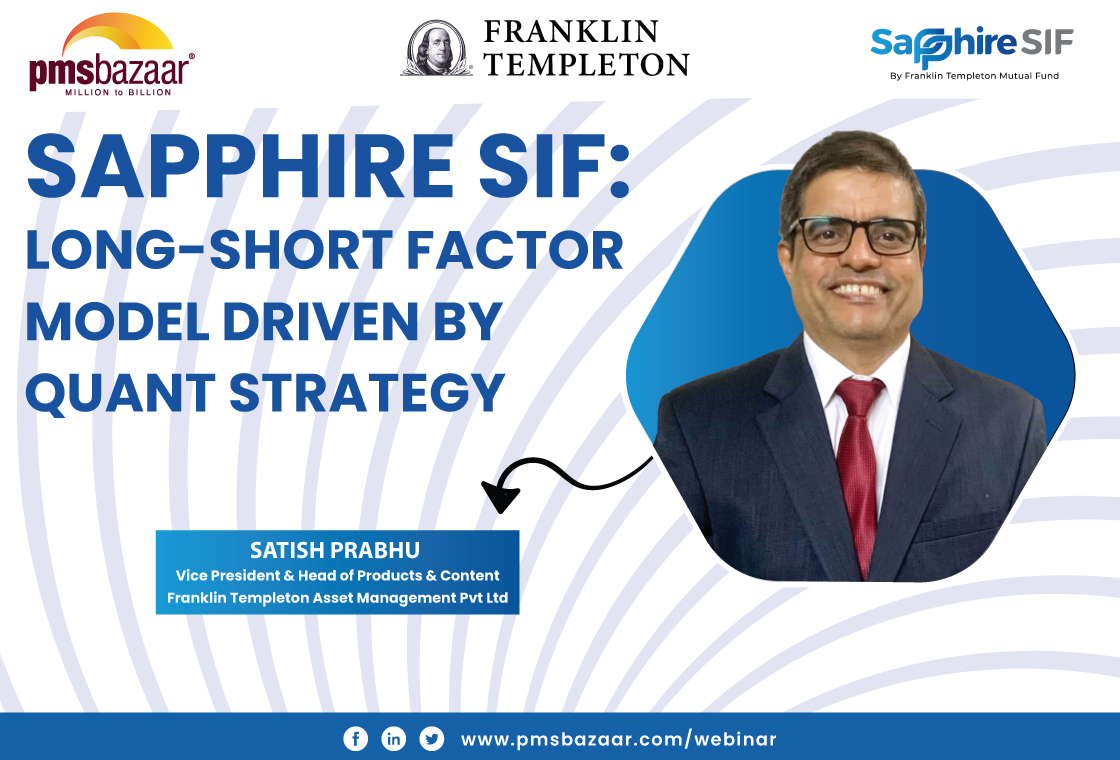
Sapphire SIF: Long-Short Factor Model Driven by Quant Strategy
PMS Bazaar recently organized a webinar titled “Sapphire SIF: Long-Short Factor Model Driven by Quant Strategy,” which featured Mr. Satish Prabhu, Vice President and Head of Products and Content, Franklin Templeton Asset Management Private Limited. This blog covers the important points shared in this insightful webinar.

Why Invest in Start-Ups for Wealth Creation?
PMS Bazaar recently organized a webinar titled “Why Invest in Start-Ups for Wealth Creation?” which featured Mr. Vinit Rai, MD& CIO, Managing Director, JM Financial Equity. This blog covers the important points shared in this insightful webinar.

Why Investors Are Turning to Semi-Liquid Credit Funds?
PMS Bazaar recently organized a webinar titled “Why Investors Are Turning to Semi-Liquid Credit Funds?” which featured Mr. Dipen Ruparelia, Chief Business and Product Officer, Vivriti Asset Management. This blog covers the important points shared in this insightful webinar.

Equity PMSes outshine benchmarks in February despite third straight market correction
Nearly 3/4th beat Nifty 50 TRI, while average equity PMS return stayed positive at 0.9 per cent amid volatility

Why Indian Family Offices Are Shifting from Real Estate to Alternative Investment Funds?
This Article is Authored by Rishi Agarwal Co-Founder & Fund Manager, Aarth Growth Fund