

PMS Bazaar recently organized a webinar titled “Why Invest in Start-Ups for Wealth Creation?” which featured Mr. Vinit Rai, MD& CIO, Managing Director, JM Financial Equity. This blog covers the important points shared in this insightful webinar.
The webinar blog covers insights from Mr.Vinit Rai, which includes startup investing, highlighting the risk-return spectrum from safe FDs to high-risk seed stages. He detailed India’s private market growth, mid-market opportunities and key investment criteria market, moat, competition, exit and founder. Emphasizing diversification, patience, and founder focus, he advised gradual exposure, time-diversified allocation, and active monitoring to achieve long-term, high-reward outcomes in the evolving startup ecosystem.
Key aspects covered in this webinar blog are
- The risk-return spectrum: from FDs to seed stage
- The evolution of the Indian private market
- Defining the mid-market opportunity
- Avoiding the "emotional trap" and common pitfalls
- The five pillars of investment criteria
- Post-investment: monitoring the portfolio
- The risk journey: from safety to startups
- Allocation and downside management
- The reward of early-stage backing
- Navigating the "funding winter"
Summary: Mr. Vinit Rai highlighted startup investing as a high-risk, high-reward journey, emphasizing the immutable risk-return relationship. He traced India’s private market growth, defining the mid-market (₹50–500 crore revenue) as his firm’s focus for balanced risk and returns. Vinit outlined five investment pillars: market opportunity, moat, competition, exit strategy, and founder quality, stressing diversification, emotional preparedness, and sector expertise. Investors should progress from safe instruments to startups, allocating small portions over time. Monitoring includes business plans, macro trends, and founder motivation. Despite funding cycles, early-stage investments offer potential for outsized returns, with a long-term, disciplined, founder-focused approach essential.
Mr. Vinit Rai started the session sharing his extensive expertise on the "why" and "how" of startup investing. Addressing an audience from the finance sector, he grounded the discussion in the fundamental principle of the industry: the immutable relationship between risk and return.
The Risk-Return Spectrum: From FDs to Seed Stage
Mr. Vinit initiated the conversation by reminding investors that there are no exceptions to the basic laws of finance. He explained that while fixed deposits offer safety, they yield a modest 4% to 6% return. Conversely, achieving higher returns necessitates embracing higher risks. As fund managers, his team's goal is to generate "alpha"—maximizing returns while strategically minimizing the associated risks.
He illustrated the investment journey as a spectrum. At the mature end are IPOs, representing large, profitable companies with established scales and low disruption risks. Here, returns typically hover in the teens, benchmarked against indices like the Nifty. However, as one moves toward earlier stages—from late-stage Private Equity (PE) to growth, venture, and finally seed stage—the risk profile intensifies. Mr. Vinit emphasized that the seed stage carries the highest risk because the business is often just an idea; its survival is uncertain. Yet, it is precisely this high-risk entry point that holds the greatest potential for outsized returns.
The Evolution of the Indian Private Market
Reflecting on the history of the asset class, Mr. Vinit noted that private markets have never been easy, even globally. He pointed to the U.S. markets, which matured over decades since the 1950s, eventually seeing private markets consistently outperform public markets over the last 20 years.
In India, the industry is relatively young, having found its footing in the late 90s. Mr. Vinit recounted his early days in investing, which were coincided with the 2008 global financial crisis. This period saw profits plummet and the asset class take a backseat. However, a significant rebuilding phase began around 2014. He highlighted a remarkable growth trajectory: the industry grew from roughly $7–$8 billion annually in 2012 to over $25 billion today. This surge is largely attributed to an increase in successful "exits," which fosters investor confidence and keeps capital flowing back into the ecosystem.
Defining the Mid-Market Opportunity
Mr. Vinit categorized the Indian landscape into three distinct segments:
- Small Ticket (<$5M): Dominated by angel networks and early VCs.
- Large Scale: Major PE funds deploying $50M to $200M in established winners.
- The Mid-Market: This is where Mr. Vinit’s firm, JM, has operated for over 20 years. He defined this segment as companies with revenues between ₹50 crore and ₹500 crore. In this "sweet spot," the business has moved past the volatility of the seed stage, resulting in lower risk while still offering robust return potential.
Avoiding the "Emotional Trap" and Common Pitfalls
Transitioning to the "how" of investing, Mr. Vinit identified common mistakes, starting with the emotional side of finance. He noted that while listed stocks can be sold with the click of a button, the startup ecosystem is inherently illiquid. While this illiquidity can be stressful, it prevents investors from exiting prematurely during minor market fluctuations.
He stressed the importance of emotional preparedness regarding time horizons. Mr. Vinit observed that while mutual fund investors are taught to hold for five years, startup investors must be prepared for even longer durations. He expressed a wish for more industry-wide education to prevent the frustration that arises when investors don't see liquidity within three or four years.
Another critical error is concentration risk. Mr. Vinit warned against investing in only two or three startups and then dismissing the asset class if they fail to perform. He recommended building a diversified portfolio of at least 10 to 15 companies before judging the performance of the asset class. Furthermore, he urged investors to stick to "familiar territory," investing in sectors where they have professional expertise or business experience.
The Five Pillars of Investment Criteria
When evaluating a potential startup, Mr. Vinit detailed five sophisticated criteria used by professional fund managers:
- Market Opportunity: Understanding demand-supply dynamics and whether the market is large enough to support multiple billion-dollar players.
- The "Moat": Identifying the true differentiating factor. He cautioned that a product might seem "new" to a founder, but investors must validate its necessity from the customer's perspective.
- Competition: Analyzing how a startup disrupts old industries and its ability to maintain a top-three position.
- Exitability: Mr. Vinit was pragmatic: "We are all here to sell shares at some point." He emphasized that a clear exit strategy—whether through an IPO or a strategic sale to an FMCG giant—must be understood before the check is written.
- The Founder: Perhaps the most vital element. After meeting over 15,000 entrepreneurs, Mr. Vinit believes the founder’s background must map directly to the business's critical success factors. He looks for "tangible" capabilities (e.g., retail experience for a retail startup) alongside "softer" traits like integrity, hunger, and a willingness to share.
Post-Investment: Monitoring the Portfolio
Once the investment is made, the work shifts to monitoring. Unlike the listed world, there are no 52-week highs or P/E ratios to track. Instead, Mr. Vinit suggested focusing on:
- Macro Disruptions: Keeping an eye on sectoral shifts that could impact the business model.
- Business Plan Tracking: Closely monitoring how far the company is from its budget and its current cash runway.
- Systems and Processes: Ensuring the company is maturing operationally as it grows.
- Founder Motivation: Gauging whether the founder remains "hungry" or is becoming "tired."
Mr. Vinit concluded by reiterating that startup investing is a marathon, not a sprint. Success requires a blend of disciplined financial analysis, a long-term emotional commitment, and a relentless focus on the quality of the people behind the vision. As the Indian ecosystem continues to mature every five years, he remains optimistic that the asset class will only grow stronger for those who approach it with the right framework.
Continuing his deep dive into the alternative investment landscape, Mr. Vinit Rai addressed the practicalities of entering the startup ecosystem. He began by acknowledging the immense role of industry platforms in building awareness, noting that while Portfolios Management Services (PMS) were once obscure, a decade of education has made them a staple for sophisticated investors. According to Mr. Vinit, staying invested is just as critical as the initial decision to commit capital.
The Risk Journey: From Safety to Startups
Mr. Vinit outlined a logical progression for investors to navigate their "risk journey." He suggested that an investor should typically move from fixed deposits to listed securities, starting with the Nifty index due to its high liquidity. From there, one might progress to mid-cap and small-cap stocks or structured PMS strategies.
Only once an investor is mentally prepared for the volatility of the listed side should they transition to the unlisted space, such as pre-IPO companies or PE funds. Mr. Rai emphasized that "balance sheet size" dictates this move. For individuals with a net worth in the eight-figure range (USD), the risks of startup investing become more palatable because failure does not compromise their fundamental lifestyle.
Allocation and Downside Management
When asked about specific allocation, Mr. Vinit provided a concrete numerical framework. If an investor has ₹10 crore in a listed equity portfolio, they might consider allocating ₹50 lakh (5%) to the startup ecosystem.
To manage the downside, he advocated for a time-diversified portfolio. Rather than a lump-sum investment, he recommended a three-year horizon, making one investment per quarter. This results in a portfolio of 12 startups, significantly reducing mortality risk compared to a concentrated bet.
The Reward of Early-Stage Backing
Mr. Vinit noted that the motivation for startup investing often stems from the desire for "life-changing" returns. He cited a personal example from 2016 involving Skarza Technologies, where an investment yielded a 55x return in five years after an acquisition by global players like Warburg Pincus. He explained that if an investor seeks to "beat the market," mid-market PE is sufficient; however, to achieve exponential wealth, one must embrace the higher risks of the early stage.
Navigating the "Funding Winter"
Addressing the high failure rates post-2020, Mr. Vinit remained bullish. He acknowledged the "funding winter" but described it as a natural cycle. He insisted that as long as the focus remains on "founder, founder, founder" and resilient business models, the rewards will eventually follow. He predicted a significant return of alpha between 2023 and 2033, driven by improved entrepreneurial quality and a deepening secondary market.
For smaller investors with ₹5 to ₹10 lakh, Mr. Vinit suggested leveraging angel networks or crowdfunding platforms. His parting advice for newcomers was to look for "bridge opportunities" companies that have already survived 18 months post-initial funding to ensure the business has moved past its most fragile state.
Mr. Vinit covered all the topics mentioned above in-depth and answered questions from the audience toward the end of the session. For more such insights on this webinar, watch the recording of this insightful session through the appended link below.
Get access to rich data and analytics of PMS & AIF by subscribing to us. Join the 90000+ investors & experts: Subscribe NOW
Recent Blogs
Is Large-Cap Alpha Changing? What Does It Mean for Investors
PMS Bazaar recently organised a webinar titled “Is Large-Cap Alpha Changing? What Does It Mean for Investors,” which featured Mr. Naveen Chandramohan, Founder and Fund Manager, ITUS Capital. This blog covers the important points shared in this insightful webinar.

PMS Performance : 401 Equity PMS Beat the Nifty 50 TRI
September 2026 saw global markets grapple with persistent macroeconomic uncertainty, as rising U.S. bond yields, crude oil prices above $90 per barrel and escalating Middle East tensions kept investors on edge. Concerns over renewed inflationary pressures and tighter financial conditions continued to shape market sentiment. The reported 25-basis-point Federal Reserve rate hike, bringing rates to 3.75–4.00 per cent, added another dimension to the evolving global outlook.
When Market Direction Is Uncertain, Can Arbitrage Add Stability to Client's Portfolio?
PMS Bazaar recently organised a webinar titled “When Market Direction Is Uncertain, Can Arbitrage Add Stability to Client's Portfolio?” which featured Mr. Sandeep Tyagi, Founder & Chairman, Estee Advisors and Mr. Shubham Goyal, Director, Strategy, (Principal Officer and Fund Manager - I-Alpha), Estee Advisors Pvt. Limited. This blog covers the important points shared in this insightful webinar.
MF-PMS: Is This the Next Big Wealth Management Opportunity
PMS Bazaar recently organised a webinar titled “MF-PMS: Is This the Next Big Wealth Management Opportunity,” which featured Mr. Sandeep Jethwani, Co-Founder, Dezerv & Vice Chairman, APMI.

PMS Performance: Over 94% of Tracked Strategies Beat Nifty 50 TRI
Global markets remained under pressure in August 2026 as geopolitical tensions, rising bond yields and elevated crude oil prices kept investors cautious.

The Next Alpha Cycle: How Should Investors Position ‘Alternatives’ in Their Portfolios?
PMS Bazaar recently organized a webinar titled “The Next Alpha Cycle: How Should Investors Position ‘Alternatives’ in Their Portfolios,” which featured Mr. Akhil Chaturvedi, ED & CBO, Motilal Oswal AMC. This blog covers the important points shared in this insightful webinar.
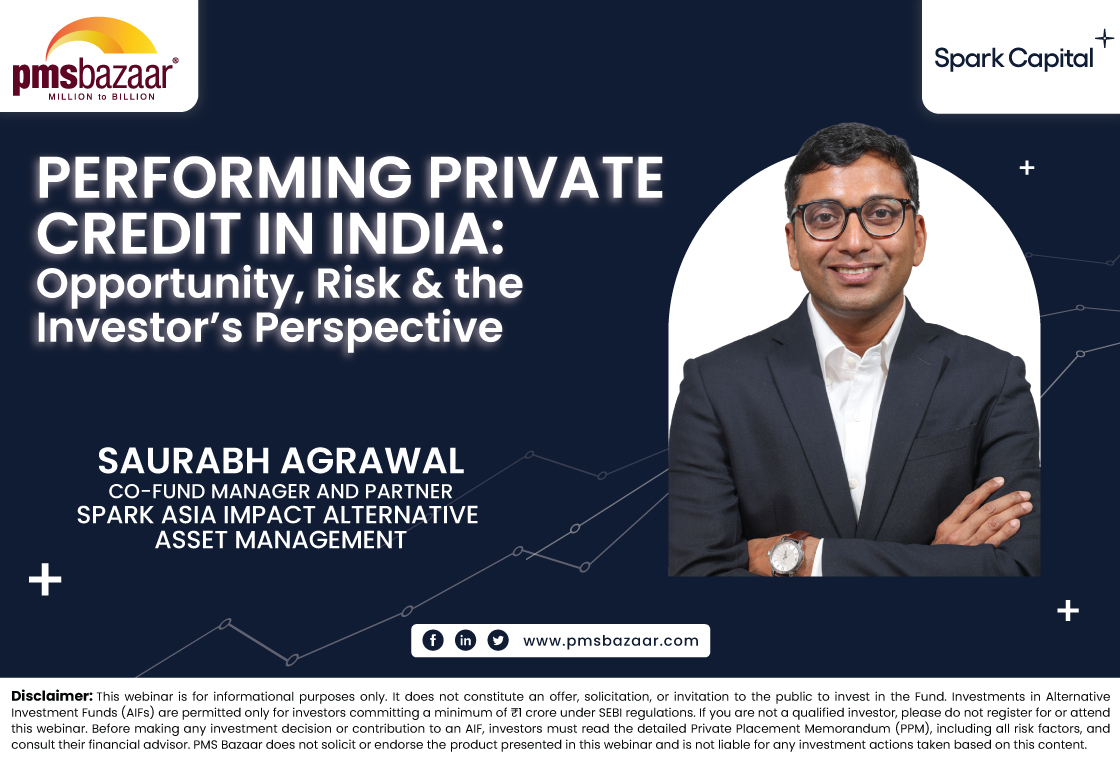
Performing Private Credit in India: Opportunity, Risk & the Investor’s Perspective
PMS Bazaar recently organised a webinar titled “Performing Private Credit in India: Opportunity, Risk & the Investor’s Perspective,” which featured Mr Saurabh Agrawal, Co-Fund Manager and Partner, Spark Asia Impact Alternative Asset Management.
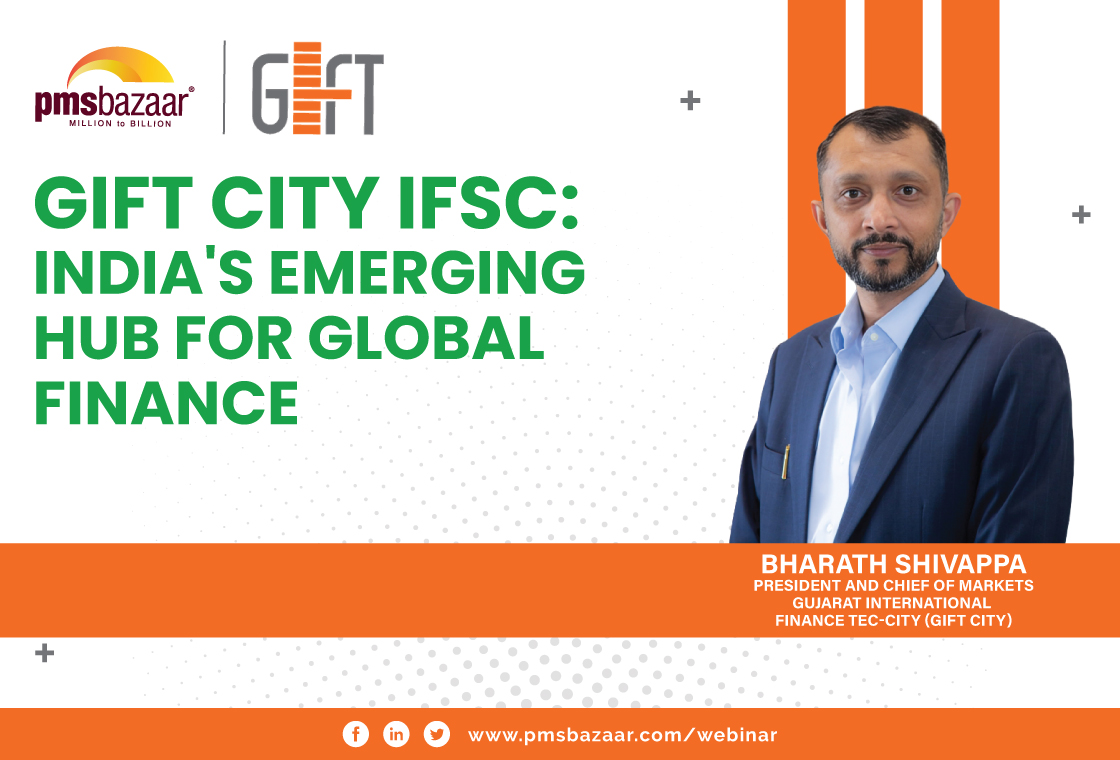
GIFT City IFSC: India's Emerging Hub for Global Finance
PMS Bazaar recently organized a webinar titled “GIFT City IFSC: India's Emerging Hub for Global Finance,” which featured Mr. Bharath Shivappa, President & Chief of Markets, Gujarat International FinanceTec-City. This blog covers the important points shared in this insightful webinar.