

PMS Bazaar recently organized a webinar titled “The Next Alpha Cycle: How Should Investors Position ‘Alternatives’ in Their Portfolios,” which featured Mr. Akhil Chaturvedi, ED & CBO, Motilal Oswal AMC. This blog covers the important points shared in this insightful webinar.

The webinar blog covers insights from Mr. Chaturvedi, which includes how India’s investment landscape is evolving and why investors increasingly need sophisticated, diversified strategies. It covers global diversification, AIFs, PMS, SIFs, private equity, private credit, SME investing and MF-PMS. The blog also addresses common misconceptions about alternative investments, highlighting the importance of professional fund management, risk assessment, strategic asset allocation and long-term investing.
Key aspects covered in this webinar blog are
- The rise of global diversification and international limits
- Expanding horizons: Alternatives and the growth of AIFs
- Structured investment funds and future portfolio strategies
- The rise of MF-PMS and distributor empowerment
- Navigating market caps: From startups to SMEs
- Global opportunities and strategic portfolio allocation
- Busted myths and the reality of alternative investments
Summary: Mr. Akhil Chaturvedi highlighted how India’s investment landscape has evolved, making sophisticated strategies essential for generating alpha. He emphasised global diversification, recommending gradual international exposure alongside India’s growth potential. The discussion covered the rising importance of AIFs, PMS, private equity, private credit, REITs, InvITs and emerging SIF structures as tools for diversification rather than guaranteed superior returns. He also discussed MF-PMS as a potential opportunity for distributors and advisors. Chaturvedi cautioned against inexperienced investing in SMEs and micro-caps due to governance and liquidity risks. Overall, he stressed professional fund management, disciplined asset allocation, appropriate risk-taking and patience across market cycles.
Mr. Akhil Chaturvedi started by explaining that the investment landscape has undergone a profound transformation over the past decade, moving away from a traditional model where capital chased straightforward opportunities. He noted that while investing was once much simpler—built on plain vanilla indices and a few popular sectors—generating alpha today requires a far more sophisticated approach. He explained that current market dynamics are driven by technological disruption, structural innovations, and significant local reforms like RERA, the Insolvency and Bankruptcy Code (IBC), and demonetization.
Furthermore, global economic shifts have influenced how capital is deployed. With countries worldwide striving for energy independence and technological supremacy in areas like artificial intelligence and semiconductors, global market performance has rotated significantly across regions. Mr. Chaturvedi highlighted that while Indian markets have experienced relative underperformance recently, the government continues to spearhead economic growth through heavy infrastructure investments. Emerging themes such as renewable energy over coal, electric vehicles over internal combustion engines, digital businesses, and consumer discretionary sectors are now shaping the new generation of alpha. Conventional investment strategies that fail to adapt are increasingly left behind.
The Rise of Global Diversification and International Limits
Addressing the current macroeconomic environment, Mr. Chaturvedi emphasized the growing importance of global equity diversification for Indian investors. He suggested that starting with a modest allocation of 5% to 10% and gradually scaling toward a 30% global allocation is an ideal strategy. Because market leadership rotates unpredictably between geographies—such as the United States focusing on artificial intelligence, and Taiwan, Korea, and Japan dominating semiconductor and tech plays—geographical diversification helps buffer against domestic volatility.
While domestic mutual fund routes under the standard $7 billion industry cap have faced constraints, Mr. Chaturvedi pointed out alternative pathways such as the Liberalised Remittance Scheme (LRS) and platforms in GIFT City. These mechanisms allow Indian investors and global participants to park capital internationally while maintaining familiarity with leading domestic and global fund houses. He advised maintaining a strong core allocation to India's high-growth potential while strategically rebalancing into global equities.
Expanding Horizons: Alternatives and the Growth of AIFs
As investor wealth and sophistication have matured, alternative investment funds (AIFs) and Portfolio Management Services (PMS) have witnessed extraordinary growth. Mr. Chaturvedi noted that over the past decade, the alternative investment ecosystem has expanded significantly, with Category II funds—spanning private equity, real estate, and private credit—capturing massive capital inflows from ultra-high-net-worth individuals and family offices.
Private equity has thrived by backing hungry, growth-oriented entrepreneurs whose businesses eventually transition into publicly listed entities. Meanwhile, private credit has emerged as a compelling fixed-income alternative, offering attractive yields for investors willing to navigate managed risk. Real estate and infrastructure investment trusts (InvITs/REITs) have likewise democratized access to institutional-grade assets.Mr. Chaturvedi emphasized that alternatives should not be viewed merely as a shortcut to outsized returns, but as an essential tool for portfolio diversification and direct participation in unlisted and high-yielding asset classes.
Structured Investment Funds and Future Portfolio Strategies
Concluding the discussion on evolving financial vehicles, Mr. Chaturvedi analyzed the emergence of newer categories such as Structured Investment Funds (SIFs) and modified PMS structures. Designed to offer predictable returns through strategies like long-short equities and arbitrage, SIFs provide tax efficiencies that make them attractive conservative alternatives to traditional category-three structures.
In a typical modern portfolio, Mr. Chaturvedi outlined a balanced approach: the vast majority remains anchored in legacy mutual funds, a targeted portion is allocated to SIFs for conservative stability, and a significant share is deployed into Category II alternatives. Ultimately, he concluded that navigating today's commoditized markets requires investors to carefully select fund managers capable of unlocking future alpha through innovation, risk management, and strategic diversification.
The Rise of MF-PMS and Distributor Empowerment
The financial regulatory landscape is continuously evolving, introducing fresh structures that frequently reshape how advisors and asset managers operate. Mr. Chaturvedi addressed the introduction of the proposed Mutual Fund only Portfolio Management Services (MF-PMS) license by SEBI with a lower ticket size of 25 lakh rupees. He explained that this development is primarily designed to benefit distributors and advisors rather than traditional product manufacturers.
By utilizing an MF-PMS license, distributors can streamline client portfolios into four or five model portfolios, avoiding the inefficiency of holding 30 to 40 scattered mutual funds. This structure enables advisors to bundle multiple mutual fund schemes into a single wrapper, facilitating better asset allocation, debt-equity balancing, and global diversification. Chaturvedi noted that while asset managers focused on direct stock-picking may not derive direct advantages, the framework acts as a blue-sky opportunity for distributors targeting the expanding mass-affluent segment.
Navigating Market Caps: From Startups to SMEs
Transitioning to broader investment avenues, Chaturvedi examined whether alternatives should be viewed purely as return-generation tools or as vital growth capital powering Indian businesses and startups. He detailed the life cycle of a business, starting from a startup to a small and medium enterprise (SME), micro-businesses, and eventually large listed corporations.
Venturing into uncharted territories like SME and micro-cap investing involves higher risks, heightened uncertainty regarding promoter governance, and significant liquidity constraints. Because smaller companies are predominantly promoter-held with limited free float, individual retail investors face steep hurdles. Chaturvedi strongly advised investors who do not deeply understand these spaces to rely on professional SME fund managers who can perform rigorous research, manage risk, and secure liquidity. While many market participants chase multibaggers in unlisted or early-stage segments, doing so without proper guidance often leads to steep financial losses.
Global Opportunities and Strategic Portfolio Allocation
Addressing audience questions regarding whether foreign markets offer superior returns due to higher research and development spending and supportive foreign regulations, Chaturvedi reaffirmed his strong support for global diversification. He noted that opportunities for massive compounding exist globally just as they do in India. However, investing abroad requires navigating unfamiliar political, economic, and business landscapes, making professional guidance essential.
When asked how to allocate a hypothetical 10-crore portfolio across alternatives, Chaturvedi outlined a balanced framework:
- Listed Equities / Category III (PMS): Approximately 3 to 4 crores to ensure adequate liquidity and professional management.
- Category II Alternatives: Roughly 4 to 5 crores distributed across private equity, private credit, and real estate.
- Venture Capital / Early Stage: About 1 to 2 crores depending on individual risk appetite.
He emphasized that investors must carefully match their capital deployment with their personal risk tolerance and time horizon.
Busted Myths and the Reality of Alternative Investments
Concluding the session, Chaturvedi tackled a widespread misconception: the expectation of superlative, magical returns from alternative investments. He clarified that expecting alternatives to consistently outperform mutual funds by massive margins is a major myth. Private equity and alternative funds typically deliver returns comparable to flexible mutual funds after accounting for fees, expenses, and profit-sharing.
Instead of hunting for outsized alpha, Chaturvedi urged investors to approach alternatives as an experience—gaining exposure to unlisted businesses, high-yielding assets, and institutional-grade real estate. Drawing an analogy to travel, he explained that alternatives are like choosing a different class of seat to reach the same destination rather than traveling to an entirely different continent. He advised investors to focus on selecting trustworthy fund managers, maintaining patience through market cycles, and letting long-term portfolio quality dictate eventual success.
Mr. Chaturvedi covered all the topics mentioned above in-depth and answered questions from the audience toward the end of the session. For more such insights on this webinar, watch the recording of this insightful session through the appended link below.
Get access to rich data and analytics of PMS & AIF by subscribing to us. Join the 100000+ investors & experts: Subscribe NOW
Recent Blogs

PMS Performance : 401 Equity PMS Beat the Nifty 50 TRI
September 2026 saw global markets grapple with persistent macroeconomic uncertainty, as rising U.S. bond yields, crude oil prices above $90 per barrel and escalating Middle East tensions kept investors on edge. Concerns over renewed inflationary pressures and tighter financial conditions continued to shape market sentiment. The reported 25-basis-point Federal Reserve rate hike, bringing rates to 3.75–4.00 per cent, added another dimension to the evolving global outlook.
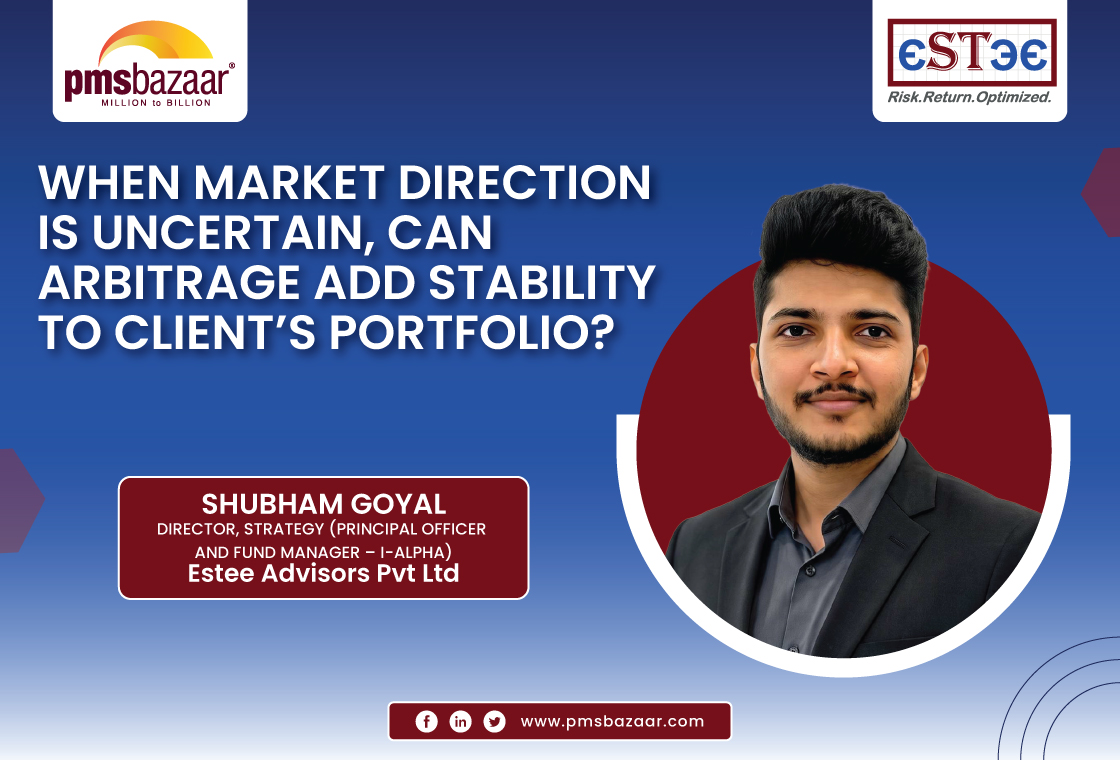
When Market Direction Is Uncertain, Can Arbitrage Add Stability to Client's Portfolio?
PMS Bazaar recently organised a webinar titled “When Market Direction Is Uncertain, Can Arbitrage Add Stability to Client's Portfolio?” which featured Mr. Sandeep Tyagi, Founder & Chairman, Estee Advisors and Mr. Shubham Goyal, Director, Strategy, (Principal Officer and Fund Manager - I-Alpha), Estee Advisors Pvt. Limited. This blog covers the important points shared in this insightful webinar.

MF-PMS: Is This the Next Big Wealth Management Opportunity
PMS Bazaar recently organised a webinar titled “MF-PMS: Is This the Next Big Wealth Management Opportunity,” which featured Mr. Sandeep Jethwani, Co-Founder, Dezerv & Vice Chairman, APMI.

PMS Performance: Over 94% of Tracked Strategies Beat Nifty 50 TRI
Global markets remained under pressure in August 2026 as geopolitical tensions, rising bond yields and elevated crude oil prices kept investors cautious.

Performing Private Credit in India: Opportunity, Risk & the Investor’s Perspective
PMS Bazaar recently organised a webinar titled “Performing Private Credit in India: Opportunity, Risk & the Investor’s Perspective,” which featured Mr Saurabh Agrawal, Co-Fund Manager and Partner, Spark Asia Impact Alternative Asset Management.
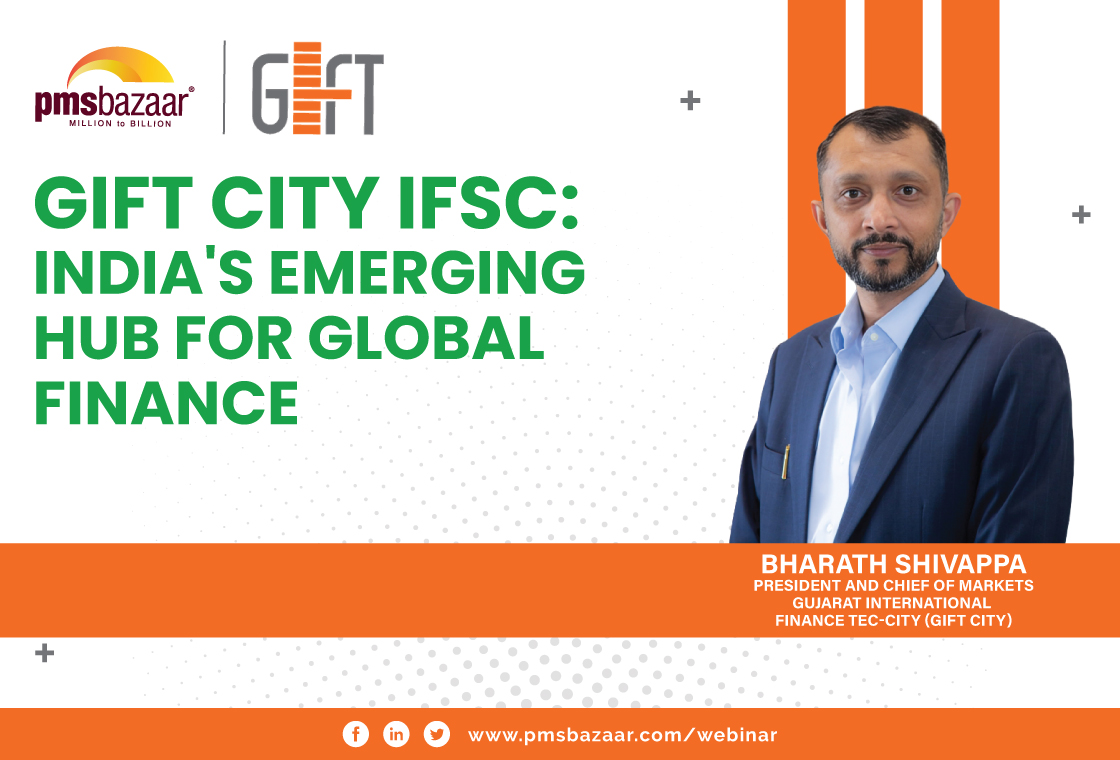
GIFT City IFSC: India's Emerging Hub for Global Finance
PMS Bazaar recently organized a webinar titled “GIFT City IFSC: India's Emerging Hub for Global Finance,” which featured Mr. Bharath Shivappa, President & Chief of Markets, Gujarat International FinanceTec-City. This blog covers the important points shared in this insightful webinar.

PMS Performance: Who Outperformed in July 2026?
July 2026 was another month marked by uncertainty, with market performance shaped by evolving global cues and shifting investor sentiment. Despite the uncertain environment, equity PMS strategies continued to present opportunities, with several managers delivering returns ahead of the broader market benchmarks.

Arbitrage: Seeking Consistency Without Predicting Markets
Every investor grapples with the same challenge: uncertainty.