

PMS Bazaar recently organised a webinar titled “Performing Private Credit in India: Opportunity, Risk & the Investor’s Perspective,” which featured Mr Saurabh Agrawal, Co-Fund Manager and Partner, Spark Asia Impact Alternative Asset Management.

This blog covers the important points shared in this insightful webinar.
The webinar blog covers insights from Mr Agrawal, which include his perspective on private and performing credit in India, highlighting how these instruments address funding gaps for medium-sized enterprises. It explains their advantages over traditional bank loans and online bond platforms, including flexibility, customised structures and professional underwriting. The article also discusses risk management, diversification, liquidity, defaults, recoveries and evolving deployment opportunities across sectors.
Key aspects covered in this webinar blog are:
- Addressing the credit gap for medium enterprises
- Why private credit stands out
- Performing credit as a fixed-income opportunity
- Private credit versus online bond platform providers (OBBPs)
- Underwriting complexity in non-financial sectors
- Proactive risk management and macroeconomic shocks
- Demystifying default risk and portfolio concentration
- Liquidity structures and exit mechanics
- Navigating geopolitical tensions and deployment momentum
Summary: Mr. Agrawal highlighted private credit’s advantages, including customised structures, flexible end-uses, faster execution and attractive yields. For investors, performing credit can complement fixed-income portfolios through regular income, professional underwriting and diversification. Spark’s approach emphasises promoter quality, sector dynamics, cash-flow matching, strong security packages and proactive risk management. He also discussed default management, portfolio diversification, liquidity constraints, geopolitical risks and flexible deployment. He concluded that fixed income should remain a core portfolio allocation.
Mr. Agrawal began by introducing Spark Group as a diversified financial services house with a rich legacy spanning over two and a half decades. Established in 2001 as an investment bank, the group has systematically expanded into three prominent business verticals:
- Investment Banking: Serving as the group's oldest pillar, it has successfully assisted nearly 200 companies across 200 deals, helping raise over $12 billion in capital through venture capital, private equity, strategic investments, and M&A transactions.
- Wealth Management: Recognised as the fastest-growing business within the group, it has crossed ₹50,000 crores in assets under advisory, maintaining a robust domestic footprint across 13 locations alongside an international presence in Dubai.
- Asset Management: Launched in 2017, this division operates across three specialised strategies: public equity through PMS, late-stage private equity via the MIDAS fund, and private credit through the SPECS fund (Spark Equitized Credit Solutions), collectively managing over ₹3,500 crores.
Addressing the Credit Gap for Medium Enterprises
Transitioning to the core discussion, Mr. Agrawal analysed the broader credit landscape, highlighting a distinct disparity in capital access. While large, well-rated corporates enjoy seamless access to domestic, capital market, and offshore funding, small and medium enterprises (SMEs)—the true backbone of the economy—face persistent capital hurdles. SMEs contribute roughly one-third of India's GDP and drive substantial employment, yet traditional banking institutions often fail to meet their evolving capital requirements.
Traditional banks typically rely on rigid, cookie-cutter lending structures involving standard tenors, fixed security requirements, and strict EMI formats. When medium enterprises fail to fit these rigid criteria, they are forced to seek alternative financial solutions. This is precisely where private credit and performing credit bridge the market gap, offering customised financing that accommodates a company's unique cash flow patterns.
Why Private Credit Stands Out
Mr. Agrawal elaborated on the distinct advantages of private credit over traditional banking products. He pointed out that private credit funds provide exceptional flexibility across several critical parameters:
- Bespoke Structuring: Unlike standard loans, private credit allows lower initial coupons paired with ballooning interest rates or equity upsides as the business scales.
- Targeted End-Uses: Traditional banks often restrict funds from being utilised for land acquisition or equity buybacks. Private credit steps in to finance these strategic initiatives smoothly.
- Speed and Certainty: For time-sensitive transactions like corporate acquisitions, businesses willingly pay a premium for the certainty of execution and rapid deployment offered by alternative investment funds.
Furthermore, the private credit industry is expanding rapidly, growing at over 30% year-on-year, with deployment ticket sizes ranging from $10 million to $60 million (approximately ₹80–600 crores). Investment yields typically range from 14% to 22% gross, spanning diversified sectors like healthcare, FMCG, renewables, and emerging data centres.
Performing Credit as a Fixed-Income Opportunity
For investors, Mr. Agrawal explained that performing credit represents a compelling addition to fixed-income portfolios. Operating primarily through Category II AIF close-ended vehicles with four- to seven-year tenors, these funds offer regular monthly or quarterly coupon distributions ranging between 2% and 3%.
Importantly, these investments cater to patient capital allocation. While lock-in periods apply, businesses frequently exercise prepayment options (observed in 60% to 70% of cases) as they scale and refinance through IPOs or private equity raises. This dynamic allows fund managers to continuously reinvest principal repayments while maintaining steady income streams for investors.
Private Credit Versus Online Bond Platform Providers (OBBPs)
Addressing the broader democratisation of fixed-income investing, Mr Agrawal touched upon the rise of Online Bond Platform Providers. Following progressive regulatory changes by SEBI—such as lowering the face value of corporate bonds to ₹10,000—retail investors now have unprecedented access to secondary market bonds, heavily dominated by NBFC issuances.
However, he drew a clear distinction between direct OBBP investing and placing capital into private credit funds:
- Self-Management vs Expert Stewardship: OBBP investments require investors to conduct their own due diligence, build diversified portfolios, and handle post-investment monitoring independently—much like picking individual stocks. In contrast, private credit delegates these complex responsibilities to professional fund managers.
- Customisation and Enforcement: Direct bond purchases limit investors to existing secondary market terms with no room for bespoke structuring. Private credit funds, however, actively negotiate tailored covenants, security mechanisms, and enforcement strategies to protect investor interests.
Underwriting Complexity in Non-Financial Sectors
Mr. Agrawal explained that while financial services investing benefits from strict regulatory oversight and active monitoring by regulatory bodies, underwriting manufacturing and services enterprises is significantly more complex. Investors typically find it challenging to evaluate and structure credits independently in these sectors without specialised expertise.
This gap highlights the core value proposition of alternative investment funds. Traditional commercial banks rely on rigid, asset-heavy collateral and a cookie-cutter underwriting approach, often dismissing asset-light companies. In contrast, private credit funds evaluate enterprises based on holistic cash flow visibility and the quality of the business being built.
According to Mr. Agrawal, the multi-layered underwriting framework relies on specific pillars:
- The Promoter Filter: Because private credit is not perpetual equity capital, selecting integrity-driven promoters who value their obligations and possess a clear intent to repay forms the bedrock of risk mitigation.
- Industry and Sector Dynamics: Fund managers evaluate whether an enterprise is riding structural tailwinds or facing severe headwinds, such as technological obsolescence driven by artificial intelligence.
- Cash Flow Matching: Debt sizes and repayment schedules are strictly sized and aligned with the projected cash generation of the underlying business.
- Robust Security Packages: Establishing holistic security mechanisms that are sufficiently burdensome for the business and promoter to ensure contractual alignment.
Businesses are willing to pay a premium—with performing credit funds operating at gross yields ranging from 14% to 18%—because private credit offers speed, flexibility, and structures completely unavailable through traditional banking channels. Furthermore, an illiquidity premium is factored into the pricing since these instruments are not designed for active secondary market trading.
Proactive Risk Management and Macroeconomic Shocks
Addressing how private credit portfolios withstand broader economic slowdowns or systemic shocks like the COVID-19 pandemic, Mr Agrawal emphasised that proactive risk management is essential. Invoking legal security enforcement remains a complex, last-resort option; therefore, continuous risk assessment is vital.
When facing macroeconomic shocks, a fund manager must determine whether a disruption is temporary or structural. Drawing from Spark’s experience with the 2019 vintage during the pandemic, Mr. Agrawal noted that instead of triggering defaults, they worked collaboratively with struggling promoters. They introduced customised stress windows, reduced near-term principal and interest outflows, and backloaded payments toward the final quarters. This approach ensured zero loss of return for investors while giving companies breathing room to navigate distress.
Demystifying Default Risk and Portfolio Concentration
Mr. Agrawal candidly noted that credit defaults should be viewed as a feature rather than a bug of credit investing. Since private credit does not involve AAA-rated paper, certain portfolio pockets will inevitably encounter headwinds requiring restructuring or security enforcement.
To mitigate this, portfolio construction is critical:
- Diversification: Over-diversification does not exist in credit. Spark spreads its risk across 15 to 20 companies, targeting average portfolio sizes between 4% and 6%. Under this model, a single default results in less than a 1% impact on overall fund returns.
- Amortising Portfolios: Building amortising portfolios ensures that risk reduces with every quarterly or semi-annual repayment.
- Loss Given Default & Recoveries: Active recovery frameworks ensure that even when defaults occur, recovery values preserve inflation-plus returns for investors.
Spark’s dedicated performing credit business, Spark Equitized Credit Solutions (SPECS), has built a strong track record over eight years. Across three funds—with the first fully returned, the second fully invested and returning capital, and the third currently fundraising and deploying—the group has executed 36 investments totalling over ₹1,200 crores.
Liquidity Structures and Exit Mechanics
Addressing investor concerns regarding liquidity constraints, Mr. Agrawal clarified that private credit in India primarily operates through close-ended Category II Alternative Investment Fund (AIF) vehicles. Investors enter fully cognizant that capital cannot be withdrawn prior to fund maturity. This structure prevents the asset-liability mismatches that plague open-ended or interval funds experiencing severe sector disruptions.
When detailing exit strategies, Mr. Agrawal emphasized that Spark’s base case assumes the underlying business will service and retire debt from its own internal cash generation. They avoid event-specific or bridge financing dependent on speculative future IPOs, private equity raises, or aggressive M&A exits.
However, because business projections can vary significantly from actual performance, the evolving private credit ecosystem offers secondary exit avenues. If a company's credit profile deteriorates, higher-yield funds with different risk appetites can refinance the debt, or promoters can proactively demerge and sell non-core units to realign debt levels with cash flows.
Navigating Geopolitical Tensions and Deployment Momentum
Responding to audience questions regarding geopolitical tensions, trade tariffs, and current market conditions, Mr. Agrawal noted that deployment strategies remain agile. When US export-oriented businesses faced tariff and macroeconomic visibility risks, the fund temporarily cut out that specific segment from its underwriting funnel.
Simultaneously, the fund capitalises on robust momentum in sectors supported by strong government and policy tailwinds. Examples from Spark’s portfolio include electric vehicles, renewable energy, battery storage, compressed biogas, and solar pumps. Because the fund maintains a sector-agnostic approach, it can dynamically dial up or dial down allocations based on emerging risks, maintaining a robust deployment pace with only brief seasonal slowdowns.
Core Investor Takeaway
Concluding the webinar, Mr. Agrawal offered a singular, defining piece of advice for investors: to consider fixed income as a part of portfolio allocation.
He urged investors not to evaluate fixed income with equity-like return expectations, but rather to view it as a disciplined, conservative allocation. It provides predictable, less volatile cash flows and allows for customised tenors that align naturally with individual financial goals.
Mr. Agrawal covered all the topics mentioned above in-depth and answered questions from the audience toward the end of the session. For more such insights on this webinar, watch the recording of this insightful session through the appended link below.
Get access to rich data and analytics of PMS & AIF by subscribing to us. Join the 100000+ investors & experts: Subscribe NOW
Recent Blogs

When Market Direction Is Uncertain, Can Arbitrage Add Stability to Client's Portfolio?
PMS Bazaar recently organised a webinar titled “When Market Direction Is Uncertain, Can Arbitrage Add Stability to Client's Portfolio?” which featured Mr. Sandeep Tyagi, Founder & Chairman, Estee Advisors and Mr. Shubham Goyal, Director, Strategy, (Principal Officer and Fund Manager - I-Alpha), Estee Advisors Pvt. Limited. This blog covers the important points shared in this insightful webinar.

MF-PMS: Is This the Next Big Wealth Management Opportunity
PMS Bazaar recently organised a webinar titled “MF-PMS: Is This the Next Big Wealth Management Opportunity,” which featured Mr. Sandeep Jethwani, Co-Founder, Dezerv & Vice Chairman, APMI.

PMS Performance: Over 94% of Tracked Strategies Beat Nifty 50 TRI
Global markets remained under pressure in August 2026 as geopolitical tensions, rising bond yields and elevated crude oil prices kept investors cautious.

The Next Alpha Cycle: How Should Investors Position ‘Alternatives’ in Their Portfolios?
PMS Bazaar recently organized a webinar titled “The Next Alpha Cycle: How Should Investors Position ‘Alternatives’ in Their Portfolios,” which featured Mr. Akhil Chaturvedi, ED & CBO, Motilal Oswal AMC. This blog covers the important points shared in this insightful webinar.
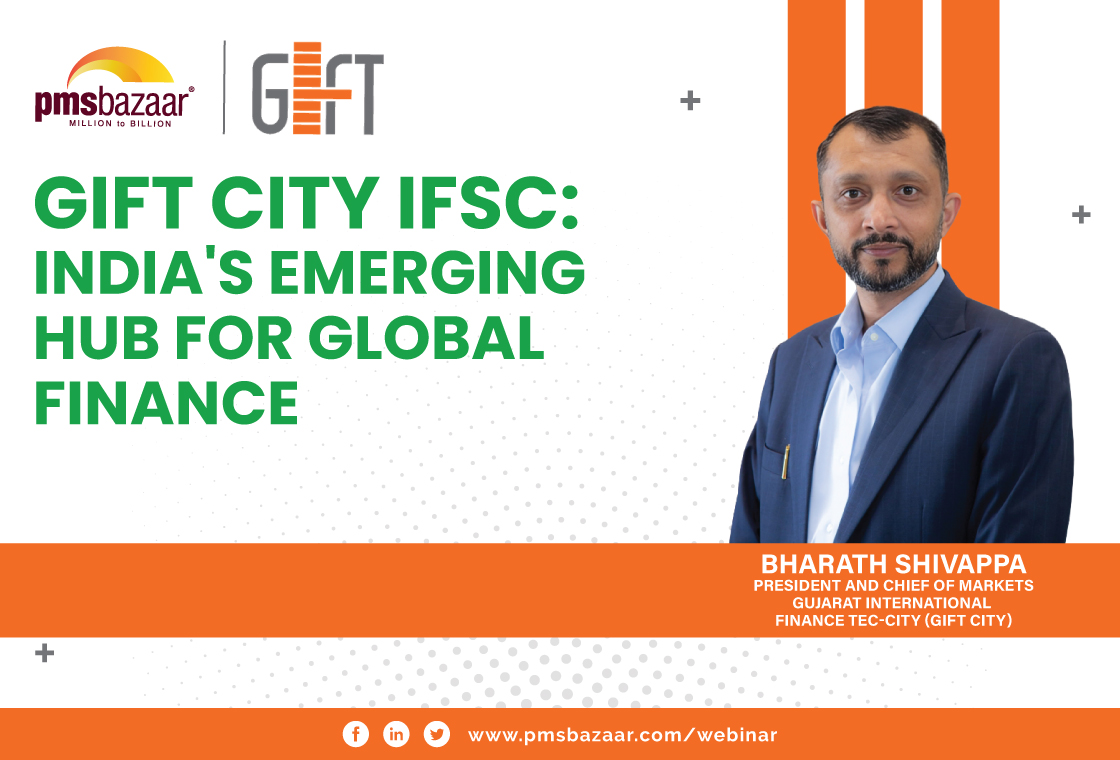
GIFT City IFSC: India's Emerging Hub for Global Finance
PMS Bazaar recently organized a webinar titled “GIFT City IFSC: India's Emerging Hub for Global Finance,” which featured Mr. Bharath Shivappa, President & Chief of Markets, Gujarat International FinanceTec-City. This blog covers the important points shared in this insightful webinar.

PMS Performance: Who Outperformed in July 2026?
July 2026 was another month marked by uncertainty, with market performance shaped by evolving global cues and shifting investor sentiment. Despite the uncertain environment, equity PMS strategies continued to present opportunities, with several managers delivering returns ahead of the broader market benchmarks.

Arbitrage: Seeking Consistency Without Predicting Markets
Every investor grapples with the same challenge: uncertainty.
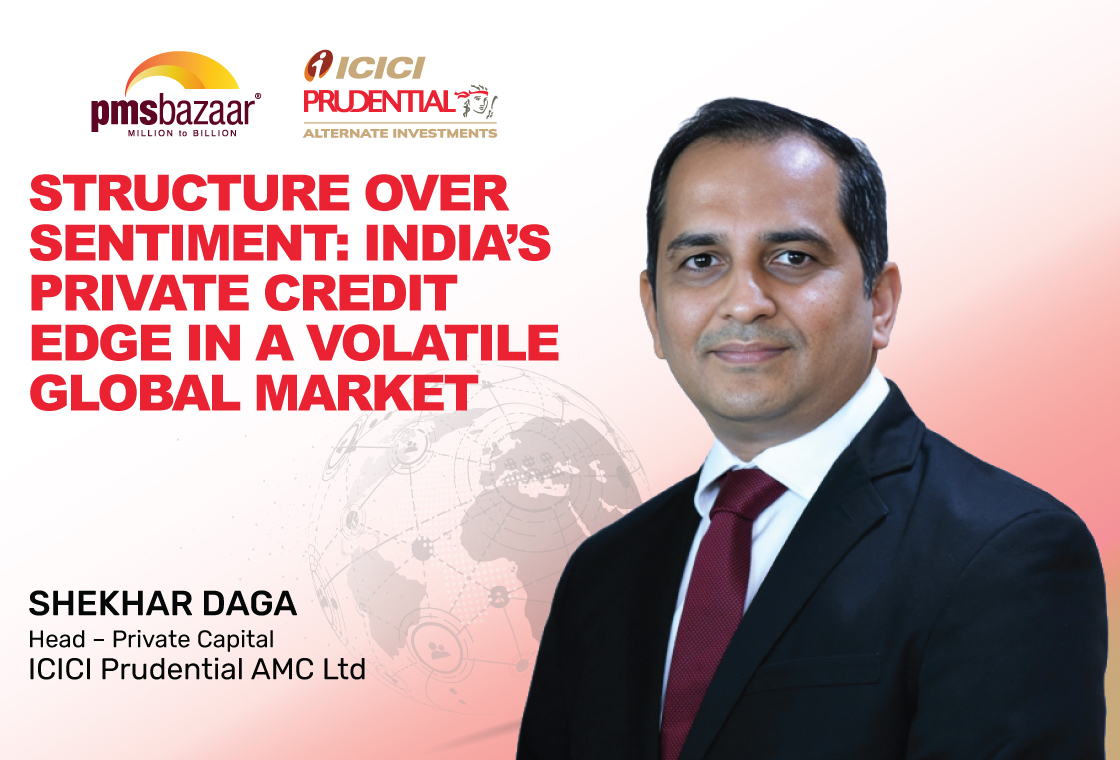
Structure Over Sentiment: India’s Private Credit Edge in a Volatile Global Market
The emergence of private credit over the past decade represents one of the most consequential developments in global finance.