

In March 2020, a friend asked me what he should do with his investments. He was a senior partner at a Big 4 firm who had spent two decades advising companies on their most consequential decisions. I asked him to send me his portfolio first.
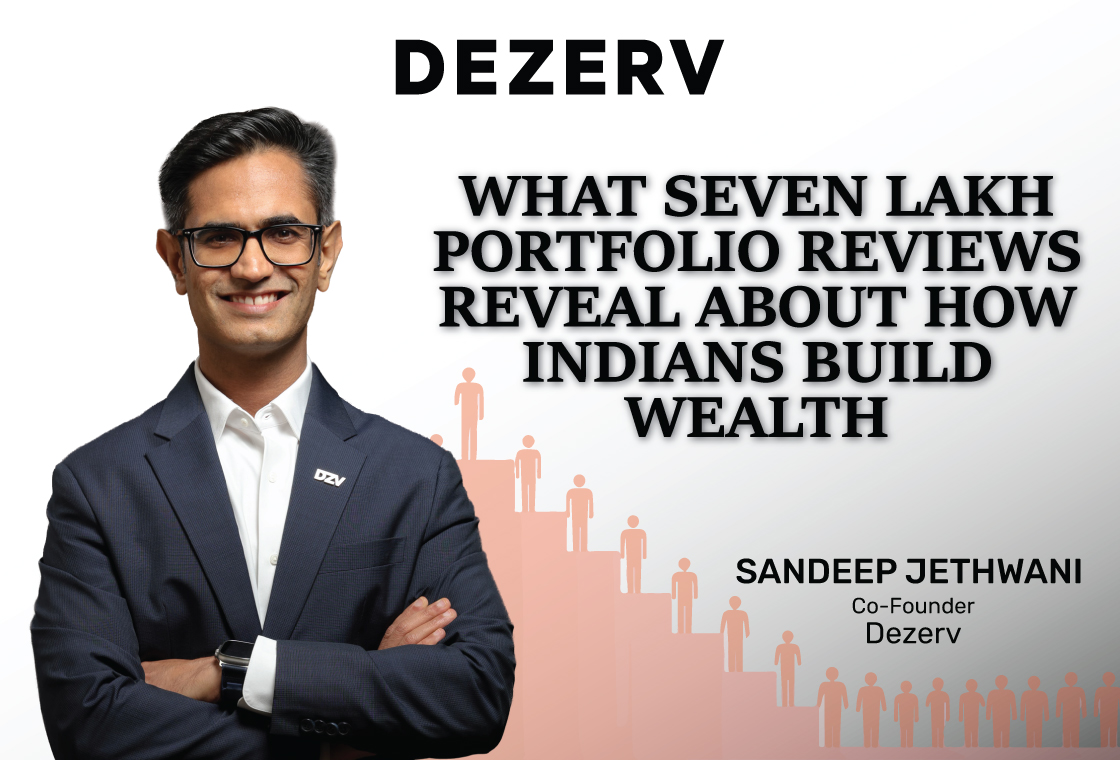
When it arrived, I counted more than 50 holdings: mutual funds, stocks, insurance-linked products, and structured notes. I had to look up several of them just to know what they were. Nobody had reviewed the full picture in years.
I shared the portfolio with Sahil and Vaibhav, who had been my colleagues in wealth management for years. We had the same reaction. If someone who advises billion-dollar businesses ends up here, the new wealth creator does not stand a chance.
That conversation led us to start Dezerv in 2021. Before we built any technology, we sat down with prospective clients and worked through their portfolios on excel sheets, trying to understand what was going wrong. The same patterns showed up, meeting after meeting. Today, Dezerv has reviewed more than seven lakh portfolios tracking over Rs. 2.5 lakh crore in assets. Roughly 54,000 of those sit above Rs. 40 lakh, the cohort closest to PMS Bazaar's readership.
In this cohort, only 43% of portfolios beat the market benchmark. Fewer than 1% beat it by more than a single percentage point.
The owners of these portfolios are founders, doctors, and partners at law and consulting firms. They make high-stakes decisions every day in their professions. Their portfolios rarely reflect the same rigour. Across thousands of reviews, the reasons are remarkably consistent. They are worth understanding because they are not failures of intelligence or effort. They are structural.
When nothing gets removed
Most investors did not set out to own 50 holdings. It happened gradually, over a decade of advisor meetings where each conversation added something and nobody removed anything. A thematic fund one year. A midcap recommendation the next. A debt product after that. Each decision was reasonable on its own. No one was watching what it all added up to.
A portfolio we recently reviewed held 34 different products. Twelve needed to be exited. Sixty percent were underperforming the benchmark. The estimated cost was Rs. 81 lakh in missed gains on holdings of Rs. 5.10 crore. Markets had nothing to do with it. The portfolio had simply been allowed to grow without anyone reviewing it as a whole.
A client of ours, a venture capital partner, described his earlier experience this way: "I found many of them to be too salesy, more intent on pushing what they have as compared to understanding what I need." When the advisor earns from transactions, the portfolio becomes a record of sales conversations rather than a plan for capital.
Good portfolios are built on more than good additions. They also need timely exits, all guided by a single investment thesis. When no one is responsible for the whole picture, portfolios slowly drift away from the purpose they were built for.
Chasing recent winners
In most portfolios, the selection logic is easy to spot. Investors and their advisors tend to buy what has done well in the recent past.
Consider flexicap direct mutual funds over the last decade. The fund ranked first between December 2021 and December 2024 was ranked eighth in the three years before that. The fund ranked fifth most recently was ranked first three years prior. Rankings shift almost completely across cycles.
In the portfolios we have reviewed, 72% of mutual funds were underperforming their benchmark at the point of review. Most had been bought on the back of a strong recent track record.
Past returns are the most visible piece of data an investor has. They feel like evidence. In reality, they describe a market environment that has, in most cases, already changed. What actually shapes future returns is much harder to look up. It includes today's macro setup, current valuations, how the fund is positioned, and how its strategy has held up across full market cycles. None of these show up neatly on a returns chart.
Picking funds without this context tends to repeat the same outcome. Investors buy when confidence is highest and exit near the bottom.
The cost of full calendars
Every founder and CXO who comes to us is running at full capacity on everything that is not their portfolio. As one client put it, there is always more work to do than time to manage wealth.
Markets do not wait. In 2025 alone, three moments called for action: the large-cap earnings data in February, the tariff and rate-cut developments in April, and the tariff escalation in August. A portfolio with no one actively watching it moved through all three without a single change.
This discipline cuts both ways. In our own portfolio management practice, we have made nine adjustments over the last thirty months. Some of the harder calls were the ones where we chose not to act, even when everything around us suggested we should. Knowing when to stay still is just as important as knowing when to move. Most retail and even HNI portfolios are not built for either kind of decision.
What an institutional answer looks like
None of these three problems are difficult to solve in principle. They persist because the typical advisory model is not built to solve them. Transactional incentives reward additions. Sales-driven recommendations follow recent performance. And when no one is paid to watch a portfolio between meetings, the portfolio simply waits.
Three changes shift the outcome.
The first is a portfolio that is built and managed by experts, held to a single clear thesis. The asset allocation reflects where the investor needs to be, not what they have collected over the years. Multi-asset diversification is built in from the start. Someone is finally responsible for the entire portfolio.
The second is selection that is anchored to the investor's actual goals, not the market's most recent winners. When you build a portfolio around where the investor needs to be in ten or twenty years, the way it is composed changes. So does the experience of owning it across the ups and downs.
The third is continuous oversight that does not depend on the investor finding time they do not have. This is what discretionary PMS is built for. The decisions sit with a team whose only job is the portfolio. The investor's calendar stops being a bottleneck. For founders, doctors, partners and CXOs whose biggest constraint is time, this is the only solution that actually fits.
This is what Dezerv was built to deliver. India has accumulated roughly $12 trillion in financial savings since independence. The next twenty-five years are projected to generate eight times that, most of it in the hands of first-generation wealth creators who have no inherited playbook for managing it.
Building wealth and preserving wealth are two different disciplines. Most portfolios I have reviewed are built only for the first. Five years and seven lakh reviews after that conversation in March 2020, what stays with me is simple. People who spend their lives getting very good at their work deserve a portfolio that has been built with the same care. That is what Dezerv exists to do.
Recent Blogs
PMS Performance : 401 Equity PMS Beat the Nifty 50 TRI
September 2026 saw global markets grapple with persistent macroeconomic uncertainty, as rising U.S. bond yields, crude oil prices above $90 per barrel and escalating Middle East tensions kept investors on edge. Concerns over renewed inflationary pressures and tighter financial conditions continued to shape market sentiment. The reported 25-basis-point Federal Reserve rate hike, bringing rates to 3.75–4.00 per cent, added another dimension to the evolving global outlook.
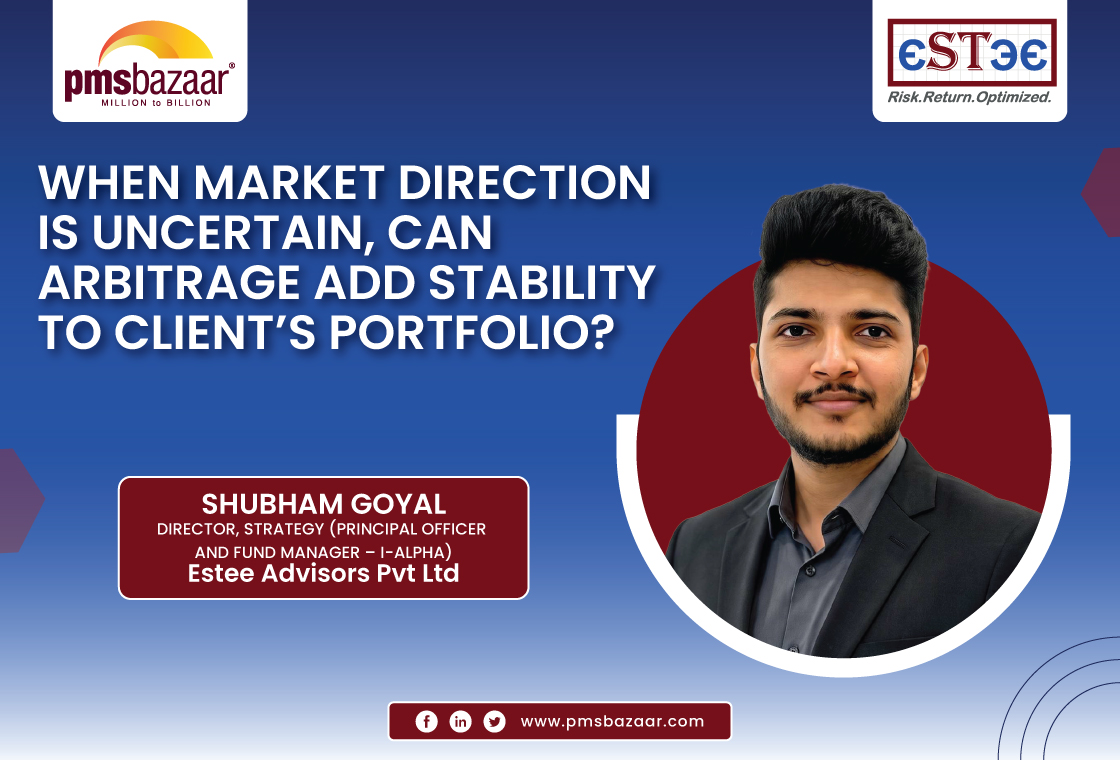
When Market Direction Is Uncertain, Can Arbitrage Add Stability to Client's Portfolio?
PMS Bazaar recently organised a webinar titled “When Market Direction Is Uncertain, Can Arbitrage Add Stability to Client's Portfolio?” which featured Mr. Sandeep Tyagi, Founder & Chairman, Estee Advisors and Mr. Shubham Goyal, Director, Strategy, (Principal Officer and Fund Manager - I-Alpha), Estee Advisors Pvt. Limited. This blog covers the important points shared in this insightful webinar.
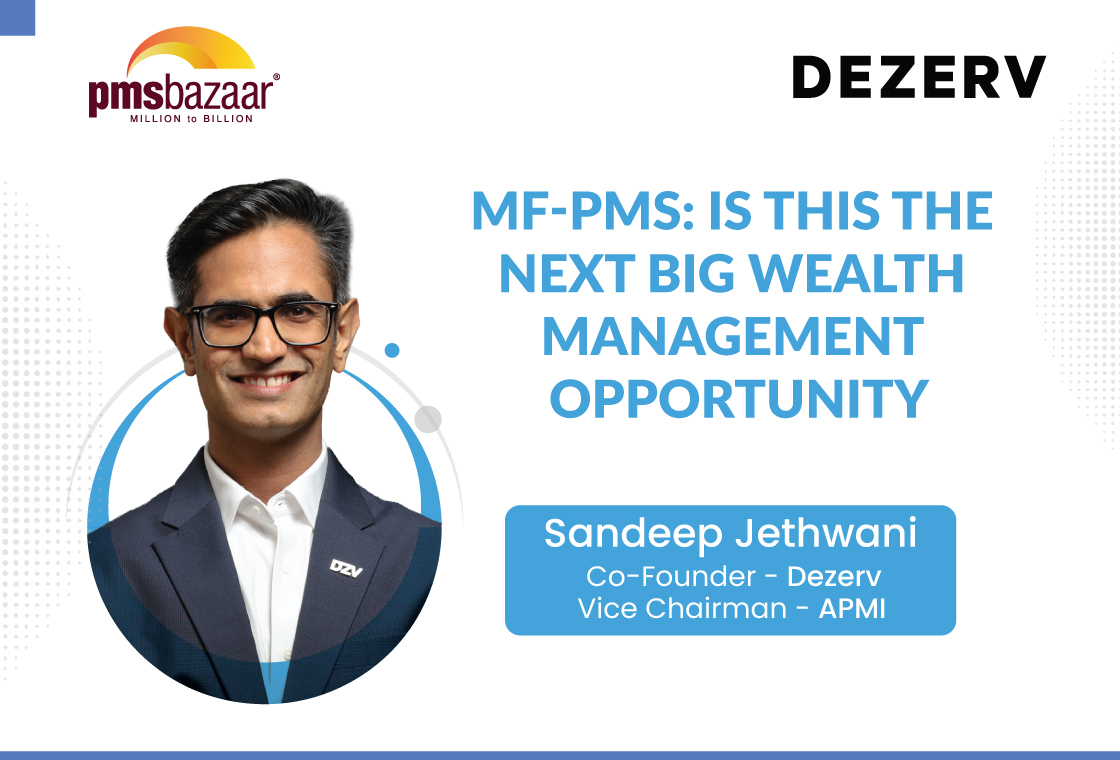
MF-PMS: Is This the Next Big Wealth Management Opportunity
PMS Bazaar recently organised a webinar titled “MF-PMS: Is This the Next Big Wealth Management Opportunity,” which featured Mr. Sandeep Jethwani, Co-Founder, Dezerv & Vice Chairman, APMI.

PMS Performance: Over 94% of Tracked Strategies Beat Nifty 50 TRI
Global markets remained under pressure in August 2026 as geopolitical tensions, rising bond yields and elevated crude oil prices kept investors cautious.

The Next Alpha Cycle: How Should Investors Position ‘Alternatives’ in Their Portfolios?
PMS Bazaar recently organized a webinar titled “The Next Alpha Cycle: How Should Investors Position ‘Alternatives’ in Their Portfolios,” which featured Mr. Akhil Chaturvedi, ED & CBO, Motilal Oswal AMC. This blog covers the important points shared in this insightful webinar.
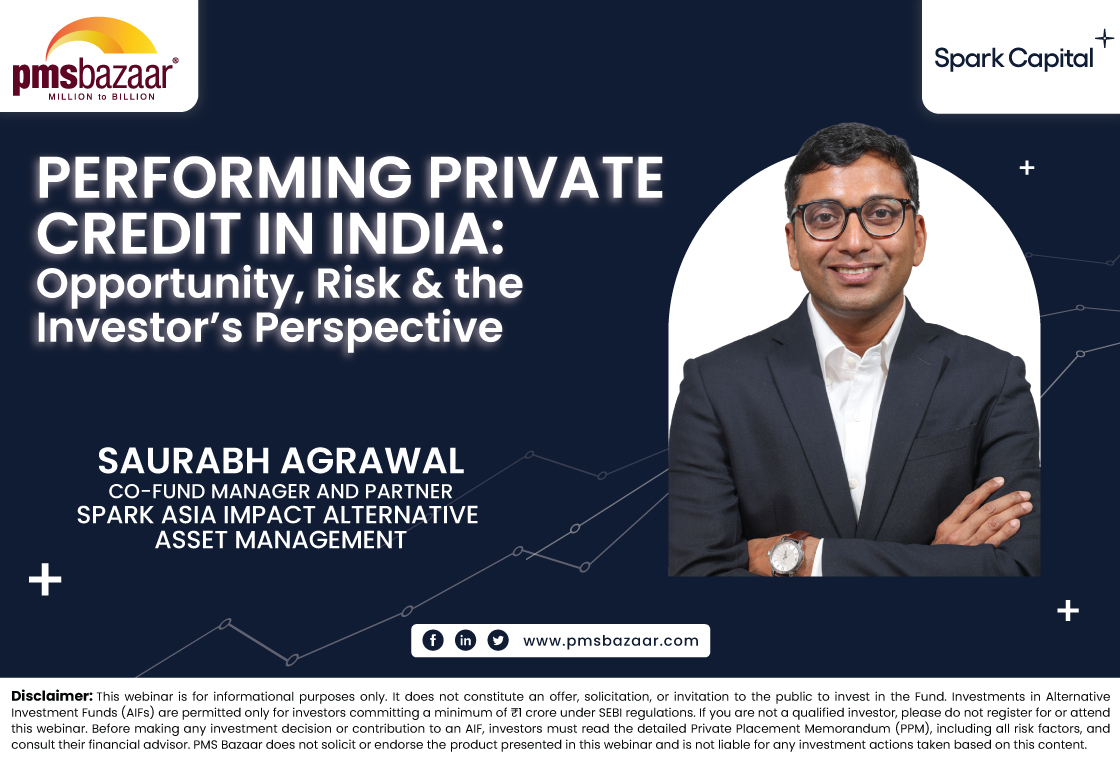
Performing Private Credit in India: Opportunity, Risk & the Investor’s Perspective
PMS Bazaar recently organised a webinar titled “Performing Private Credit in India: Opportunity, Risk & the Investor’s Perspective,” which featured Mr Saurabh Agrawal, Co-Fund Manager and Partner, Spark Asia Impact Alternative Asset Management.
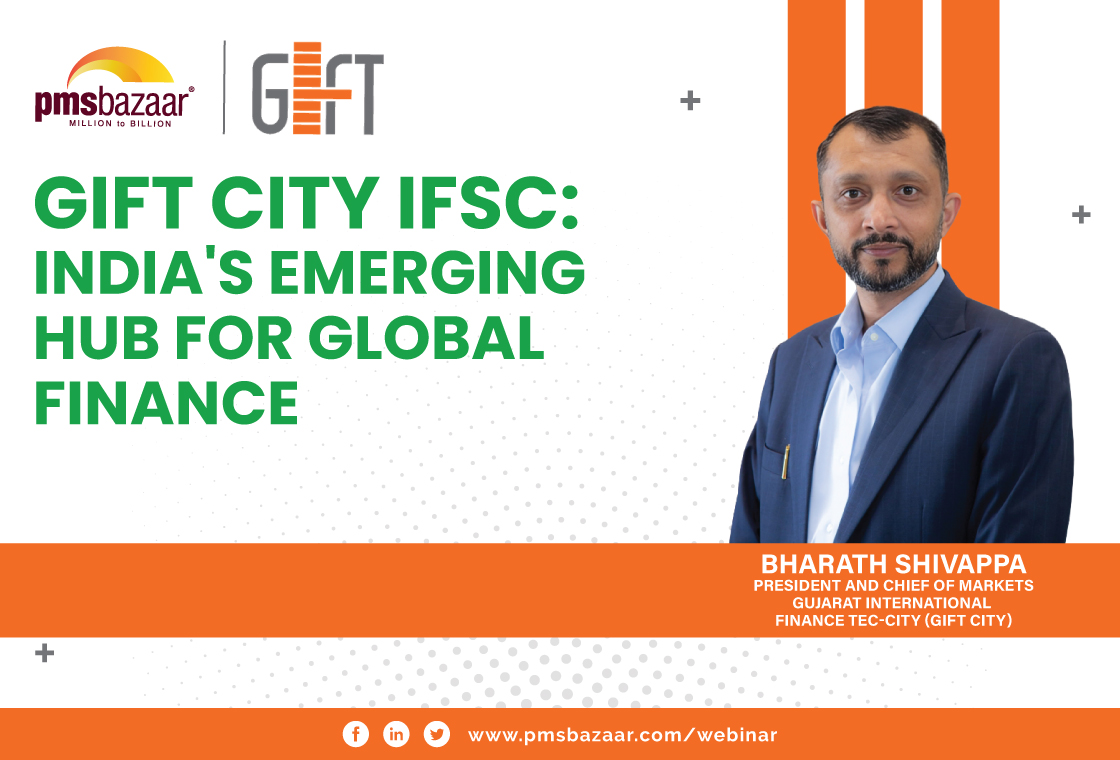
GIFT City IFSC: India's Emerging Hub for Global Finance
PMS Bazaar recently organized a webinar titled “GIFT City IFSC: India's Emerging Hub for Global Finance,” which featured Mr. Bharath Shivappa, President & Chief of Markets, Gujarat International FinanceTec-City. This blog covers the important points shared in this insightful webinar.
PMS Performance: Who Outperformed in July 2026?
July 2026 was another month marked by uncertainty, with market performance shaped by evolving global cues and shifting investor sentiment. Despite the uncertain environment, equity PMS strategies continued to present opportunities, with several managers delivering returns ahead of the broader market benchmarks.