


In a bold and transformative move to position India at the forefront of global finance, the Government of India conceptualized and established the International Financial Services Centre (“IFSC”) at Gujarat International Finance Tec-City (“GIFT City”).
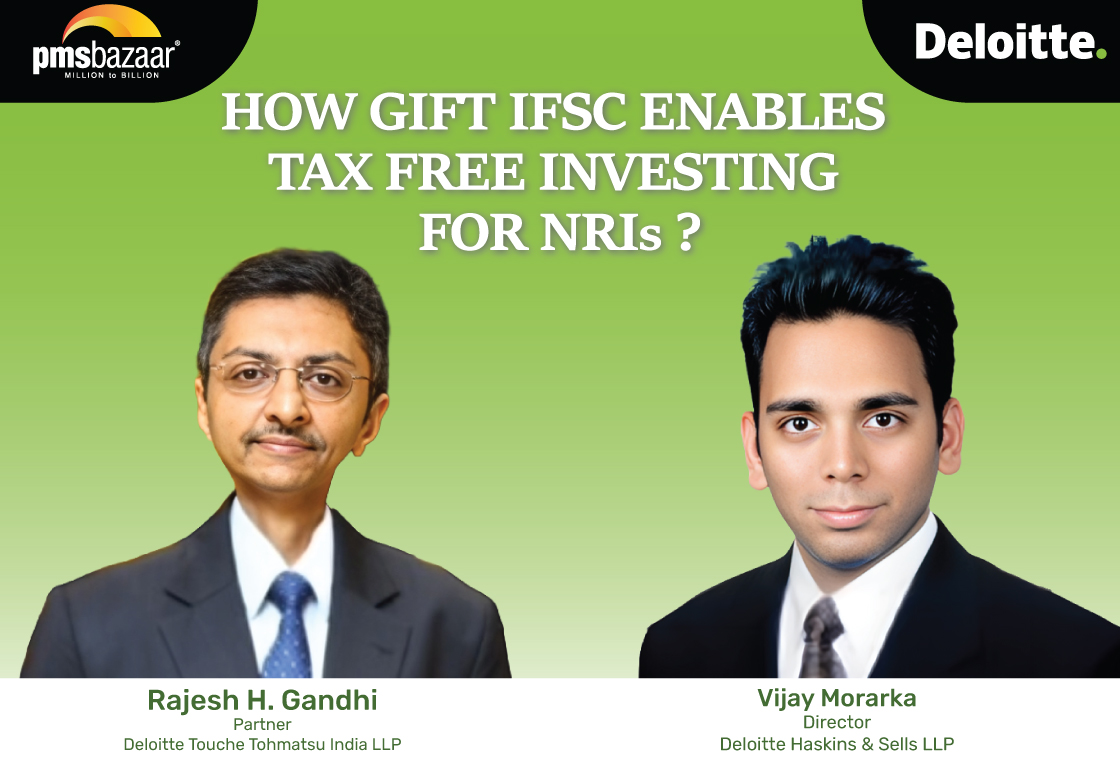
GIFT IFSC represents India’s strategic push to create a globally competitive financial hub within its borders. As India’s first and only operational IFSC, it enables seamless cross-border financial transactions under globally aligned regulatory and policy frameworks, while allowing entities to operate in freely convertible foreign currency and be treated as non-residents under exchange control laws.
The IFSC supports a broad spectrum of activities, including banking, insurance, fund and asset management, capital markets, leasing, and FinTech, backed by a full ecosystem of ancillary services. Regulatory oversight is provided by the unified IFSC Authority, consolidating functions traditionally performed by multiple domestic regulators.
Against this backdrop, a range of fiscal, regulatory, and operational incentives have been introduced to enhance its attractiveness for investors and market participants.
Tax benefits for overseas investors investing in GIFT IFSC
GIFT IFSC has been developed as a tax-efficient jurisdiction that complements its regulatory and operational advantages. Global investors and Non-Resident Indians earning income from GIFT IFSC entities enjoy several advantages. Interest income received by a non-resident from any GIFT IFSC entity is fully exempt from India tax, while dividends distributed by such GIFT IFSC entities is taxed at a reduced rate. Non-residents also enjoy exemption on transfer of Over-the-Counter transactions, Offshore Derivative Instruments, and Non-Deliverable Forward Contracts executed with qualifying IFSC entities and capital gains exemption on specified securities listed on the IFSC exchanges, further reducing tax liability of the investors.
Non-resident investors in funds investing either into India or overseas benefit not only from favorable tax treatment but also from significantly reduced compliance obligations. Where such investors have no other taxable income in India, they are not required to obtain a Permanent Account Number (“PAN”) or file an Indian tax return, provided applicable taxes have been appropriately withheld at source and prescribed conditions are satisfied. In the absence of a PAN, investors must furnish a declaration along with specified information; however, where a PAN has been obtained by the investor, it must be disclosed in accordance with KYC requirements. Further enhancing investor efficiency, non-resident investors in Category III AIFs are exempt from Indian tax both on income distributions made by such funds and on transfers of units in these AIFs.
In the sections that follow, we will explore in greater detail the investment avenues available to global investors and highlight the specific tax benefits to Funds that make GIFT IFSC an increasingly attractive destination for international capital.
Investing in Funds established in GIFT IFSC
Fund and asset management has emerged as one of the fastest-growing segments within GIFT IFSC. As of September 2025, 194 Fund Management Entities have registered, launching 310 funds with cumulative investor commitments exceeding USD 26bn. This includes four retail schemes, 168 Category III Alternative Investment Funds (“AIFs”), and 118 Category I and II AIFs. The pace of new scheme launches continues to accelerate. To further promote this segment, initiatives such as the “Platform Play” framework have been introduced, enabling fund managers to use existing platforms within GIFT IFSC before establishing a full-fledged presence.
The regulatory framework governing fund management in GIFT IFSC permits the establishment of Fund Management Entities under the IFSCA (Fund Management) Regulations, 2025. These entities may manage AIFs and Retail Schemes and may also provide Portfolio Management Services to global investors.
AIFs are categorized into three classes. Category I and Category II AIFs primarily invest in unlisted securities, while Category III AIFs and Retail Schemes typically focus on listed securities. Investment in Indian listed securities require registration as FPI from SEBI.
Category I and II AIFs operate under a pass-through tax regime, under which most income, other than business income, is taxed directly in the hands of investors. Foreign investors may also claim benefits under applicable tax treaties.
Category III AIFs and retail schemes operating out of GIFT IFSC benefit from one of the most investor-friendly tax regimes available to non-resident investors. Capital gains from investments in securities other than shares of Indian companies such as bonds, debentures, derivatives, foreign securities, and securities listed on GIFT IFSC exchanges are fully exempt from tax. Dividend and interest income from Indian investments is taxed at a concessional rate of 10 percent, while income from foreign securities is entirely exempt. In addition, several domestic anti-avoidance provisions and treaty-related restrictions do not apply to these funds, further enhancing tax certainty and efficiency.
This framework allows fund managers considerable latitude in structuring investments. Beyond making direct investments into India, Category III AIFs can operate as fund-of-funds, investing into global funds or allocating capital to Indian mutual funds, without incurring tax at the fund level in India. As a result, the entire structure can remain tax-neutral domestically. These advantages have made GIFT IFSC an increasingly attractive jurisdiction for global investors, prompting many fund managers to establish funds in GIFT City that exclusively pool non-resident capital to invest either in domestic mutual funds or in offshore funds and foreign securities.
However, Category III AIFs set up in GIFT IFSC require all investors other than the sponsor or manager to be non-residents. The inclusion of even a single resident investor could result in the loss of tax exemptions for the entire Fund. Further, if an investor who is non-resident at the time of onboarding subsequently becomes a resident, the investor must exit from the Fund within three months from the end of the relevant financial year. This can pose challenges for Indian citizens residing in certain jurisdictions who do not levy any tax on individuals. In such cases, despite living overseas, they may be deemed residents under Indian tax law due to taxable income exceeding INR 1.5 million in India, thereby limiting their ability to participate in such Funds.
Overall, GIFT IFSC provides a compelling platform for Non-Resident Indians and global investors to access fund-based investment opportunities with lower tax incidence and simplified compliance.
Investing in business operations at GIFT IFSC
Entities established in GIFT IFSC to carry out approved activities are entitled to a full exemption from income tax for ten consecutive years within the first fifteen years, materially reducing tax outflows at the operating level and enhancing overall returns for investors involved in such businesses. Additionally, services procured by such entities are exempt from Goods and Services Tax, thereby reducing operating costs. The applicable rate of MAT/ AMT on book profits is reduced to 9% or NIL (where the special tax regime is adopted).
Dividends distributed by companies and funds operating from GIFT IFSC are subject to a concessional tax rate of 10% in the hands of global investors and Non-Resident Indians, seeking efficient distribution of profits and predictable post-tax income streams.
In addition, interest earned by NRIs and global investors on loans advanced to, or debt instruments issued by, GIFT IFSC entities is fully exempt from tax and withholding. When coupled with the ten-year tax holiday available to IFSC businesses, this framework enables tax-efficient debt financing of Indian operations without triggering thin capitalization restrictions under Indian tax laws, making GIFT IFSC a preferred jurisdiction for structured lending arrangements.
Conclusion
GIFT IFSC has rapidly evolved into a leading financial destination for NRIs and global investors by offering a combination of tax incentives, transaction-level exemptions, ease of repatriation, and a cost-efficient operating environment. Supported by world-class infrastructure and a unified regulatory framework, GIFT IFSC provides a seamless and future-ready platform for global capital to participate in India’s growth story with enhanced tax efficiency and regulatory certainty.
Recent Blogs

April rebound lifts PMS strategies, but small-cap tilt drives leaders
A broad market recovery helped managers beat large-cap indices, though alpha against wider benchmarks remained more selective and category-dependent

SEBI’s GARUDA Framework: A Big Boost for India’s AIF Industry and GIFT City Ecosystem
India’s Alternative Investment Fund (AIF) industry has evolved rapidly over the last few years. Investors today are increasingly moving beyond traditional investment products such as mutual funds and fixed deposits in search of differentiated opportunities across Private Equity, Venture Capital, Private Credit, Real Estate, infrastructure, and Category III long-short strategies.

Winners & Losers: Sectors to Watch in the Current Global Crisis
PMS Bazaar recently organized a webinar titled “Winners & Losers: Sectors to Watch in the Current Global Crisis,” which featured Mr. Arpit Shah, Co-Founder and Director, Care Portfolio Managers. This blog covers the important points shared in this insightful webinar.

Why Market Corrections Are the Best Time to Build Your Core Equity Portfolio
PMS Bazaar recently organized a webinar titled “Why Market Corrections Are the Best Time to Build Your Core Equity Portfolio,” which featured Mr. Amit Nigam, Deputy CIO, ASK Investment Managers. The webinar blog covers insights from Mr. Nigam, which includes explanation how recent stock market volatility in India creates opportunities for long-term investors. It highlights shifting from a fixed deposit mindset to equities, his blog covers the important points shared in this insightful webinar.
Why ETF-Only Portfolios Are the Most Tax-Efficient Way to Invest
How deferred taxation and lower LTCG rates compound into significantly higher post-tax wealth for long-term investors

6 out of 10 PMSes Beat Benchmarks In March Crash
Despite a fourth straight monthly sell-off, most PMSes fell less than benchmarks; a few even stayed in the green
Sapphire SIF: Long-Short Factor Model Driven by Quant Strategy
PMS Bazaar recently organized a webinar titled “Sapphire SIF: Long-Short Factor Model Driven by Quant Strategy,” which featured Mr. Satish Prabhu, Vice President and Head of Products and Content, Franklin Templeton Asset Management Private Limited. This blog covers the important points shared in this insightful webinar.

Why Invest in Start-Ups for Wealth Creation?
PMS Bazaar recently organized a webinar titled “Why Invest in Start-Ups for Wealth Creation?” which featured Mr. Vinit Rai, MD& CIO, Managing Director, JM Financial Equity. This blog covers the important points shared in this insightful webinar.