


PMS Bazaar data reveals that all the equity PMS categories have delivered over 35% return on average in the past year beating the market, represented by Nifty 50 return of 33%.

Portfolio Management Services (PMS) have consistently outperformed benchmark indices like the Nifty 50 and BSE 500. This success is primarily attributed to the PMS fund managers’ active fund management strategies. PMS managers carefully select stocks, rotate sectors, and employ other tactics to ensure timely entry and exit, ultimately generating alpha and creating wealth for investors.
In the past year, all equity PMS categories, including large-cap, mid-cap, small-cap, multi-cap, and more, have significantly surpassed the Nifty 50 TRI and BSE 500 TRI. For this purpose, 378 data within the PMS Bazaar universe that has completed one year, as of August 2024, were considered. The data shows the effectiveness of PMS in delivering superior returns to investors.
PMS categories outperform the market
There are 378 different PMS investment approaches within the PMS Bazaar universe, each categorised based on its unique style. These styles include Flexi Cap, Large & Mid Cap, Large Cap, Mid Cap, Small Cap, Multi Cap, Flexi Cap, Small & Mid Cap, Thematic, and Sectoral PMSes.
In the past year, all equity-focused PMS categories have achieved impressive returns of over 35% (data as of Aug 2024). The Large & Mid Cap category stands out with the maximum returns at 47.64%, while the Small Cap category recorded the minimum returns at 37.98%.
As such over the last year, Large & Mid Cap PMS category has emerged as the top performer, delivering an average return of 47.64%. Following closely, Small & Mid Cap PMS category achieved an average return of 42.67%, securing the second position. Flexi Cap PMS categories claimed the third spot with an average return of 42.45%.

Source: PMS Bazaar; Data as of August 2024
Benchmark outperformance
While the large and mid cap PMS category has topped the chart with its performance compared to other PMS categories, the data reveals a slightly different perspective with respect to benchmark outperformance.
Large-cap funds, which invest in well-established companies with substantial market presence, have historically offered a degree of stability and resilience. These companies often possess strong financial foundations, established brands, and a proven track record of navigating economic fluctuations. While the overall category average return for large-cap PMS was a respectable 38.91%, the benchmark outperformance was particularly noteworthy, suggesting that these funds have effectively capitalised on market opportunities and outpaced their respective benchmarks. As such, out of 25 large cap PMSes, about 64% of them have outperformed their respective benchmark indices.
Let’s take another example. The multi asset PMS category has seen the second highest benchmark outperformance in this past year. Of the 15 PMSes, 10 of them have outperformed their respective benchmark (66.67%). The multi asset PMSes employ a diversified investment strategy that spreads risk across various asset classes. This approach aims to mitigate the impact of market volatility and potentially enhance risk-adjusted returns. By investing in a combination of equity, fixed income, commodities, and potentially other asset classes, multi-asset PMS can offer a more balanced and less correlated portfolio. Despite a slightly lower category average return compared to other equity PMS categories, multi asset PMS category has exhibited impressive benchmark outperformance, indicating their ability to generate returns in diverse market conditions.
That said, while benchmark outperformance is a valuable indicator, it's not the sole determinant of a fund's success. Factors such as investment objectives, risk tolerance, and individual investor circumstances also play a crucial role in evaluating the suitability of a particular PMS.

The top 3 PMS categories are as follows:
Large & mid cap PMS
Large & mid cap PMS category delivered an average return of 47.64% in the past year. Despite volatile markets, large-cap and mid-cap funds have led the pack among other PMS categories.
Of the 15 large-cap PMS funds, 11 have outperformed the Nifty 50 TRI, and 8 have surpassed the BSE 500 TRI. Notably, the top 3 PMS funds have achieved remarkable returns of over 70% in the past year.

Small & mid cap PMS
Small and mid-cap PMS funds have also delivered impressive returns, with an average of 42.67%. Out of 33 funds, 27 have outperformed the Nifty 50 TRI, and 18 have surpassed the BSE 500 TRI. The top 3 funds have generated returns exceeding 50%, with Green Lantern - Growth Fund leading the way at a remarkable 98% up to August 2024.

Flexi and multi cap PMS category
Both Flexi-cap and Multi-cap PMS categories delivered comparable returns in the past year, with average returns of 42.45% and 42.15%, respectively. Although there is no clear-cut distinction between the two, PMS fund managers differentiate themselves based on their allocation to small, mid, and large-cap stocks.
Of the 45 Flexi cap PMS approaches, 21 outperformed their benchmark by an average of 46.47%. In the Multi cap category, 95 out of 170 funds surpassed their benchmark, with an average outperformance of 55.88%. Notably, the top-performing funds in both categories achieved returns exceeding 70%.
Top 3 PMSes in flexi cap category are as follows:

Top 3 PMSes in multi cap category are as follows:

Takeaway
PMS investments have delivered impressive returns in the past year, with an average return of 40.55% across 378 investment approaches. Notably, 56% of these PMS funds outperformed the benchmark indices, Nifty 50 TRI and BSE 500 TRI.
Among the various PMS categories, large & mid-cap and small & mid-cap funds significantly outperformed large-cap funds. This success can be attributed to the overall optimistic market sentiment, fueled by positive economic growth forecasts. While investors in small and mid-cap segments have benefited from higher returns in the past year, they should carefully consider their risk tolerance before investing in these segments going forward due to growing valuation concerns.
Remember, past performance is not a guarantee of future results. However, PMS can be an attractive option for High-Net-Worth Individuals (HNIs) and Ultra-High-Net-Worth Individuals (UHNIs) seeking to grow their wealth through strong performance across different categories and the ability to navigate market volatility.
Recent Blogs

SEBI’s Accredited Investor Certificate: Exclusive Access to AIFs, PMS, SIFs & Private Markets
PMS Bazaar recently organized a webinar titled “SEBI’s Accredited Investor Certificate: Exclusive Access to AIFs, PMS, SIFs & Private Markets,” which featured Mr. Rajesh Kumar S, Head of Business, NSDL Database Management Limited. This blog covers the important points shared in this insightful webinar.

April rebound lifts PMS strategies, but small-cap tilt drives leaders
A broad market recovery helped managers beat large-cap indices, though alpha against wider benchmarks remained more selective and category-dependent

SEBI’s GARUDA Framework: A Big Boost for India’s AIF Industry and GIFT City Ecosystem
India’s Alternative Investment Fund (AIF) industry has evolved rapidly over the last few years. Investors today are increasingly moving beyond traditional investment products such as mutual funds and fixed deposits in search of differentiated opportunities across Private Equity, Venture Capital, Private Credit, Real Estate, infrastructure, and Category III long-short strategies.

Winners & Losers: Sectors to Watch in the Current Global Crisis
PMS Bazaar recently organized a webinar titled “Winners & Losers: Sectors to Watch in the Current Global Crisis,” which featured Mr. Arpit Shah, Co-Founder and Director, Care Portfolio Managers. This blog covers the important points shared in this insightful webinar.

Why Market Corrections Are the Best Time to Build Your Core Equity Portfolio
PMS Bazaar recently organized a webinar titled “Why Market Corrections Are the Best Time to Build Your Core Equity Portfolio,” which featured Mr. Amit Nigam, Deputy CIO, ASK Investment Managers. The webinar blog covers insights from Mr. Nigam, which includes explanation how recent stock market volatility in India creates opportunities for long-term investors. It highlights shifting from a fixed deposit mindset to equities, his blog covers the important points shared in this insightful webinar.

Why ETF-Only Portfolios Are the Most Tax-Efficient Way to Invest
How deferred taxation and lower LTCG rates compound into significantly higher post-tax wealth for long-term investors
6 out of 10 PMSes Beat Benchmarks In March Crash
Despite a fourth straight monthly sell-off, most PMSes fell less than benchmarks; a few even stayed in the green
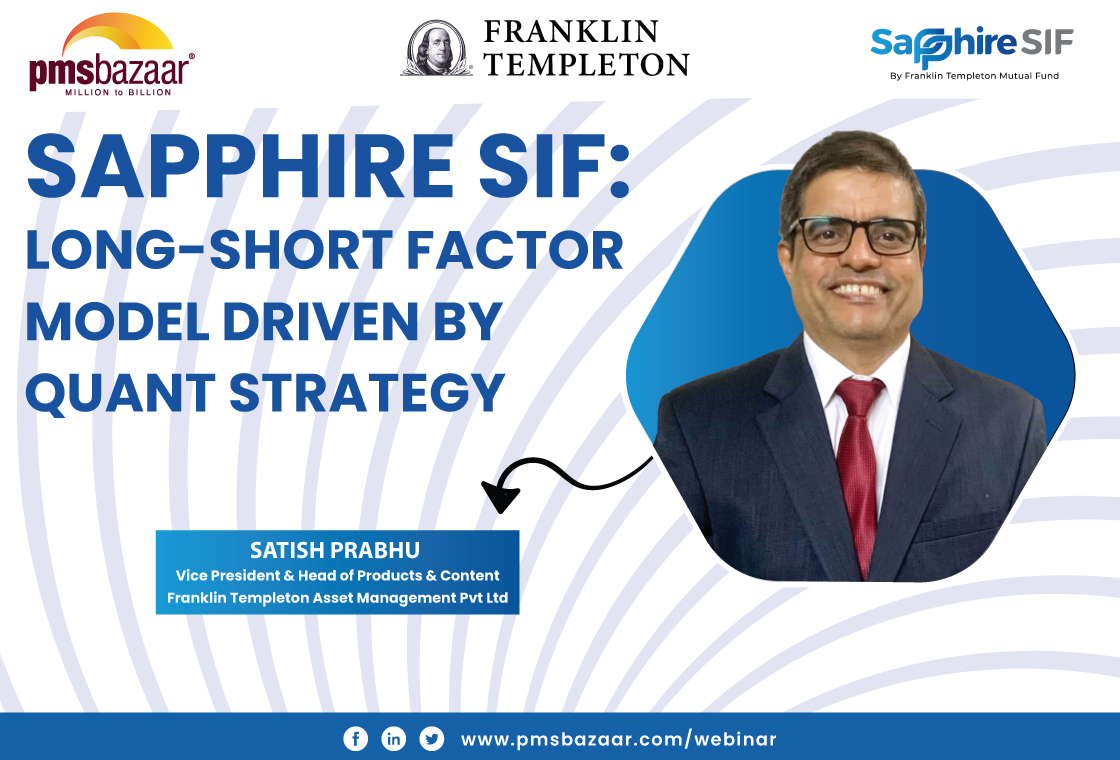
Sapphire SIF: Long-Short Factor Model Driven by Quant Strategy
PMS Bazaar recently organized a webinar titled “Sapphire SIF: Long-Short Factor Model Driven by Quant Strategy,” which featured Mr. Satish Prabhu, Vice President and Head of Products and Content, Franklin Templeton Asset Management Private Limited. This blog covers the important points shared in this insightful webinar.