


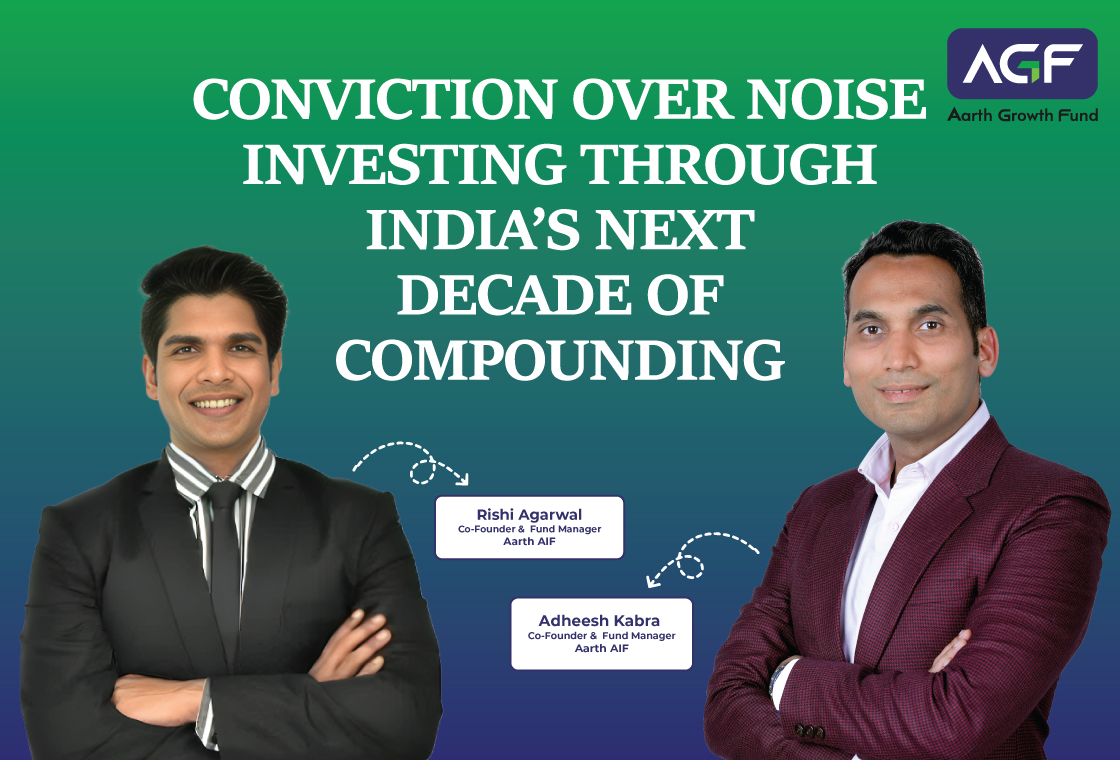
By Rishi Agarwal & Adheesh Kabra, Co-Founders and Fund Managers, Aarth Growth Fund
If the past year has taught markets anything, it is this:
CERTAINTY IS OVERRATED, CONVICTION IS NOT.
The last twelve months were a masterclass in how quickly sentiment can swing. Periods of calm were followed by sharp drawdowns. Valuations expanded aggressively in some pockets, only to correct just as fast. Headlines changed weekly. Yet beneath this surface volatility, something far more durable continued to strengthen India’s structural growth story.
At Aarth Growth Fund, we did not view volatility as an interruption. We viewed it as cues for micro trends which can fundamentally shift India's microcap growth. "Markets test patience, not principles. Discipline in 2025 triumphed over momentum." — Co-Founders, Aarth Growth Fund
2025 was a year where discipline mattered more than optimism. Even as valuations in select pockets ran ahead of fundamentals and liquidity tapered post-IPO rallies, our focus stayed rooted in framework.
We continued investing behind businesses with:
- Prudent capital allocation — management capable of deploying capital wisely.
- Founder market fit - alignment between a founder's vision and the market's needs.
- Governance that absorbs shocks — institutional practices that hold through volatility.
Our approach was not about predicting short-term moves, but about positioning for long-term compounding in segments where institutional participation still remains thin.
This discipline mattered, especially in primary markets. As active anchor investors across micro caps, we participated selectively (one in ten) — engaging in opportunities where strength of business models justified valuation and walking away when quality did not align with price.
Volatility Creates Entry Points, Not Excuses
Global macro shifts — rising rates, geopolitical tremors and risk aversion — brought corrections across the market spectrum. Yet many high-quality businesses with clean balance sheets and credible execution traded at discounts to intrinsic value.
To us, these phases were not reasons to retreat, but moments to deepen conviction.
We intensified our research — mapping:
- Supply chain resilience across manufacturing networks
- Credit cycles and working capital dynamics
- Technology adoption rates within sectors
This helped us differentiate transient noise from lasting structural change.
Periods like these often define the foundation for future alpha. accumulate quality amid discomfort.
Entrepreneurs Signal the Road Ahead
Our conviction was not just data-backed — it was dialogue-led.
Conversations with Micro caps entrepreneurs provided a bottom-up validation of India's formalisation story. We observed:
- Manufacturing firms scaling regional capacities into national footprints
- Traditional businesses corporatizing, digitizing operations and enhancing supply chain efficiency
- Emerging segments in backward integrated companies – enabling value addition
The transformation is tangible — visible in capacity expansions, working capital cycles and export quality products.
India has signed 13 Free Trade Agreements (FTAs) with its trading partners, including the 3 agreements, namely India-Mauritius Comprehensive Economic Cooperation and Partnership Agreement (CECPA), India-UAE Comprehensive Partnership Agreement (CEPA) and India-Australia Economic Cooperation and Trade Agreement (IndAus ECTA) signed during the last five years.
India's PLI-led manufacturing push, domestic demand resilience, and microcap formalisation are converging into one undeniable truth: India's next trillion-dollar opportunity lies in the MSME ecosystem.
“India's next trillion-dollar opportunity lies in the MSME ecosystem." — Founder Insight
Year One: Compounding in Action
Amid volatility, Aarth Growth Fund completed its first year as a SEBI-registered Category III AIF with results that validated our framework.
Delivering 60%+ returns in a year when broader indices like Nifty Microcap/Smallcap 250 delivered negative returns, Aarth established that disciplined microcap investing can achieve superior risk-adjusted performance even when sentiment turns cautious.
Performance Metrics That Reflect Process
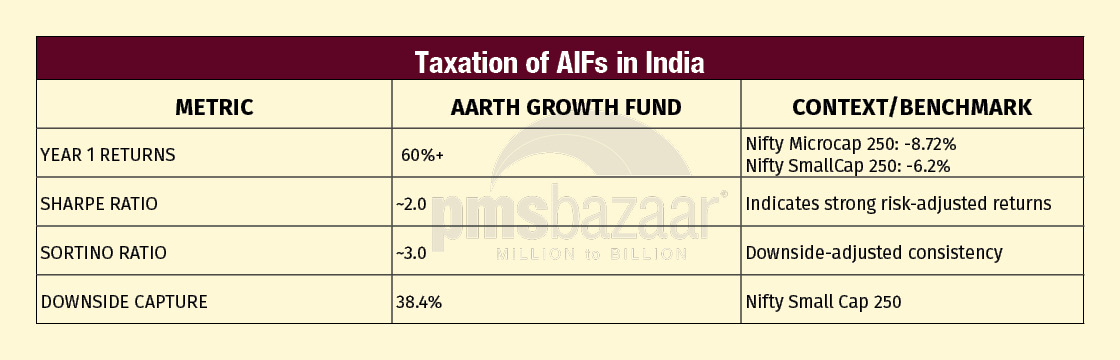
- Period – 03 Dec 2024 till 28 Nov 2025
- Benchmark & Assumption- Nifty small cap 250 Index & 6.5% Risk free rate of return
- Performance Consistency: Returns Through Risk
- Our Sharpe ratio of 2 and Sortino ratio near 3 underline consistency, not just headline returns.
What Sets Aarth Apart
Aarth Growth Fund represents a differentiated approach within the long-only Category III ecosystem:
- Downside Protection — When benchmarks correct by 1%, we protected capital by only 0.38%
- Transparent Economics — Scalable structure with institutional-grade compliance, audit, and data integration • Entrepreneur Proximity — Direct engagement with management teams across portfolio companies
- Data-Driven Selection — Conviction-weighted rather than market-cap-weighted positioning
- Formalisation Thesis — Positioned to benefit from India's MSME ecosystem upgrade
For sophisticated capital seeking asymmetric opportunity in India's formalizing MSME sector, this offers what few asset classes can — liquidity, scalability, and genuine price discovery.
The Portfolio Behind the Performance
With ₹550+ crore AUM spread across holdings representing over ₹850 crore in aggregate market capitalization, we maintain a deliberately diversified yet conviction-weighted construct.
Our core allocation stands where India's growth engines turn:
- Capital goods, infrastructure, EPC — India's capex revival
- Consumption — Domestic demand resilience
- Renewables, AI/data infrastructure — Next-decade themes
- Healthcare manufacturing, logistics, defence supply chains — Structural shifts
Each reflects India's dual narrative of capex revival and consumption depth, amplified by policy continuity and technological transition.
"Each holding reflects where India's growth engines turn — capex revival, consumption, and policy-driven transformation." — Portfolio Construction Philosophy
Institutional Standards for a Retail-Less Segment
Microcap investing is often perceived as high-risk, low-discipline. We built Aarth to challenge that notion. From day one, operational transparency and financial governance matched institutional benchmarks. Ultra-HNI and family office investors, our primary LP base, expect alignment — not just alpha. That's why our constructs embed a "post-cost clarity" model: performance that holds after friction.
As we often say to investors — returns matter, but repeatability defines trust.
Our institutional standards include:
- Transparent economics — scalable structures with clear fee alignment
- Institutional-grade compliance — audit, data integration, regulatory adherence
- Portfolio transparency — monthly factsheet, quarterly holdings disclosure and bi-annual newsletter • Risk management — downside protection through portfolio construction
Ahead of the Curve — Not Ahead of Conviction
India's macro backdrop continues to offer one of the most attractive compounding setups globally:
- Resilient domestic demand — consumption cycles remain strong
- Deepening capex momentum — government and private sector investment expanding
- Broad-based credit availability — financing ecosystem improving for MSMEs
Yet we believe the coming decade will reward selectivity more than speed. Returns will concentrate around execution-led, governance-backed businesses — those that create, not chase narratives.
Our mandate at Aarth Growth Fund stays constant:
- Remain close to entrepreneurs
- Anchor in data, not noise
- Compound process, not just performance
Because conviction built on clarity is not a philosophy — it's a framework for enduring alpha.
"Conviction built on clarity is not a philosophy - it's a framework for enduring alpha." — Aarth Growth Fund
Disclaimer: This document is for informational purposes only and should not be construed as investment advice. Past performance is not indicative of future returns. This material does not constitute an offer or solicitation for investment.
Recent Blogs

April rebound lifts PMS strategies, but small-cap tilt drives leaders
A broad market recovery helped managers beat large-cap indices, though alpha against wider benchmarks remained more selective and category-dependent

SEBI’s GARUDA Framework: A Big Boost for India’s AIF Industry and GIFT City Ecosystem
India’s Alternative Investment Fund (AIF) industry has evolved rapidly over the last few years. Investors today are increasingly moving beyond traditional investment products such as mutual funds and fixed deposits in search of differentiated opportunities across Private Equity, Venture Capital, Private Credit, Real Estate, infrastructure, and Category III long-short strategies.

Winners & Losers: Sectors to Watch in the Current Global Crisis
PMS Bazaar recently organized a webinar titled “Winners & Losers: Sectors to Watch in the Current Global Crisis,” which featured Mr. Arpit Shah, Co-Founder and Director, Care Portfolio Managers. This blog covers the important points shared in this insightful webinar.
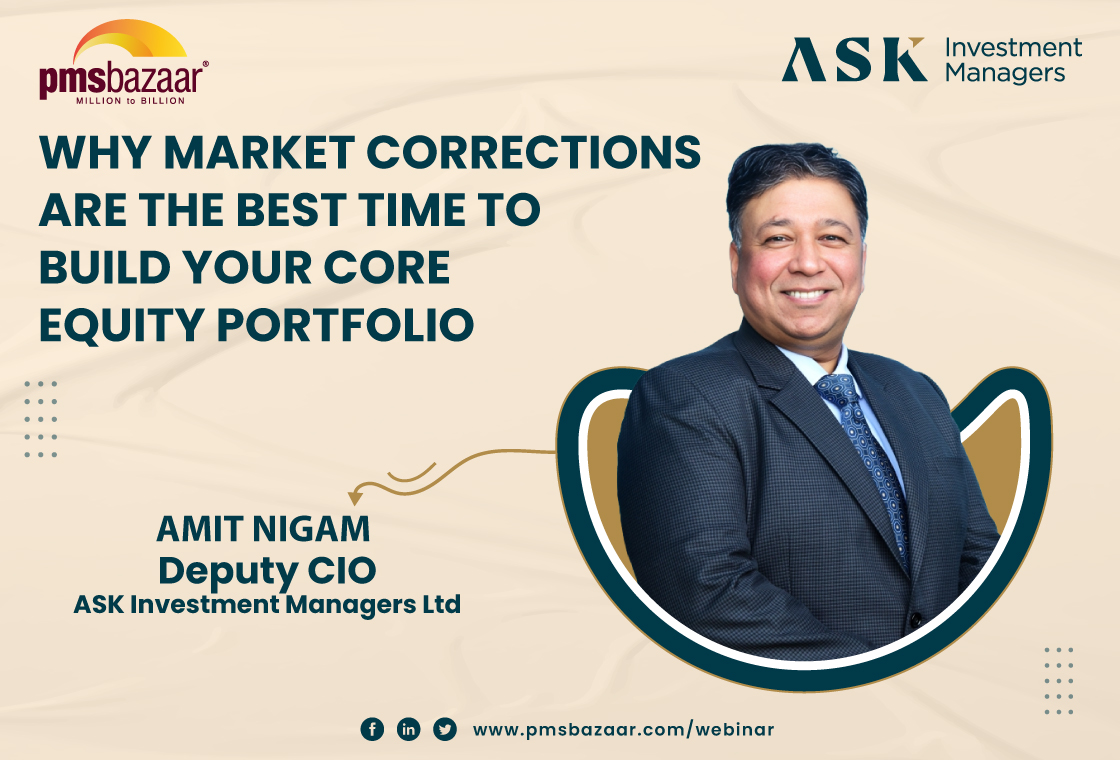
Why Market Corrections Are the Best Time to Build Your Core Equity Portfolio
PMS Bazaar recently organized a webinar titled “Why Market Corrections Are the Best Time to Build Your Core Equity Portfolio,” which featured Mr. Amit Nigam, Deputy CIO, ASK Investment Managers. The webinar blog covers insights from Mr. Nigam, which includes explanation how recent stock market volatility in India creates opportunities for long-term investors. It highlights shifting from a fixed deposit mindset to equities, his blog covers the important points shared in this insightful webinar.
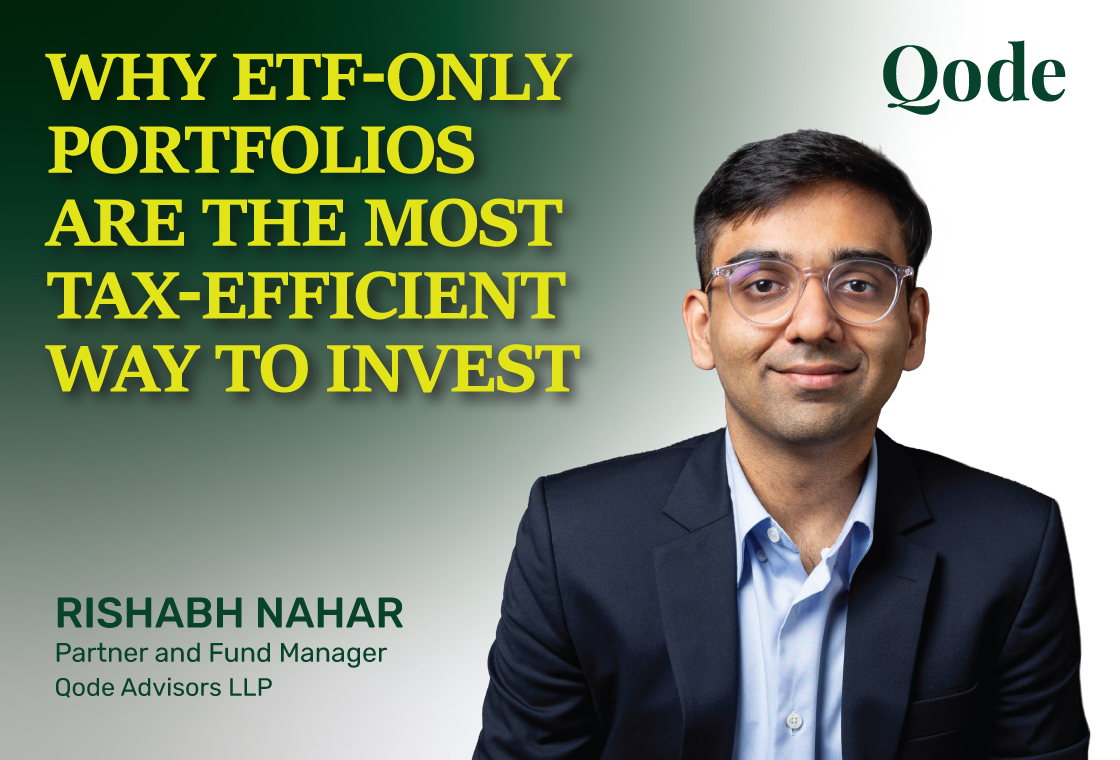
Why ETF-Only Portfolios Are the Most Tax-Efficient Way to Invest
How deferred taxation and lower LTCG rates compound into significantly higher post-tax wealth for long-term investors

6 out of 10 PMSes Beat Benchmarks In March Crash
Despite a fourth straight monthly sell-off, most PMSes fell less than benchmarks; a few even stayed in the green
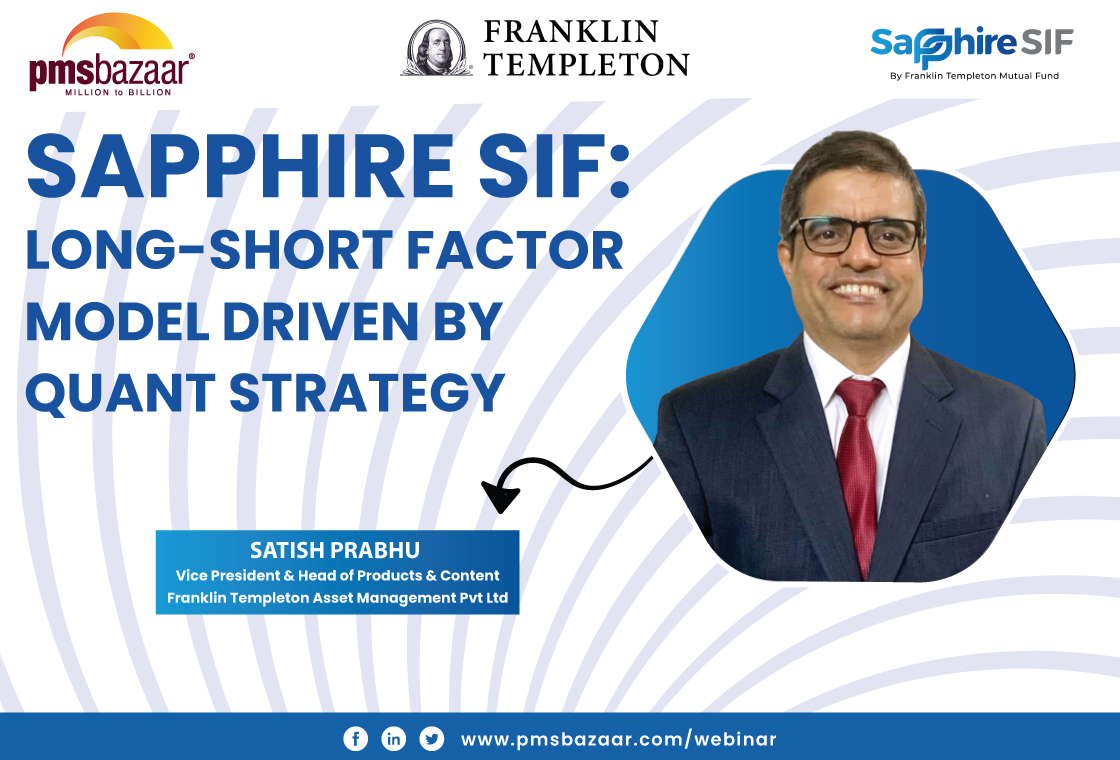
Sapphire SIF: Long-Short Factor Model Driven by Quant Strategy
PMS Bazaar recently organized a webinar titled “Sapphire SIF: Long-Short Factor Model Driven by Quant Strategy,” which featured Mr. Satish Prabhu, Vice President and Head of Products and Content, Franklin Templeton Asset Management Private Limited. This blog covers the important points shared in this insightful webinar.
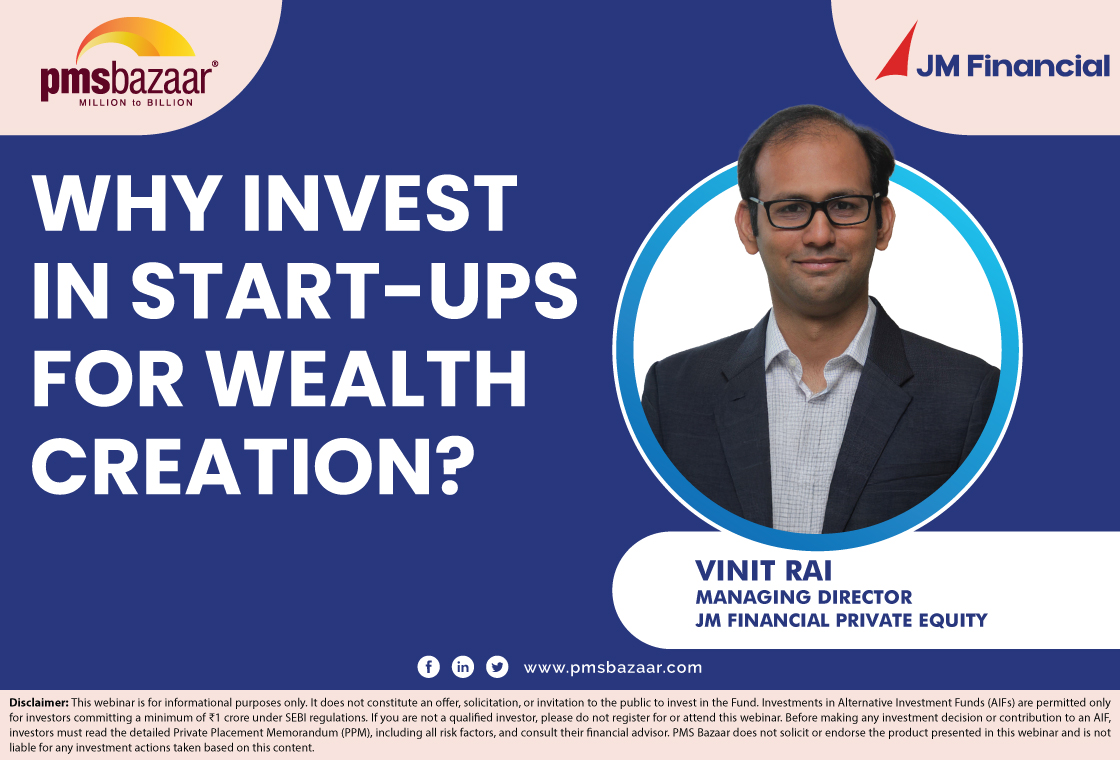
Why Invest in Start-Ups for Wealth Creation?
PMS Bazaar recently organized a webinar titled “Why Invest in Start-Ups for Wealth Creation?” which featured Mr. Vinit Rai, MD& CIO, Managing Director, JM Financial Equity. This blog covers the important points shared in this insightful webinar.