

PMS Bazaar recently organized a webinar titled “SEBI’s Accredited Investor Certificate: Exclusive Access to AIFs, PMS, SIFs & Private Markets,” which featured Mr. Rajesh Kumar S, Head of Business, NSDL Database Management Limited. This blog covers the important points shared in this insightful webinar.
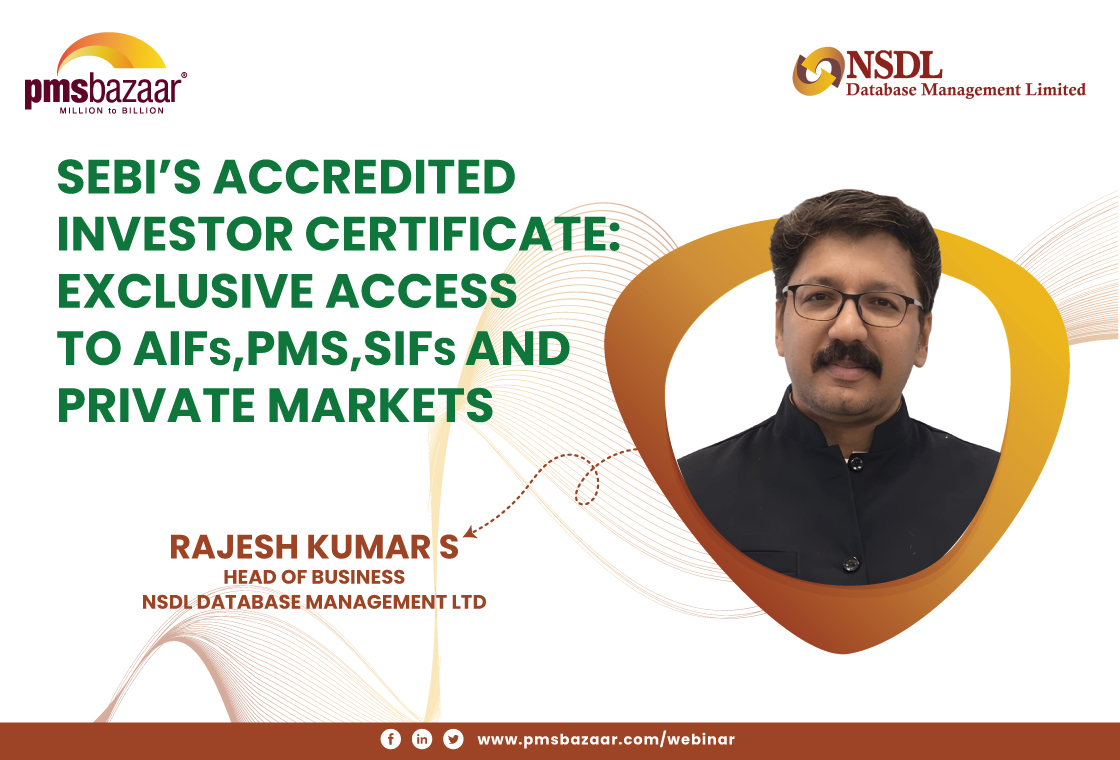
The webinar blog covers insights from Mr. Rajesh, which included India’s accredited investor framework introduced by SEBI, which allows high-net-worth and financially sophisticated individuals to access advanced investment products like PMS and AIFs. It outlines eligibility criteria, certification by NDML/CDSL, documentation processes, and benefits for investors and fund managers. It also highlights regulatory simplification and future movement toward more qualitative investor assessment standards.
Key aspects covered in this webinar blog are
- Decoding the concept: who is an accredited investor?
- Tracing the origins and global parallels
- The crucial role of institutional accreditation agencies
- Understanding eligibility, buckets, and joint certifications
- Mutual growth and streamlined processing
- Managing post-validity renewals: the lifecycle of an AI certificate
- Simplifying the net worth assessment matrix
- Asset treatment: permitted portfolios vs. clear exclusions
- International frameworks and gift city logistics
- The road ahead: anticipating a mature, qualitative market
Summary: India’s accredited investor framework, introduced by SEBI in 2021, enables financially sophisticated individuals and entities to access complex investment products under lighter regulatory oversight. Defined by income and net worth thresholds, accredited investors must demonstrate financial resilience and understanding of market risks. NDML, along with CDSL, acts as an accreditation agency ensuring secure verification and certification. The system simplifies access to PMSes and AIFs while allowing flexible fee negotiations. Certificates are digital, valid for up to three years, and require renewal upon reassessment. The framework is expected to evolve toward qualitative assessments, strengthening India’s alternative investment ecosystem and investor sophistication.
The Indian financial ecosystem is progressively shifting toward maturity, demanding modern regulatory approaches that balance investor flexibility with risk management. Mr. Rajesh Kumar, representing NSDL Database Management Limited (NDML), shed light on the concept of accredited investors, the evolving regulatory environment, and how this framework redefines wealth management for both market participants and asset managers.
Decoding the Concept: Who is an Accredited Investor?
According to Mr. Rajesh Kumar, the definition of an accredited investor hinges on financial sophistication and capacity. He observed that while the registration process for an accredited investor is relatively straightforward, the underlying financial instruments available to them are complex.
An accredited investor is an individual or an entity demonstrating a comprehensive understanding of the financial ecosystem and complex financial solutions. Crucially, these investors possess the necessary financial resilience to absorb capital losses during their investment tenure. Because of their sophisticated profile, the Securities and Exchange Board of India (SEBI) permits a "regulatory light" approach, easing the oversight burdens typically required for retail portfolios.
Tracing the Origins and Global Parallels
The structured framework for accredited investors was introduced to the Indian markets by SEBI in August 2021. This mechanism centers on two major players: the accredited investor (AI) and the accreditation agency responsible for verifying credentials and issuing valid digital certificates.
Mr. Rajesh contextualized the Indian framework by drawing parallels with global benchmarks. In international markets, these participants are recognized under various nomenclatures, such as Professional Investors (PI) or Qualified Investors (QI). Major financial markets, including the United States and Singapore, primarily determine eligibility via specific income thresholds or net worth criteria. Additionally, the UK and European Union integrate a qualitative aspect, analyzing an investor's professional experience within the financial services domain. He highlighted that while India currently utilizes quantitative asset and income benchmarks, the market will likely incorporate qualitative experience as it matures.
The Crucial Role of Institutional Accreditation Agencies
When SEBI formulated the operational rules, it mandated that only highly reputable organizations with solid institutional foundations could act as accreditation agencies. Initially, licenses were granted to subsidiaries of major depositories and exchanges, including NSDL, CDSL, and BSE. Following BSE's surrender of its license, the landscape consolidated. Today, only the subsidiaries of NSDL and CDSL manage these operations.
Mr. Rajesh emphasized that NDML is optimally positioned to uphold strict data confidentiality and security standards. Backed by multi-regulator compliance involving SEBI, RBI, and IRDAI, NDML relies on a highly secure data center verified by the Ministry of Electronics and Information Technology (MeitY). He reiterated that absolute Chinese walls are maintained between accreditation workflows and other businesses to preserve complete compliance and ethical operations.
Understanding Eligibility, Buckets, and Joint Certifications
The eligibility criteria are divided into specific financial buckets to accommodate diverse market participants:
- Individuals, HUFs, and Sole Proprietorships: Requires an annual income of ₹2 crores, a net worth of ₹7.5 crores, or a proportional combination of both.
- Body Corporates and Registered Trusts: Must hold a minimum net worth of ₹50 crores.
- Partnership Firms: Each individual partner must independently fulfill the core individual criteria.
- Deemed Accredited Investors: Includes central or state governments, sovereign wealth funds, and Category-I FPIs.
Furthermore, foreign investors can qualify provided their assets meet the rupee-denominated equivalent. Joint certifications are available for spouses allowing the pooling of income as well as parents and children. Approved certificates are strictly digital, offering a validity of two years when supported by one year of financial history, or three years when backed by two years of data.
Mutual Growth and Streamlined Processing
The advantages of accreditation extend across both sides of the investment table. For investors, the framework eliminates standard entry barriers, waiving minimum investment thresholds for Portfolio Management Services (PMS) and Alternative Investment Funds (AIF). It enables access to sophisticated instruments and facilitates direct negotiations regarding exit charges and fee structures. For fund managers, it provides sophisticated, well-informed clients, alongside operational reliefs such as exemptions from specific annual audits and enhanced concentration limits.
To simplify the onboarding journey, NDML provides a direct "Do-It-Yourself" portal and works alongside authorized channel partners like PMS Bazaar. These partners manage primary data screenings, ensuring that application pipelines move smoothly. Backed by a patient "no-rejection policy" aimed at guiding investors through document discrepancies, NDML regularly delivers these digital certificates on a swift, reliable T+1 timeline.
The Future of Accredited Investing: Formats, Renewals, and the Evolving Role of CAs
A robust Q&A session followed, addressing critical operational nuances of India’s Accredited Investor (AI) framework. The discussion provided market participants with essential clarity on certificate renewals, net worth documentation, asset inclusion parameters, and the strategic outlook for high-net-worth individuals.
Managing Post-Validity Renewals: The Lifecycle of an AI Certificate
A prominent area of inquiry focused on the procedures required once an accredited investor's certificate reaches its expiration date. Mr. Rajesh clarified that the framework treats certificate expiration much like a passport renewal process.
Because an investor's net worth, annual income, or asset profile fluctuates over time, the qualification cannot be granted permanently. Upon expiration, investors are required to resubmit their updated financial history and documentation to the accreditation agency for a fresh evaluation.
Furthermore, Mr. Rajesh noted that while the agency’s role concludes with verifying the data and issuing the renewed digital credential, the underlying investment provider retains ultimate discretion. Fund houses and portfolio managers must determine internally whether to allow an investor to remain active in a specific restricted scheme if their accreditation status temporarily lapses.
Simplifying the Net Worth Assessment Matrix
Addressing a question regarding specific formats for net worth evaluation, Mr. Kumar explained that SEBI significantly simplified the evaluation guidelines in response to market feedback. The original regulations relied on complex accounting formulas subtracting specific expenses and isolating reserve surpluses which proved cumbersome for both applicants and Chartered Accountants (CAs).
[Standard CA Certification Process]
- Step 1: Verification of CA Credentials via UDIN API
- Step 2: Confirmation of Financial Assets & Rupee Equivalence
- Step 3: Formal Attestation of the Minimum Criteria Threshold
The current protocol eliminates rigid arithmetic constraints. Now, a CA simply needs to issue an official statement declaring that the applicant’s financial standing satisfies the minimum regulatory thresholds. This declaration must feature the CA's Unique Document Identification Number (UDIN), which NDML cross-checks directly against institutional registries to verify authenticity.
Asset Treatment: Permitted Portfolios vs. Clear Exclusions
The session provided detailed guidance on how different types of holdings affect net worth calculations:
- Primary Residences: The governing circular explicitly mandates the exclusion of an applicant's primary self-occupied residential property from the net worth equation.
- Let-Out and Commercial Properties: The treatment of real estate investments or rental properties remains a nuanced area left to the discretion of the certifying accountant. If a CA chooses to factor in commercial real estate valuation or rental yields, the accreditation agency accepts that professional attestation at face value.
- Physical Gold Holdings: The framework prioritizes liquid financial assets. While gold holdings declared formally on balance sheets are routinely factored into net worth computations, unbacked or unlisted physical gold is generally omitted in favor of capital market holdings and cash equivalents, such as Consolidated Account Statements (CAS).
- Unlisted Shares: Valuation of unlisted shares remains challenging due to the absence of a standardized public market ticker. Consequently, the task of assessing and verifying the accurate valuation of unlisted stock falls entirely upon the certifying CA.
International Frameworks and Gift City Logistics
The dialogue extended to non-resident Indians (NRIs) and foreign portfolio managers seeking accreditation. For investors operating within tax-free jurisdictions, such as parts of the Middle East, standard income tax returns are replaced by formal employer-vouched salary accounts and asset evaluations.
For entities operating under special jurisdictions like Gujarat International Finance Tec-City (GIFT City), Mr. Kumar highlighted that international accounting certifications are valid. He cited successful credential issuances for offshore investors out of Mauritius, confirming that NDML approves foreign CA certificates provided the source professional can be validated through international tracking protocols.
The Road Ahead: Anticipating a Mature, Qualitative Market
Looking ahead over the next three to five years, Mr. Rajesh predicted that the Indian accredited investor landscape will shift from purely quantitative wealth metrics toward qualitative evaluations. Future iterations of the framework are expected to look beyond net worth, taking into account an investor's professional financial experience and their baseline understanding of systemic risk.
As these processes become more standardized, specialized investment vehicles such as Accredited Investor-only funds and Specialized Investment Funds (SIFs) are projected to gain widespread institutional traction, creating a more sophisticated, highly resilient financial ecosystem.
Mr Kumar covered all the topics mentioned above in-depth and answered questions from the audience toward the end of the session. For more such insights on this webinar, watch the recording of this insightful session through the appended link below.
Get access to rich data and analytics of PMS & AIF by subscribing to us. Join the 90000+ investors & experts: Subscribe NOW
Recent Blogs

PMS Performance : 401 Equity PMS Beat the Nifty 50 TRI
September 2026 saw global markets grapple with persistent macroeconomic uncertainty, as rising U.S. bond yields, crude oil prices above $90 per barrel and escalating Middle East tensions kept investors on edge. Concerns over renewed inflationary pressures and tighter financial conditions continued to shape market sentiment. The reported 25-basis-point Federal Reserve rate hike, bringing rates to 3.75–4.00 per cent, added another dimension to the evolving global outlook.
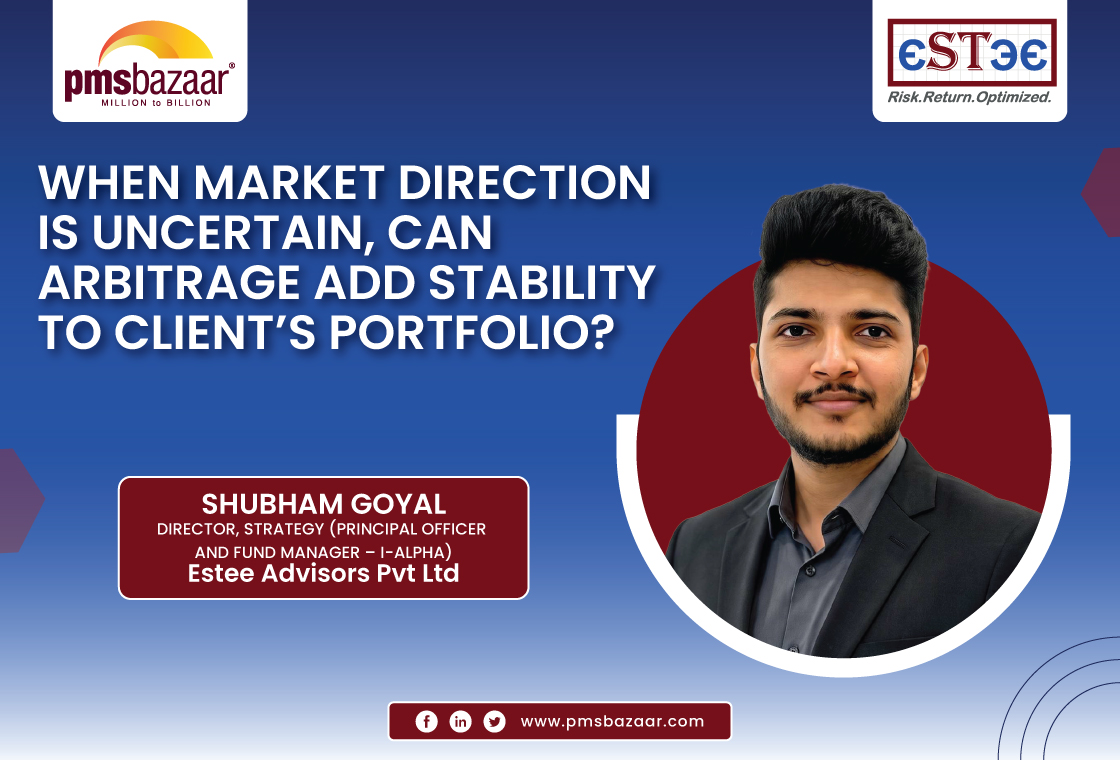
When Market Direction Is Uncertain, Can Arbitrage Add Stability to Client's Portfolio?
PMS Bazaar recently organised a webinar titled “When Market Direction Is Uncertain, Can Arbitrage Add Stability to Client's Portfolio?” which featured Mr. Sandeep Tyagi, Founder & Chairman, Estee Advisors and Mr. Shubham Goyal, Director, Strategy, (Principal Officer and Fund Manager - I-Alpha), Estee Advisors Pvt. Limited. This blog covers the important points shared in this insightful webinar.

MF-PMS: Is This the Next Big Wealth Management Opportunity
PMS Bazaar recently organised a webinar titled “MF-PMS: Is This the Next Big Wealth Management Opportunity,” which featured Mr. Sandeep Jethwani, Co-Founder, Dezerv & Vice Chairman, APMI.

PMS Performance: Over 94% of Tracked Strategies Beat Nifty 50 TRI
Global markets remained under pressure in August 2026 as geopolitical tensions, rising bond yields and elevated crude oil prices kept investors cautious.

The Next Alpha Cycle: How Should Investors Position ‘Alternatives’ in Their Portfolios?
PMS Bazaar recently organized a webinar titled “The Next Alpha Cycle: How Should Investors Position ‘Alternatives’ in Their Portfolios,” which featured Mr. Akhil Chaturvedi, ED & CBO, Motilal Oswal AMC. This blog covers the important points shared in this insightful webinar.

Performing Private Credit in India: Opportunity, Risk & the Investor’s Perspective
PMS Bazaar recently organised a webinar titled “Performing Private Credit in India: Opportunity, Risk & the Investor’s Perspective,” which featured Mr Saurabh Agrawal, Co-Fund Manager and Partner, Spark Asia Impact Alternative Asset Management.
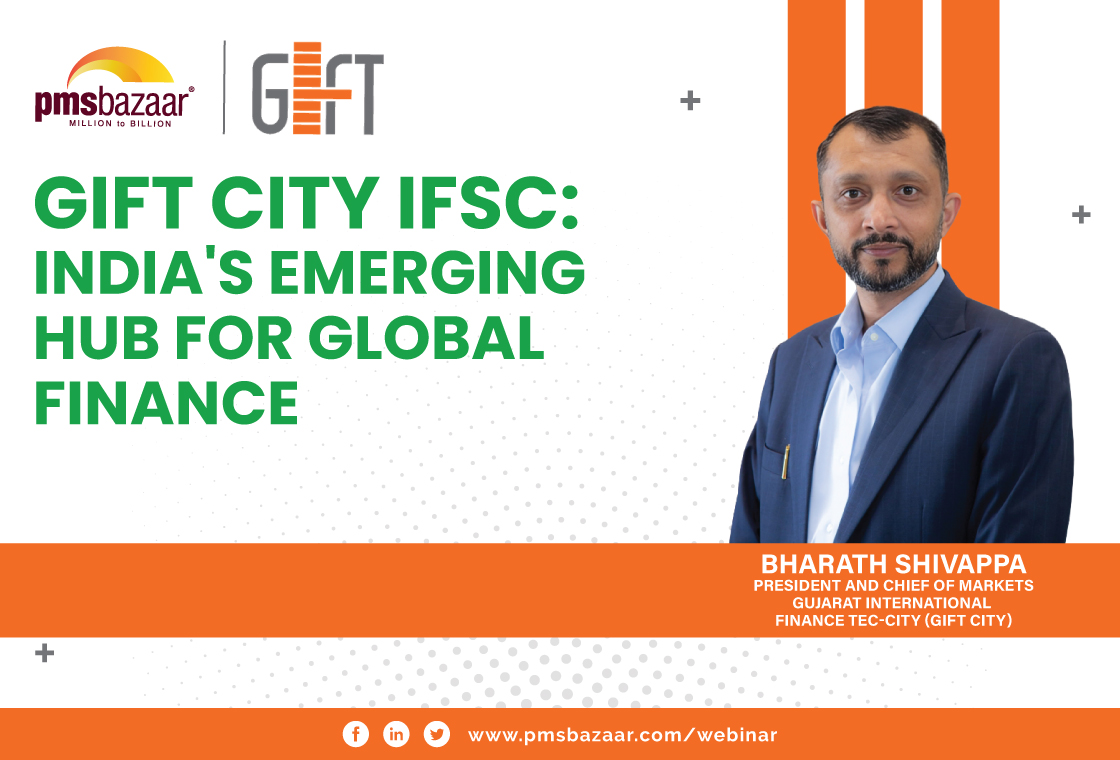
GIFT City IFSC: India's Emerging Hub for Global Finance
PMS Bazaar recently organized a webinar titled “GIFT City IFSC: India's Emerging Hub for Global Finance,” which featured Mr. Bharath Shivappa, President & Chief of Markets, Gujarat International FinanceTec-City. This blog covers the important points shared in this insightful webinar.

PMS Performance: Who Outperformed in July 2026?
July 2026 was another month marked by uncertainty, with market performance shaped by evolving global cues and shifting investor sentiment. Despite the uncertain environment, equity PMS strategies continued to present opportunities, with several managers delivering returns ahead of the broader market benchmarks.